

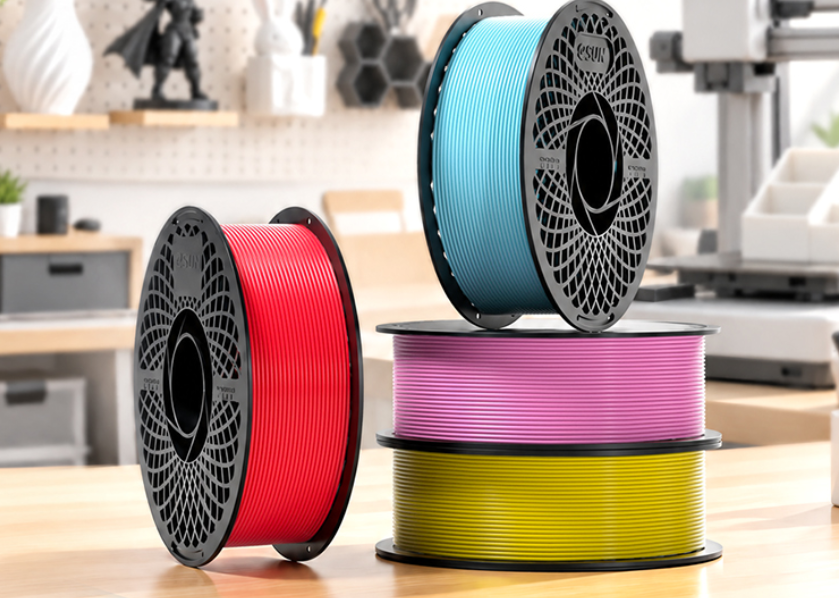
The world of 3D printing continues to evolve as manufacturers, designers, engineers, and hobbyists look for materials that deliver better performance and consistent results. Choosing the right filament is an important part of this process because material quality directly affects the strength, appearance, and reliability of finished models. Among the many available options, PLA Plus has become a popular choice for users who want improved toughness, smooth finishes, and convenient printing.
Traditional PLA is widely recognized for its ease of use and versatility. However, some projects require additional durability and resistance to everyday handling. This is where PLA+ offers an advantage. Its modified formulation is designed to improve certain mechanical properties while maintaining many of the printing benefits associated with standard PLA.
What Makes PLA Plus Filament Different?
PLA Plus Filament is an enhanced version of conventional polylactic acid (PLA), a thermoplastic commonly used in fused deposition modeling (FDM) 3D printers. Manufacturers modify the material’s formulation to improve characteristics such as toughness, impact resistance, and printing consistency.
Standard PLA is suitable for many decorative and educational projects, but printed objects can sometimes become brittle under pressure or impact. PLA Plus is designed to reduce this limitation by providing better resistance to breaking during everyday handling.
This combination makes it useful for people who want attractive prints without sacrificing practical performance. It also allows beginners and experienced users to work with a familiar material while exploring more demanding applications.
Key Benefits of PLA+ for High-Quality Printing
1. Improved Strength and Durability
One of the main reasons users choose PLA+ is its improved toughness compared with conventional PLA. The modified formulation helps printed components withstand minor impacts, bending, and regular handling.
This characteristic is useful when producing functional prototypes, equipment housings, brackets, and custom accessories. Although it is not a replacement for every engineering-grade material, it provides a practical balance between printability and durability.
2. Smooth Surface Quality
Appearance is important in professional and creative 3D printing. PLA Plus can produce smooth layers and detailed surfaces when the printer is configured correctly.
This makes it suitable for architectural models, product demonstrations, miniatures, decorative objects, and customized designs. Consistent extrusion also helps produce cleaner models with fewer visible imperfections.
For designers presenting prototypes to customers or development teams, a polished finish can make the final model easier to evaluate.
3. Reliable Printing Performance
Printing interruptions can waste time and material. Problems such as nozzle clogging, excessive stringing, and warping may affect the final result.
A well-formulated PLA+ material is designed to provide stable extrusion and reliable printing behavior. eSUN, for example, highlights its upgraded PLA+ formulation for smooth extrusion, reduced warping, fewer clogging issues, and cleaner prints.
These characteristics can make the material convenient for beginners while helping experienced users maintain consistent results across different projects.
4. Versatility and Color Options
Another advantage of PLA Plus is its suitability for a wide range of creative applications. Users can produce colorful decorations, personalized gifts, prototypes, educational models, and custom components.
Color availability is particularly important for projects where appearance matters. eSUN offers more than 40 color options for its PLA+ product, giving users flexibility when creating detailed and visually distinctive models.
Common Applications of PLA Plus Filament
Product Design and Prototyping
Designers often need physical models to evaluate product dimensions, shapes, and functionality before manufacturing. PLA Plus can help create prototypes that are easier to handle and demonstrate.
Its combination of strength and surface quality makes it useful during early product development and design reviews.
Educational and Engineering Projects
Educational institutions use 3D printing to introduce students to engineering, robotics, architecture, and product design. PLA Plus is suitable for creating demonstration models, mechanical components, and classroom projects.
Its convenient printing characteristics can also help students focus on learning design principles rather than troubleshooting complicated printing processes.
Electrical and Electronics Components
3D printing makes it possible to develop customized enclosures, cable organizers, mounting accessories, and prototype housings for electronic projects.
PLA+ can support these applications when its mechanical and temperature properties meet the project’s requirements. For components exposed to significant heat or demanding operating conditions, designers should evaluate alternative engineering materials.
Creative and Decorative Products
Artists, hobbyists, and small businesses can use PLA Plus to create sculptures, display models, personalized accessories, and decorative products.
Its ability to reproduce fine details and its availability in different colors make it an appealing option for customized designs.
How to Get Better Results When Printing with PLA+
Using the correct printing settings is essential for achieving consistent results. Although PLA Plus is relatively easy to print, recommended temperatures and speeds can vary depending on the filament manufacturer and printer.
For eSUN PLA+, the recommended extruder temperature is approximately 210–230°C, with a heated bed temperature of 45–60°C. The manufacturer also recommends a fan speed of 100%.
Before starting a large printing project, users should test a small model to identify suitable settings for their particular equipment. Proper bed leveling, clean printing surfaces, and appropriate cooling can also improve print quality.
Filament storage deserves attention as well. Exposure to moisture can affect extrusion and surface appearance. Keeping the spool in a sealed container with desiccant helps maintain its condition. When necessary, eSUN recommends drying its PLA+ filament at 50°C for 8–12 hours.
Choosing a Reliable PLA+ Manufacturer
The quality of the filament plays an important role in achieving repeatable printing results. Buyers should consider material consistency, technical specifications, color availability, printer compatibility, and manufacturer support before making a decision.
eSUN is one manufacturer offering PLA+ designed for smooth printing, improved toughness, and detailed surface finishes. Its product is available in a 1.75 mm diameter and 1 kg spool, with a range of colors and applications covering prototyping, creative projects, and electrical and electronics development.
Users interested in learning more about the material can explore the official eSUN PLA+ Filament product page for product information, technical specifications, and recommended printing conditions.
Conclusion
PLA Plus has become a popular material because it combines convenient printing with improved toughness, attractive surface quality, and versatility. From educational models and product prototypes to decorative objects and customized components, it supports a wide range of 3D printing applications.
By selecting quality PLA+ filament, following manufacturer recommendations, and maintaining proper storage conditions, users can achieve reliable results and make the most of their 3D printing projects.
