

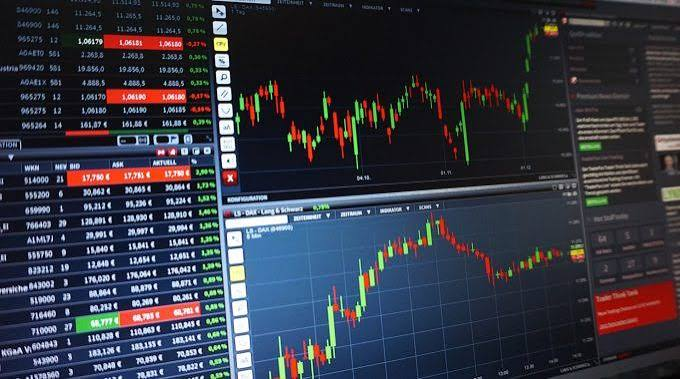
Open any app store or search engine and you will find hundreds of trading platforms promising fast execution, low costs and a smooth experience. Most of them look similar on the surface. They show a chart, a buy button, a sell button and a balance. The differences that matter tend to sit underneath, in how orders are handled, how your money is protected, how clearly costs are disclosed and how well the software behaves when markets get busy.
This guide walks through the criteria experienced traders use when they compare the best online trading platforms, so you can judge any provider on your own terms instead of relying on marketing copy. It covers regulation, platform technology, costs, tools, support and the habits that keep a new account under control. It requires patience more than expertise.
Start With the Question Nobody Finds Exciting: Who Regulates the Broker?
A trading platform is only as trustworthy as the company running it. Before you look at features, find out which legal entity you would be opening an account with and which authority supervises it. Reputable brokers publish this information in the footer of their website and in their client agreement. The name of the entity matters because many brokerage groups operate several companies in different countries, and each one may be supervised by a different authority with different rules.
Once you have the entity name, check it directly on the regulator’s own public register. Do not rely on a logo or a screenshot. Confirm that the company name, address and website on the register match what the broker shows you. Look for details such as whether client funds must be held in segregated accounts, whether negative balance protection applies to retail clients, and whether there is an investor compensation scheme. These protections vary a lot between jurisdictions, and they matter far more than a slick interface if something goes wrong.
Understand the Product Before You Compare Platforms
Many online brokers that serve retail traders offer contracts for difference, or CFDs, rather than direct ownership of shares or currencies. A CFD lets you speculate on the price movement of an underlying market such as a currency pair, an index or a metal without owning the asset itself. CFDs are traded on margin, which means you only put up a fraction of the position’s value. That magnifies gains, and it magnifies losses just as quickly.
Regulators in several regions require brokers to publish the percentage of retail accounts that lose money trading CFDs with them, and those figures are usually well above half. That is not a reason to panic, but it is a reason to treat CFD trading as a high-risk activity, to size positions modestly and to never fund an account with money you cannot afford to lose. A good platform will make these risks obvious rather than hiding them in small print.
Platform Technology: Stability Beats Novelty
The software itself is where you will spend most of your time, so it deserves careful attention. Many brokers support the MetaTrader family of platforms, which have been around for years and are widely used by retail traders. MetaTrader 4 is known for its simplicity and its huge library of custom indicators and automated scripts. MetaTrader 5 adds more timeframes, more order types, an economic calendar and a depth-of-market view on supported instruments. Others build their own proprietary platforms or offer browser-based terminals.
When you test a platform, pay attention to these points:
- Order types. At minimum you want market orders, limit orders, stop orders and the ability to attach stop-loss and take-profit levels when you open a trade.
- Charting. Check whether you can save layouts, draw trendlines that stay in place and switch timeframes without lag.
- Sync across devices. If you open a trade on your phone, it should appear instantly on your desktop and in the browser version.
- Behavior during news. A demo account during a major data release will tell you a lot about how the platform copes with fast markets.
- Login security. Two-factor authentication on the client area and the app is a basic expectation now.
A plain platform that never freezes is worth more than a flashy one that crashes when volatility spikes.
Costs: Read the Whole Picture, Not Just the Headline
Trading costs come in several forms, and brokers tend to advertise the one that looks best. The spread is the gap between the buy and sell price. Some accounts charge a commission per trade on top of a tighter spread. Positions held overnight usually incur a swap or financing charge, which can be positive or negative depending on the instrument and direction. There may also be fees for deposits, withdrawals, currency conversion or account inactivity.
The simplest way to compare is to pick a trade you would realistically place, for example one standard lot on a major currency pair held for three days, and calculate what it would cost at each broker using their published spread, commission and swap tables. You will often find that the cheapest broker on paper is not the cheapest for your style. Also note whether spreads are fixed or variable, because variable spreads can widen sharply around news events and at the daily rollover.
Market Range: More Is Not Always Better
Some platforms list thousands of instruments. That sounds impressive, but most traders end up focusing on a handful of markets they understand. What matters is that the markets you care about are available with reasonable trading conditions. If you trade gold, check the contract specifications for gold. If you trade indices, check trading hours and how the broker handles holidays. If you want exposure to commodities such as copper or aluminium, confirm they are offered as CFDs and see how the pricing works.
A sensible approach is to write a short list of the five to ten instruments you expect to trade, then check each broker’s specification page for those exact symbols. Look at minimum trade size, margin requirement, trading hours and swap rates.
Tools That Genuinely Help
Beyond the core platform, brokers add tools to attract clients. Some are useful, some are noise. Features worth looking for include an economic calendar integrated into the platform, clear margin and position calculators, price alerts that push to your phone, and education that explains concepts honestly rather than selling a dream. Copy trading services, where you can follow the positions of other traders, have become common too. They can be educational, but following someone else’s trades does not remove risk, and past performance of a strategy provider says little about the future.
For example, Ultima Markets is one broker that offers CFD trading on forex, metals and other markets through MetaTrader 4, MetaTrader 5, a WebTrader and its own mobile app, alongside a copy trading platform. It is one of many providers in this space, and the same checks described here apply to it as to any other. For EU clients, its affiliated entity Ultima Markets Cyprus Ltd is regulated by the Cyprus Securities and Exchange Commission, and readers should confirm on the regulator’s register which entity would hold their own account.
Deposits, Withdrawals and Customer Support
It is easy to forget about withdrawals until you need one. Before funding an account, read the broker’s policy on how withdrawals are processed, how long they usually take, which methods are supported and whether funds must be returned to the original payment source. Many traders make a small test deposit and then request a small withdrawal early on, simply to see how the process works in practice.
Support quality is harder to measure from the outside. Try asking a specific question through live chat or email before you sign up, something like how swap is calculated on a particular instrument, or what happens to open positions during a platform maintenance window. A clear, accurate answer within a reasonable time is a good sign. A vague reply that pushes you to deposit is not.
A Simple Process for Comparing Platforms
If you want a repeatable method, this sequence works well for most people:
- Make a shortlist of three to five brokers that serve clients in your country.
- Verify each broker’s regulated entity on the official register of its supervisor.
- Read the client agreement sections on margin calls, stop-outs and negative balance protection.
- Compare total costs on two or three trades you would actually place.
- Open demo accounts and use each platform for at least a week, including during a news release.
- Test customer support with a specific technical question.
- If you go live, start with a small balance and small position sizes, and test a withdrawal.
None of these steps is complicated, but skipping them is how many traders end up with a platform that does not suit them, or worse, with an unregulated operator.
Red Flags Worth Walking Away From
Some warning signs are easy to spot once you know them. Be cautious of any platform that contacts you unsolicited and pressures you to deposit quickly, that promises steady monthly returns, that cannot tell you clearly which entity you are dealing with, or that makes withdrawals unusually difficult. Legitimate brokers talk about risk openly and do not promise outcomes, because nobody can control the market.
Building Good Habits From Day One
The platform is a tool, and even the best tool will not fix poor habits. Decide in advance how much of your account you are willing to risk on a single trade, and keep it small. Use stop-loss orders. Keep a simple journal of every trade with the reason you took it and the result. Avoid increasing your position size after a loss to win the money back quickly, because that is one of the fastest ways to drain an account.
The Bottom Line
Choosing a trading platform is less about finding the one with the longest feature list and more about finding a regulated broker whose costs, tools and software match the way you plan to trade. Verify regulation yourself, understand that leveraged products carry a high risk of loss, compare real costs, test the platform thoroughly, and keep your first live steps small. Do that, and you will be in a much stronger position than most people who pick a platform because of an advert.
Risk warning: CFDs and forex are complex leveraged instruments, and a large share of retail investor accounts lose money when trading them. You should consider whether you understand how these products work and whether you can afford to take the high risk of losing your money. This article is for general educational purposes only and is not financial advice.
