

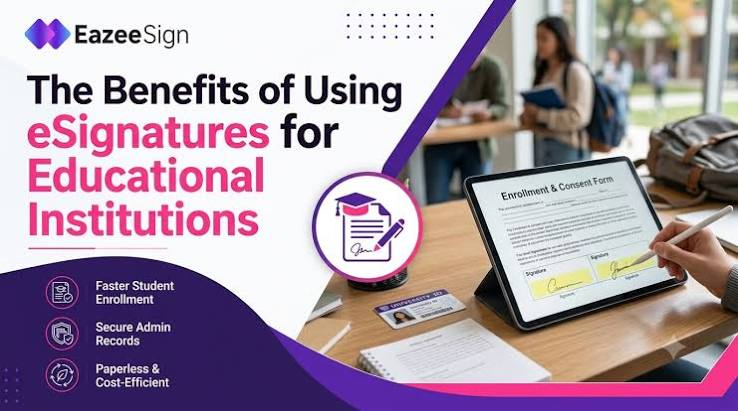
When a parent completes the admission form online, they receive an email that requests a signed printout of the form which has to be scanned back. This makes the entire effort of filling out the form online somewhat pointless. Educational institutions that use electronic signature software completely bypass this problem and the difference becomes most evident during the admissions period when time is important. A digital signature free trial is an easy way to see that difference before the season starts.
Why Admission Season Makes the Case on Its Own
Admissions run on tight timelines every single year. Hundreds of applications land within a short window, each one needing a parent or guardian’s signature before processing can even start. Doing this on paper means every form physically has to travel somewhere, sometimes across cities if a family’s applying from outside the local area.
An eSign app cuts that travel out completely. A parent reviews an admission agreement from their phone, signs it in a couple of minutes, and the form’s back with the institution instantly. No courier. No waiting on postal delays. No risk of a signed form vanishing somewhere between departments during a hectic week.
Fee Agreements and Scholarship Forms Move Quicker Too
Beyond the admission form itself, institutions deal with a long list of related paperwork, fee structure agreements, scholarship terms, hostel consent, transport arrangements. Each one traditionally meant another printed page needing another signature from someone.
Digital signature software handles all of this the same way it handles the main application, quickly, without a separate trip to campus. For families juggling work schedules around a child’s admission, that alone removes a genuine source of stress during an already hectic stretch of the year.
Staff Contracts Without the Office Hopping
Hiring season brings its own pile of paperwork. A new teacher’s contract usually needs sign off from HR, a department head, sometimes the principal too, before it is finalized. On paper, that document physically moves between offices, sometimes across entirely different buildings on the same campus.
With proper electronic signature software, that same contract routes through each required signer on its own. Everyone gets notified the moment it is their turn, so nobody’s sitting there wondering whether a document’s untouched on someone’s desk somewhere. For institutions hiring several staff members at once ahead of a new term, this alone cuts out a surprising amount of delay.
No More Chasing Parent Consent Slips
Field trips, medical consent, photo releases, these need a parent’s signature regularly, often on short notice. Collecting signed paper slips from dozens of parents before a trip deadline is genuinely stressful and any teacher who has done it will say the same without much hesitation.
A decent eSign app sends consent forms straight to a parent’s phone. They sign in a couple of minutes and it’s recorded automatically on the institution’s end. No slip lost in a backpack somewhere. No last minute scramble the morning a trip’s supposed to leave.
Fewer Mistakes in Academic Paperwork
Paper based systems create their own quiet problems. Missed signatures. Incomplete fields. Forms filed under the wrong student entirely. None of this is usually anyone’s fault really, it is just what happens when dozens of documents move through manual handling every week without fail.
A missing eSignature on a transcript request or a financial aid form can delay something genuinely important for a student — who had zero control over the mix up. Digital signature software generally walks a signer through every required field before letting them submit, flagging anything left blank so it does not slip through unnoticed.
Records That Actually Stay Organized
The eSign app records the time of signing along with an accurate time log of participants in the signing process. For organizations that must undergo audits accreditation assessments or simply want to find an old contract it can save them so much time over searching through numerous folders piled in different offices.
Also documents signed electronically can be found easily rather than being placed in boxes in the cabinets where they can be found only if the one who signed them will remember to put them in the right place.
Fitting Remote and Hybrid Programs
Plenty of institutions now run hybrid courses, with students and sometimes faculty working from completely different locations. Paper based signing just does not fit that setup well. A physical form can not exactly travel across states the way a digital one can.
A student enrolled remotely can sign a course agreement from another city, or another country, without ever setting foot on campus. Part time faculty working from home can sign contracts the same way, nothing tied to being physically present at a specific desk at a specific time.
Security and Legal Standing Schools Need to Think About
Institutions are in charge of important information all the time: students’ records, financial data, and sometimes, minors’ personal information too. Reliable electronic signature programs use real encryption, verified identity, and thorough audit trails for every document signed.
The legality of the signature is important too. In many jurisdictions, a properly created electronic signature is as valid as a handwritten signature, provided that signalling software satisfies certain compliance criteria. Therefore, spending ten extra minutes to make sure legality is confirmed before the implementation of electronic signature software is rather worth it.
What is Actually Worth Checking Before Choosing a Platform
Not every signing tool suits an academic setting equally well. Worth checking for recognized certifications like SOC 2 and ISO 27001, since those confirm a provider’s security claims hold up under independent review rather than resting on marketing copy alone.
Templates matter a lot here too. Institutions deal with the same document types semester after semester, admission forms, consent slips, staff contracts. Reusable templates cut setup time down noticeably and lower the odds of a required field slipping through unnoticed during a busy enrollment period.
EazeeSign is worth a look here, backed by SOC 2 and ISO 27001 certifications alongside AI based features that flag unusual or missing information before a document even goes out for signing. For institutions dealing with a large volume of repetitive paperwork every semester, this kind of setup removes a fair chunk of the manual tracking that paper based processes usually demand.
Final Thoughts
Institutions still leaning heavily on paper are giving up time and resources they really don’t need to lose. Electronic signature software speeds up admissions, simplifies staff contracts, cuts down on parent consent delays and keeps records organized in a way paper filing just never quite manages. And honestly, the switch isn’t that complicated either. Most administrative teams settle in within a few weeks, usually wondering why it did not happen sooner.
