

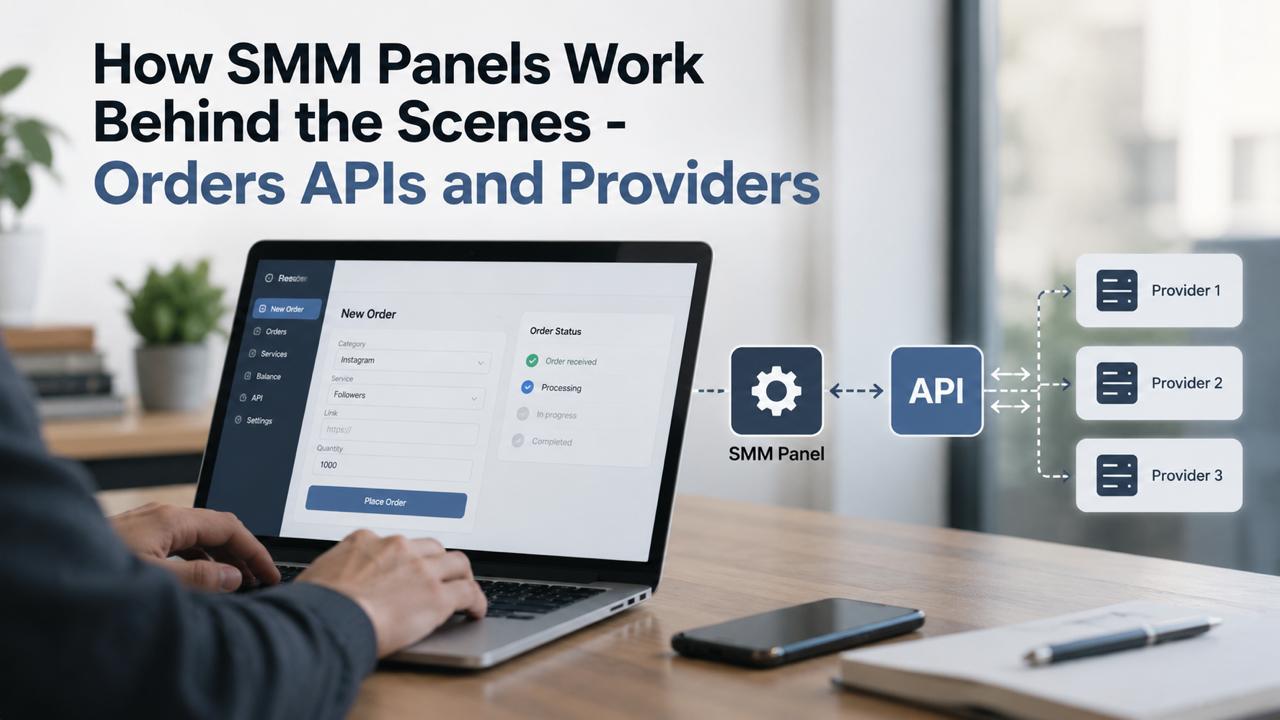
An SMM panel is an online system that manages orders for social media services such as followers, likes, views, and subscribers. Behind its dashboard, several technical processes work together to receive customer requests, communicate with providers, and track order progress. Application programming interfaces (APIs) connect these processes, allowing resellers to forward orders automatically instead of entering every request manually.
OZSM is an smm panel and SMM provider serving resellers, agencies, and individual users since 2021. Its platform combines direct ordering with API integration for service management. Understanding how these systems communicate explains why APIs have become an important part of SMM reselling and how different businesses coordinate customer orders through connected software.
The Main Components of an SMM Panel System
A typical reseller operation contains three functional layers. Each handles a different part of the transaction, although one business may operate multiple layers.
- Customer dashboard: The interface where users select services, provide links or usernames, submit orders, and monitor progress.
- Reseller system: The software that maintains customer accounts, records transactions, manages balances, and forwards requests to connected providers.
- Main provider: The upstream platform that receives submitted orders, manages fulfillment operations, and returns status information.
A reseller may use one main provider or connect several providers to the same customer-facing dashboard. The customer interacts with the reseller interface, while communication with upstream systems happens behind the scenes.
The distinction matters because accepting an order and fulfilling it are separate responsibilities. A reseller can manage the storefront and customer relationship without directly controlling the underlying service delivery process.
How Does an Order Travel From Customer to Provider?
Consider an agency ordering Instagram post views through a reseller panel. The request follows a structured process before reaching the main provider.
- Service selection: The customer chooses a service from the available catalog and specifies the requested quantity.
- Target submission: The customer enters the relevant post link, profile URL, or username according to the service requirements.
- Request validation: The reseller checks required fields, service limits, and account balance conditions.
- API submission: The reseller sends the order information to the provider using an authenticated API request.
- Order registration: The provider returns an order identifier when the request is accepted.
- Status tracking: The reseller retrieves subsequent updates and displays the order’s current state to the customer.
The reseller and provider may assign different identifiers to the same transaction. For example, customer order 4201 could correspond to provider order 18345. The reseller must preserve this relationship to retrieve updates and submit follow-up requests correctly.
An accepted request only confirms that the provider has registered the order. It does not establish that fulfillment has been completed.
What Does an SMM Panel API Actually Do?
An API allows separate applications to exchange structured information. SMM panel integrations commonly use HTTP requests and JSON responses to handle ordering functions without requiring someone to operate the provider dashboard manually.
OZSM provides an API with actions supporting several important operations:
- Services: Retrieves available services and their ordering parameters.
- Add order: Submits a new request containing the service identifier and required order information.
- Status: Retrieves information about an existing order and its processing state.
- Refill: Submits a refill request for an eligible order.
- Cancel: Requests cancellation where the service supports that action.
- Balance: Returns the available balance associated with the account.
A typical order submission contains an API key, service identifier, target link, and quantity. Some service types require additional parameters. The provider processes the request and returns a response that the reseller software can interpret.
The API key serves as an authentication credential. Resellers should store it securely on their servers rather than expose it in publicly accessible frontend code. Unauthorized access could allow requests against the connected account.
Understanding Order Statuses and Their Meaning
Order status tracking is essential because fulfillment takes place separately from the initial submission. A reseller needs accurate information about each order to keep its customer dashboard synchronized.
Common statuses include:
- Pending: The provider has received the order, but active processing has not started.
- In progress: The provider reports that fulfillment activity is underway.
- Processing: An intermediate state used by some systems during ongoing work.
- Completed: The provider reports that the requested process has finished.
- Partial: The provider reports fulfillment of only part of the requested quantity.
- Canceled: The order has been canceled rather than completed.
Some responses include a starting count and a remaining quantity. These fields help explain reported progress or partial fulfillment. However, they represent information returned by the provider rather than independent verification of social media activity.
Different providers may use different status conventions. Reseller software should interpret those differences consistently without misrepresenting the underlying order information.
How Do Refill Requests and Cancellations Work?
A refill is a follow-up request associated with an earlier order. It is available only when the selected service supports refill functionality and the applicable conditions are satisfied.
In an API-based workflow, the reseller submits the original provider order identifier with a refill request. The provider may return a separate refill identifier that can be used to check subsequent progress.
Submitting a refill request does not mean it has been approved or completed. The provider determines eligibility according to the relevant service conditions.
Cancellation follows a similar communication process. The reseller sends a request for an eligible order, and the provider returns information indicating whether cancellation is possible. Orders already undergoing certain processing stages may not qualify.
These operations illustrate why a reseller needs more than basic order submission. Post-order management is an important part of maintaining accurate customer records.
Why APIs Made SMM Reselling More Scalable
Without API integration, an operator may need to open the provider dashboard, locate a service, enter the target information, submit the order, and manually update the customer afterward.
As the number of transactions increases, repeating these actions creates administrative workload and additional opportunities for errors.
APIs allow software to handle routine operations automatically. Orders can be forwarded, service information can be synchronized, account balances can be checked, and statuses can be retrieved through programmed requests.
This is especially useful for agencies coordinating multiple accounts and service categories. A single interface can manage requests associated with several social media platforms while communicating with the relevant upstream systems.
Some reseller applications also connect to multiple providers. Such arrangements require accurate service mappings so that each customer request reaches the intended provider and remains associated with the correct transaction record.
Common Technical Problems in Automated Ordering
API automation reduces manual work, but it introduces technical dependencies that reseller businesses must manage carefully.
- Duplicate submissions: A network timeout can occur after a provider has already accepted an order. Repeating the request without checking may create a duplicate.
- Outdated service catalogs: Provider service identifiers, availability, or quantity limits can change, causing previously valid requests to fail.
- Insufficient balances: Automated submissions may be rejected when the reseller account lacks adequate available funds.
- Status synchronization errors: Interrupted API communication can leave customer dashboards displaying outdated order information.
- Unsupported refill requests: Not every service provides refill functionality, and eligible orders may still be subject to additional conditions.
- Platform policy concerns: Purchasing engagement can conflict with social network policies and may expose accounts to restrictions or enforcement actions.
A reliable integration should record provider responses, validate submitted information, and preserve transaction histories. These measures help operators investigate errors without relying entirely on manual reconstruction of previous requests.
How OZSM Fits Into the Reseller Workflow
OZSM offers services for Instagram, TikTok, YouTube, Telegram, Twitter (X), Facebook, Spotify, Twitch, Kick, Discord, LinkedIn, Threads, and SoundCloud. Its catalog includes followers, likes, views, members, subscribers, and watch time.
Customers can place supported orders using a link or username without sharing their social media account passwords. Available platform features also include mass orders, drip-feed options, refills on eligible services, and multiple payment methods such as PayPal, cryptocurrency, Binance Pay, and cards.
These functions serve different operational requirements. Mass ordering helps organize multiple requests, while drip-feed options support configurable distribution where available. The API allows resellers to connect ordering operations with their own software systems.
For agencies evaluating SMM panels, important technical considerations include API documentation, service parameters, status visibility, balance management, and support for post-order requests. An accessible dashboard is useful, but dependable communication between systems is equally significant.
Ultimately, SMM panels operate as interconnected order management systems. The customer interface captures requests, reseller software coordinates transactions, and the provider processes submitted orders. APIs connect these stages and reduce repetitive administration, while accurate service mapping, status handling, and error management remain essential to running an organized reseller operation.
