

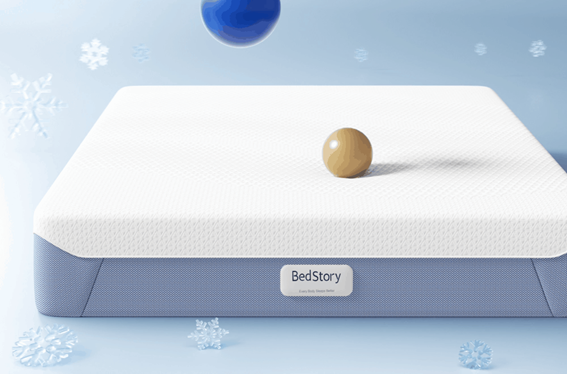
An ultra plush mattress is about as soft as mattresses get. You sink into the top layers before the support beneath catches you, which can feel wonderfully cushioned at the shoulders and hips. The risk is going too far: if you sink so deep that turning over is a struggle or your hips drop below your spine, the softness becomes a problem.
This guide explains how to tell a well-built ultra plush mattress from one that is simply soft, and who is most likely to enjoy that deep, cradling feel. In BedStory’s range, the plush COOLING COLLECTION hybrid is sold as the 12-inch standard model, the 13-inch PRO, and the 14-inch LUXE.
What “ultra plush” really means
Ultra plush is a feel, not a standard specification. It usually means more cushioning and a deeper cradle than a medium plush mattress. Brands create it with thick foam, fiber layers, quilting, or a pillow top.
Firmness labels are a starting point, not a promise. Your weight, sleep position, room temperature, and even the bed frame all change how soft a mattress feels.
Deep cushioning needs a steady transition
The soft top layer should cushion your pressure points. Below it, transition layers should slow your descent so you meet the support core gradually. Without that, a mattress can feel soft for the first minute and then hard once your weight settles.
Signs the transition is not working:
- the surface feels soft but you suddenly hit something firm,
- you sink into a hole that is hard to roll out of,
- the bed feels floaty at first and unstable later.
When you test, lie still for a few minutes. Notice whether your torso stays level and whether the resistance builds smoothly.
Height is not the same as support
A taller mattress is not automatically softer or more supportive. What matters is how thick the comfort section is and what sits directly underneath it.
Who enjoys a very soft feel
Side sleepers are the most natural fit. Their shoulders and hips carry concentrated pressure and benefit from extra cushioning, as long as the waist does not dip.
Back sleepers can enjoy ultra plush but should watch for the hips sinking lower than the upper back.
Stomach sleepers usually find it too soft, because the hips drop and the lower back arches.
Body weight matters as well. Lighter sleepers may stay in the upper layers and find ultra plush less dramatic than expected. Heavier sleepers press deeper and need strong support underneath.
Ultra plush or medium plush?
| Ultra plush | Medium plush | |
| First feel | Deep, enveloping cushioning | Soft, with a shallower cradle |
| Turning over | Can take more effort | Usually easier |
| Support check | Watch the hips and midsection closely | Easier to stay level |
| Warmth | More body contact can feel warmer | Less immersion, more open feel |
| Best for | People who love deep cushioning | People who want softness and mobility |
Neither is higher quality. The better choice is the one that still feels good after a full night. If you like softness but want a slightly more contouring, all-foam feel, the COOLING COLLECTION memory foam mattress is another option to compare.
Movement, edges, and getting up
A deep comfort layer absorbs small movements, which can help couples. It can also create a small valley around your body. Try these at home:
- roll from one side to the other without pushing off with your hands,
- sit on the edge as if putting on shoes,
- lie near the edge and see if you feel secure,
- have your partner move while you lie still.
Heat
Sinking deeper means more of your body touches the mattress, which some people find warmer. A breathable cover, gel-infused foams, and a coil core help, as do lighter bedding and a cooler room. Judge temperature over several nights, not a single nap.
Checking durability before you buy
Very soft comfort layers can soften further over the first months. Before ordering, look for:
- a clear description of the comfort, transition, and support layers,
- guidance on which bases and frames are compatible,
- a home trial long enough to judge the feel,
- a warranty that explains what counts as a body impression.
How to run an in-home ultra plush test
A short showroom test cannot show you how a very soft mattress feels after a full night. Use your trial period to test it properly:
- Sleep on your normal schedule, with your usual pillow and bedding.
- Each morning, note three things: your main sleep position, whether you woke hot or turned over often, and whether the surface felt stable when you got up.
- Keep going for at least two to three weeks, and compare the pattern rather than any single good or bad night.
- Try getting in and out of bed the way you normally do, including in the middle of the night.
- If you share the bed, ask your partner to note whether your movements disturb them.
If you notice that your lower back feels unsupported, that you struggle to turn over, or that you consistently wake up warm, the mattress may be softer than your body needs. A medium plush model could be the better match.
Pairing ultra plush with the right base
Very soft mattresses rely heavily on a firm, even foundation. A sagging box spring or widely spaced slats can make an ultra plush mattress feel even softer and less supportive than intended. Check the manufacturer’s base recommendations before setting it up.
Ultra plush and body weight
Body weight has a bigger effect on very soft mattresses than on firmer ones. A lighter sleeper may only compress the top few inches and experience ultra plush as pleasantly soft but not overwhelming. A heavier sleeper can pass through the comfort layers more quickly, so the transition and support layers do much more of the work.
If you weigh more, look for an ultra plush design with a substantial support core and reinforced edges, and pay close attention to whether your hips stay level during your trial. If you weigh less, you may find that ultra plush feels closer to medium plush than the label suggests, which can actually make it a good fit for side sleeping.
Frequently Asked Questions
Is ultra plush always best for side sleepers?
Not always. It suits many side sleepers, but only if the waist stays supported and turning over remains easy.
Is medium plush less supportive than ultra plush?
No. Support comes from the deeper layers. Medium plush just has a shallower comfort layer on top.
How long does it take to judge an ultra plush mattress?
Give it at least three or four weeks. Soft mattresses often feel different once your body adjusts and the foam breaks in slightly.
Will an ultra plush mattress sleep hot?
It can feel warmer for some people. Cooling covers, coils, and breathable bedding reduce the effect.
Is an ultra plush mattress good for back pain?
It depends on your body. Some people find deep cushioning soothing, while others need firmer support to keep the lower back level. If back pain is the main concern, a medium feel is often a safer starting point.
Can I make an ultra plush mattress firmer?
A firm topper can make the surface feel slightly steadier, but it cannot add support the core lacks. If the mattress feels too soft overall, exchanging it during the trial is usually the better option.
