

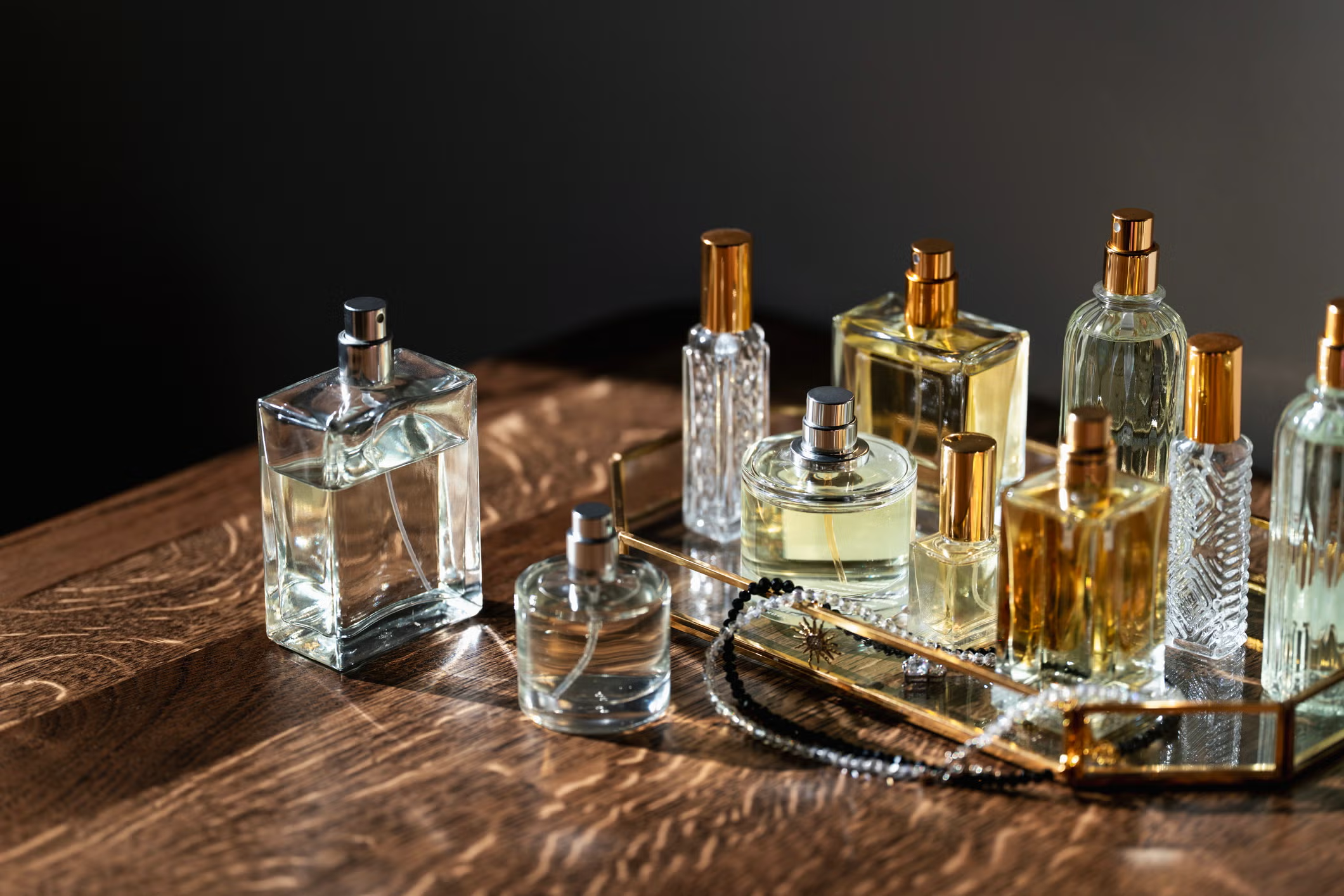
You buy a perfume because the first spray is nothing like the one you wore yesterday. This one opens with orange and spice; the other starts with lavender. A few hours later, both leave you with the soft sweetness you already have in several bottles. You can tell them apart if you try. On a Tuesday morning, you’re still reaching for them for much the same reason.
You keep buying perfumes that smell similar because you’re choosing what catches your attention in the shop or on the page, while wearing them for what they become later. Familiar notes can pull you towards the same kind of scent. Different brands, openings or bottle designs can make the choices feel more varied than they’ll be on your shelf.
If you want to break the pattern, compare the new perfume with the bottle it’s most likely to replace in your routine. Ask two things: does it smell different once it settles, and would I reach for it on a different day? Sometimes the answer you want is a better version of something you already wear. It helps to call that a replacement before paying for it.
The opening can change while the part you buy stays the same
When you’re shopping, the opening gets your attention first. That’s useful if you’re curious about a bright citrus or an unusual spice. But if you mostly enjoy perfume after it’s settled, you may repeatedly buy scents with different first impressions and a familiar finish. Looking for another brand won’t solve that if you still choose every perfume for the same warm, sweet dry-down.
Consider two published descriptions. Versace describes Eros Flame Eau de Parfum through citrus and pepper, with vanilla and tonka among the later notes. ScentRepublic’s Mon Guerlain Eau de Parfum listing describes lavender and jasmine with vanilla and sandalwood. The two listings give you different reasons to try the fragrances. They also give a shopper who already owns several warm vanilla perfumes a reason to check the finish before buying either.
This is a comparison of the descriptions, rather than a claim that the two perfumes are substitutes. On one wearer, the contrast between spice and lavender may matter from start to finish. Another might buy both for the same evening slot and end up wearing just one. The shared note is a reason to compare, not a verdict.
There’s a scientific reason to be cautious about treating notes as a checklist. In experiments on how people identify odour mixtures, A. Jinks and D. G. Laing investigated why people lose information about individual odours when they’re combined. A mixture can be perceived as a whole, with some components harder to pick out separately. The study wasn’t a comparison of retail perfume descriptions. It helps explain why counting shared notes is a poor substitute for smelling what those notes do together.
There are two ways a bottle can repeat what you own
A scent repeat is when two bottles give you much the same impression at the part of the wear you care about. That could be a clean, powdery finish or an earthy sweetness after a few hours. The difference may be real but too small to change what you’d choose. If you enjoy comparing subtle variations, that might be exactly why you want both.
A repeat happens when two perfumes compete for the same slot. A citrus and a soft musk can smell quite different and still serve as interchangeable work perfumes. If you want two options for work, that’s useful. If you’ve been buying to find something for cooler evenings and still reach for the same old bottle every time you go out, the collection hasn’t changed in the way you wanted.
There’s another possibility: the perfumes smell related, but a difference in how they wear gives each one a job. You might like both a quiet wood and a more noticeable wood because one suits the office and the other suits evenings out. The point of the check is to decide whether that difference matters in your week. It doesn’t have to be dramatic to be worth paying for.
| What you discover | What the purchase would add | What to do next |
| Similar settled smell, same occasion | A backup or replacement | Buy it when the old bottle runs low, unless you deliberately want both. |
| Similar settled smell, different practical use | A variation with a clear job | Test the difference where you’ll use it, such as at work. |
| Different settled smell, same occasion | More choice for a slot you already cover | Decide whether you want more options there or have another gap to fill. |
| Different settled smell, different occasion | A new option you may reach for | Sample it in that setting before paying for a bottle. |
Use the bottles you actually wear as your reference
Take out three perfumes: the one you use most, the one you hoped would give you something different, and the one you keep forgetting to wear. For each, write down the last time you wore it and what you could smell later that day. If you can’t remember, put it on tomorrow. You don’t need to estimate how many sprays are left or sort the whole collection into fragrance families.
Look for the part that keeps repeating. “All three get sweeter by lunch” is useful. So is “I wear every one of these on the same kind of day.” You can stop at that observation and write a short shopping brief: “Keep the orange opening, but I want a dry finish for warm afternoons.” That’s a narrower request than “Show me something different”, and it gives you something you can check against a product page.
Say you usually wear sweet woods and want something drier, but still want a woody character. ScentRepublic’s description of Hermès Bel Ami points to leather with a dry woody background. That gives you a specific direction to investigate. If you dislike leather, though, it’s a poor choice just for the sake of contrast. You could look for an earthy vetiver or a greener wood instead. You’re trying to change the feature you’re tired of while keeping enough of what you like.
Don’t make difference the only thing you’re shopping for
In consumer experiments on choosing variety, Rebecca Ratner, Barbara Kahn and Daniel Kahneman found that people sometimes switched to options they enjoyed less than they would have enjoyed repeating a favourite. The research didn’t test perfume purchases. It does offer a useful caution: the urge to add variety and the pleasure you get from the new choice can pull in different directions.
If you love several versions of the same style and wear them all, there’s no obligation to become someone who likes every fragrance family. You can break a buying habit without breaking with your taste. Spend less on similar discoveries, or wait until a bottle needs replacing, and keep the familiar scents you use.
Make the new sample compete with the right bottle
When you order samples online, choose one that changes the feature you identified. If your favourite perfumes become sweet later, look for a dry finish that still has something you enjoy. If the issue is that everything you own is too noticeable for a shared office, look for a more discreet option rather than switching from citrus to floral at random. A sample of something completely unfamiliar can be fun, but it answers a different question.
Wear the new sample on one day and its closest rival from your shelf on another. Use roughly similar amounts if the applicators allow, and give both a similar setting. Notice what you smell once each has settled and again later in the day. On a third suitable day, choose freely between them. Do you actually want the new one, or was it only interesting when you had nothing beside it?
You don’t have to run the comparison in a shop. If delivery in South Africa makes a single vial expensive, check whether you can try the exact version at a nearby counter or group the order with a second sample that answers a real question. ScentRepublic’s guide to buying perfume online covers sampling formats and checks to make before ordering. Confirm the version and total price in rand, including delivery, before comparing it with the cost of a bottle.
Imagine the sample wins because the sweetness is gentler and you’d rather wear it to work every week. That can justify a replacement, even if it smells related. If you’d choose the sample only on a certain kind of day, a small bottle may be enough. If you keep preferring the bottle you already own, you’ve found out something useful at the price of a sample.
When the similar option is the right one
Buy a similar perfume when you can name the improvement you want. Perhaps you want the same dry character with a softer opening, or you’re finishing a bottle and want something that fits the same routine. Compare the options directly before you buy. A new one has to be better for you in the way you specified; a different logo isn’t an improvement by itself.
If you already have two near neighbours and want to use both, put them somewhere equally easy to reach. Wear each for the sort of day it suits and see whether a difference in use emerges. If one keeps getting left behind, hold off on ordering another like it. You may have discovered which one you want to replace when it’s empty.
Frequently asked questions
Is it a waste to own several perfumes in the same family?
Only if they sit unused or you want a different result. Someone who wears woods almost every day may enjoy several versions. If you can’t think of a day when you’d choose the new one over what you own, wait before buying it.
How can I tell if two perfumes are too similar without testing them side by side?
Compare the later wear on separate days in similar settings and write down what you noticed without looking at the descriptions again. If the notes you make and the occasions you’d choose are nearly the same, you’ve got a reason to pause, even if you know the perfumes aren’t identical.
Will switching from designer to niche stop me buying the same style?
Only if you change what you look for. You can buy dry woods or sweet vanilla from either kind of brand. Decide which feature you want to change and use that when you shortlist, wherever you shop.
Should I avoid a note that appears in most of my bottles?
You don’t need to give up a note you like. If the problem is that everything becomes too sweet, look for a different level of sweetness or a drier finish rather than banning every listing that mentions vanilla. Sample the whole fragrance before deciding.
Does a new version of my favourite count as variety?
It can, if the difference makes you choose it for different reasons. Compare the exact versions after they settle and ask where each one fits. If they’re interchangeable for you, the new version may be a good replacement when you finish the old bottle.
Before your next order, put the new fragrance next to one you already own, at least on paper. Write one sentence about what the new one should do differently after it settles, or when you’d wear it instead. If you can’t finish that sentence, close the tab for now. The perfume you were looking for may already be on your shelf.
