

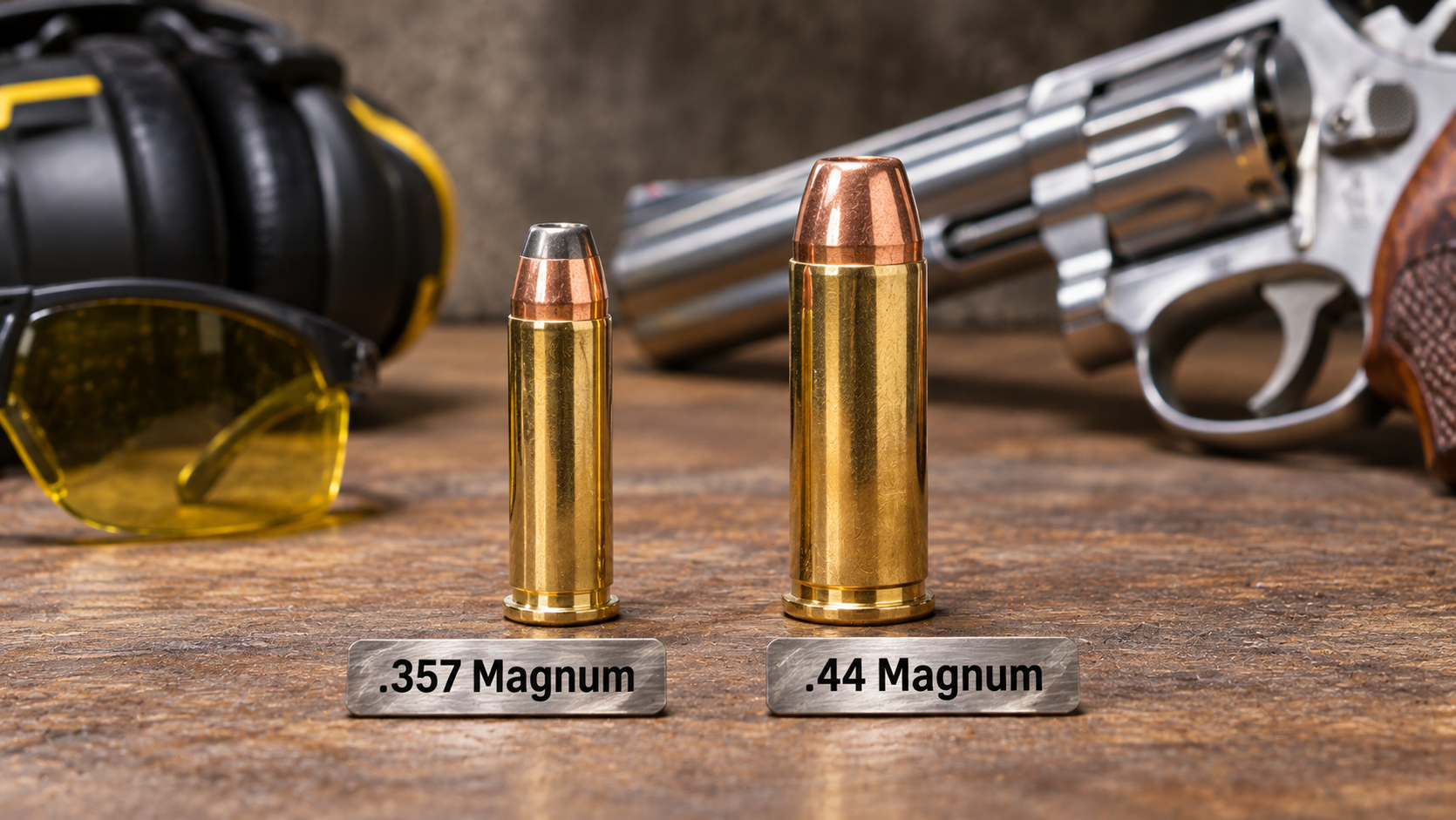
The history of modern handgun cartridges reflects decades of developments in firearm engineering, sporting traditions, and ammunition design. Among the best-known magnum cartridges are the .357 Magnum and .44 Magnum, both of which have earned lasting recognition in shooting history and popular culture.
Although they share the Magnum designation, these cartridges have distinct histories and identities. Understanding their background provides useful context for anyone interested in firearms history, sporting traditions, and responsible firearm ownership.
The History of Magnum Handgun Cartridges
The term Magnum is commonly associated with ammunition designed around particular performance and engineering characteristics. Its use in handgun cartridges became especially prominent during the twentieth century, as firearm manufacturers and ammunition developers introduced new designs.
The .357 Magnum appeared in 1935 and became an influential development in revolver history. Its introduction helped establish the Magnum designation as a recognisable category in the handgun world.
The .44 Magnum followed in 1955. It became widely recognised through sporting use, firearm history, and its prominent representation in popular entertainment.
Both cartridges remain familiar names among firearm enthusiasts, collectors, historians, and participants in regulated shooting sports.
Understanding the .357 Magnum
The .357 Magnum is one of the most historically significant revolver cartridges. Its long association with sporting firearms and revolver development has made it an important subject for collectors and enthusiasts.
The cartridge is particularly notable for its place in twentieth-century American firearm history. Its introduction influenced the development and marketing of subsequent revolver designs and contributed to the popularity of Magnum-branded handgun ammunition.
For historical reference, the 357 magnum designation continues to appear in discussions of classic revolvers, ammunition development, and sporting firearm history.
Its legacy is also connected to the broader evolution of handgun manufacturing, including improvements in materials, mechanical design, and ammunition standardisation.
Understanding the .44 Magnum
Introduced two decades after the .357 Magnum, the .44 Magnum developed its own distinctive identity in handgun history.
It became especially recognisable through its association with large-frame revolvers and its appearance in films and other popular media. This cultural visibility helped make the cartridge familiar even to people who have limited knowledge of firearms.
The 44 magnum designation is frequently discussed in relation to historic revolver models, sporting traditions, and the development of modern handgun ammunition.
Its place in firearm history illustrates how cartridge development can influence both mechanical design and public perceptions of particular firearm categories.
Why Ammunition Standards and Compatibility Matter
Ammunition is manufactured according to defined technical specifications. These standards help establish consistency in areas such as cartridge dimensions and pressure limits.
However, familiarity with a cartridge name should never be treated as confirmation that a particular round is suitable for a particular firearm.
Firearm owners should always consult the manufacturer’s documentation and verify the exact chambering and approved ammunition specifications. Ammunition should never be selected based solely on visual similarity or assumptions about compatibility.
Using incorrect ammunition can create serious safety risks. When there is uncertainty, advice should be obtained from a qualified firearms professional.
Firearm Safety and Responsible Ownership
Responsible firearm ownership requires consistent attention to safe handling, secure storage, and applicable legal requirements.
Basic safety principles include:
- Treat every firearm as though it is loaded.
- Keep the muzzle pointed in a safe direction.
- Keep fingers outside the trigger guard unless appropriate to the intended, lawful activity.
- Use suitable eye and hearing protection in designated shooting environments.
- Store firearms unloaded in secure, locked storage.
- Keep ammunition locked separately from firearms.
- Prevent access by children and unauthorised individuals.
- Follow the manufacturer’s instructions and applicable laws.
These principles are important regardless of the cartridge associated with a firearm. The US Bureau of Alcohol, Tobacco, Firearms and Explosives provides additional guidance on firearm handling, storage, and security.
The Importance of Legal Awareness
Firearm and ammunition laws differ considerably between countries and jurisdictions. Regulations may cover ownership eligibility, licensing, transportation, storage, permitted uses, and the circumstances under which ammunition may be possessed.
Anyone researching historical or sporting firearms should understand the legal framework that applies in their location.
It is equally important to recognise that online information may not reflect current local requirements. Official government guidance and qualified legal advice are more reliable sources when determining legal responsibilities.
The Continuing Legacy of Magnum Cartridges
The .357 Magnum and .44 Magnum occupy established places in firearm history. Their introductions represent important stages in the development of modern revolver ammunition, while their continued recognition reflects their influence on sporting traditions and popular culture.
Studying these cartridges offers an opportunity to understand how ammunition design, firearm engineering, and cultural history have developed together.
Ultimately, historical interest should go hand in hand with responsible ownership, technical accuracy, and respect for firearm safety regulations.
