

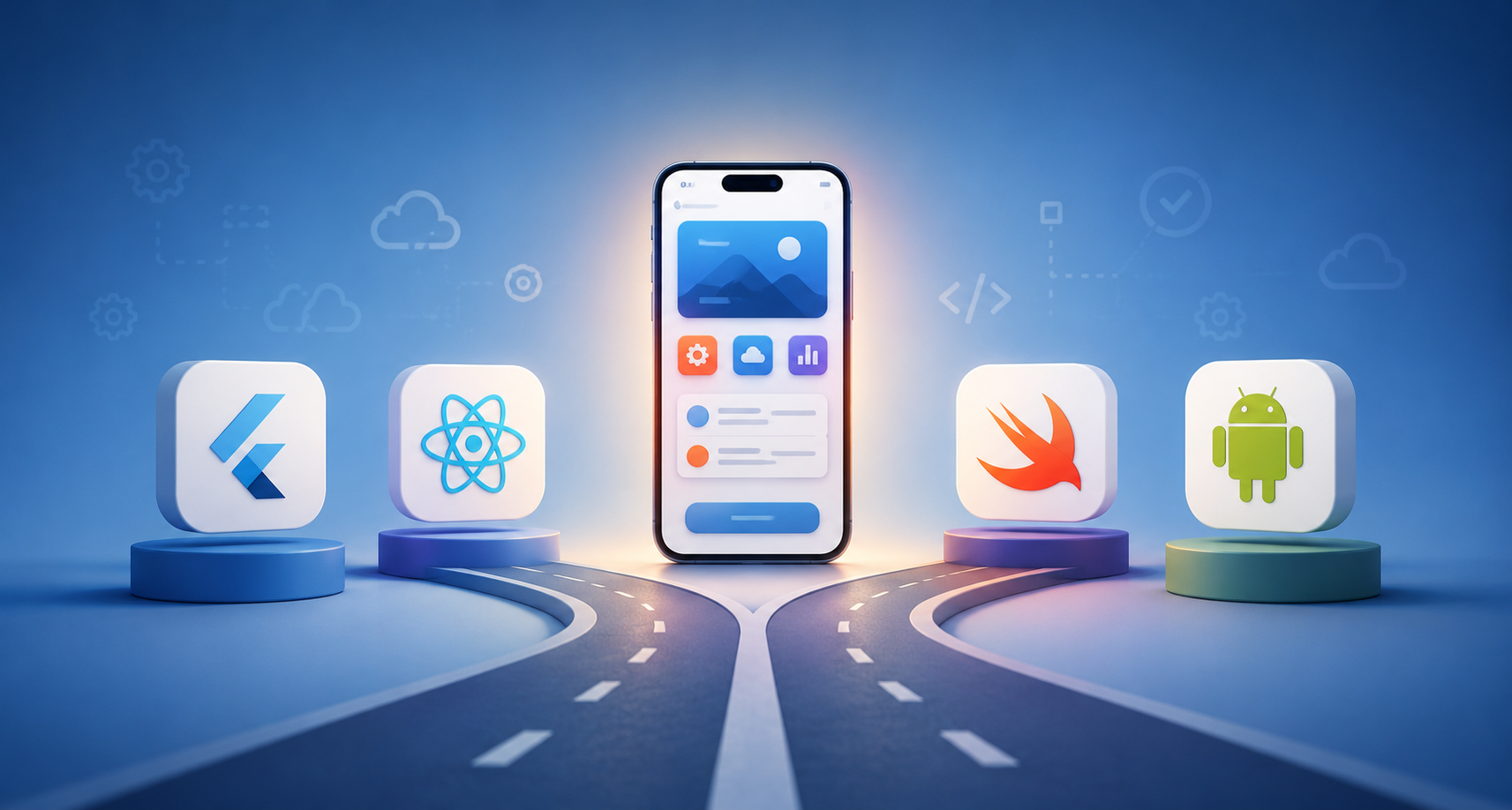
Building a mobile application is one of the exciting moments; however, prior to spending time and money on its creation, one has to make a crucial decision on which platform he or she needs to build the mobile app. As there are many tools, frameworks, and operating systems, choosing the appropriate one might turn into a difficult task, especially for those who have no experience in mobile app development.
Fortunately, being a technology expert is not required for making the right decision. The main thing one needs to know is what their target audience is, what their business objectives are, what budget they have and some other criteria.
In this guide, we will explore the key factors to consider, compare popular development approaches, and answer common questions to help you make the right choice.
1. Understand Your Target Audience First
Before comparing the two technologies, you need to think about the users of your application. The target audience should be a big factor when choosing the platform.
For example, if your intended users use iPhones, then Apple could be a good place to start. On the same note, if the majority of your intended users are using Android phones, you could prioritize Android first.
Consider these factors:
- User demographics: Learn about your users’ age group, geographical location, financial status, and device preference.
- Device preference: Know what type of device, iPhone or Android, is preferred by your potential users.
- Geographical location: The usage of Android is often high in some developing countries, whereas iOS has high market shares in developed countries like the US.
- User expectations: Consider the features, design standards, and functionality your audience expects.
Researching these details helps you choose the right mobile app platform based on actual user behaviour rather than assumptions.
2. Compare iOS and Android Development
One of the decisions that you are going to make is whether to use either the Apple iOS system or Google’s Android platform. Both provide great potential, but their programming environments and market audiences vary.
iOS App Development
iOS app development is centered on building applications for Apple’s devices, such as iPhones and iPads. Developers typically rely on Swift and Apple’s development tools to create applications.
Advantages include:
- App access to the existing Apple ecosystem.
- Homogeneous hardware and software platforms.
- High levels of integration with Apple services.
- Ability to target customers willing to pay for digital content.
However, Apple’s development guidelines and review process require careful attention. You also need access to suitable Apple development hardware and tools.
Android App Development
Creating apps for Android means designing apps for devices running on the Android Operating System developed by Google. Kotlin is one of the programming languages that have been widely used in this environment.
Advantages include:
- Access to a large global smartphone audience.
- Support for devices across different price ranges.
- Greater hardware variety and customisation opportunities.
- Flexibility when targeting different markets.
Android fragmentation can introduce additional testing requirements because applications must work across different manufacturers, screen sizes, and software versions.
iOS vs Android: Which Should You Choose?
However, neither of these two options can be considered better in all cases. It all depends on the audience you target, your products’ characteristics, and your company’s goals.
As an illustration, you should launch a premium subscription-based service for iPhone users first. On the other hand, your application meant for a wider Indian audience would do well by starting with Android.
3. Choose Between Native and Cross-Platform Development
Another important consideration is whether to build separate applications for each operating system or use a shared development approach.
Native App Development
Native app development means creating separate apps for iOS or Android, using each platform’s own programming languages and development tools. Native development is ideal where the application needs high performance, animation, processing, or hardware integration.
Native mobile applications usually offer great access to particular functions of the platform and are very polished. But at the same time, the separate maintenance of the code may increase the cost of development.
Cross-Platform App Development
Cross-platform app development lets developers build applications for multiple operating systems from one shared codebase.
Popular technologies include:
- Flutter: It was developed by Google and makes use of the Dart programming language.
- React Native: It is created and maintained by Facebook. This is supported by a huge developer community and uses JavaScript or TypeScript.
This strategy can lead to a reduction in duplication of effort during the process of software development. It is considered a feasible solution for small businesses and startups with limited resources.
4. Evaluate Your Budget and Development Costs
Budgeting is the first thing that you have to take into consideration in your first application plan. You need to think about both initial and continued costs of development.
The cost of developing a mobile app depends on several factors, including:
- Application complexity and feature requirements.
- UI and UX design.
- Backend infrastructure and API integration.
- Developer experience and location.
- Testing and quality assurance.
- Ongoing maintenance and updates.
For example, an application with simple functionalities such as login, user account information, and informational content would consume less effort and resources than an application that is very complicated, like marketplaces or real-time delivery applications.
Also, in your app development budget, take into account the costs involved in hosting, security upgrades, third-party services, and app store accounts. When dealing with budget constraints, create an MVP (Minimum Viable Product). An MVP is the minimum feature set needed to launch your idea and get feedback from actual customers.
This strategy is especially applicable in the case of application development for startups.
5. Consider Performance and User Experience
A successful application should be easy to use, responsive, and reliable. Your technology choice should support the experience you want to deliver.
Consider the following:
Performance of application: In case your application deals with games, video processing, augmented reality, and animation, analyze the potential performance gains provided by the native implementation.
User experience: The user experience of your application should match the user expectations depending on the platform.
Compatibility of platform: Determine whether your chosen framework provides support for the devices and OS that your target audience uses.
Security: Think about security aspects from the very beginning – authentication, encryption, secure storage of data, etc.
The best platform for mobile app development is ultimately the one that supports your application’s functionality without compromising usability or reliability.
6. Will Your App Technology Keep Up with Your Business Growth?
Your first version is only the beginning. As your business grows, your application may need new features, additional integrations, and support for more users.
Before making a decision, consider long-term requirements such as:
- App scalability: Can the technology support increasing users and more complex features?
- App maintenance: Will your team be able to manage updates, bug fixes, and security improvements?
- Development timeline: How quickly can you introduce new functionality?
- Developer availability: Is it easy to find experienced developers who work with your chosen technology?
Consider also your application’s monetization model. No matter which of the above models you choose (subscriptions, in-app purchases, ads, paid downloads), ensure that the ecosystem you choose is compatible with your business model.
Your choice today should not restrict the future development of your application.
7. Compare Popular Mobile App Development Platforms
When exploring different mobile app development platforms, focus on your project requirements rather than choosing a technology simply because it is popular.
Here is a quick comparison:
| Development approach | Best suited for | Main advantage |
| Native iOS | Apple-focused audiences | Platform integration |
| Native Android | Android-focused audiences | Device flexibility |
| Flutter | Multiple platforms | Shared codebase |
| React Native | Multiple platforms | JavaScript ecosystem |
Flutter app development is worth considering when you want consistent interfaces and a shared codebase across platforms.
React Native app development may be suitable if your development team already has experience with JavaScript or React.
The right choice depends on your technical requirements, team capabilities, and long-term product plans.
8. Make Your Decision Based on Business Requirements
Before finalising your mobile app platform selection, bring together everything you have learned about your audience, budget, features, and future goals.
Use these practical guidelines:
- Use native development if your application needs some advanced capabilities specific to the platform or heavy processing.
- If you would like to release an application for several operating systems at once using one codebase, use Flutter or React Native.
- If your research shows that there is a preference for one particular operating system among your target audience, start with it.
- Keep in mind cross-platform capability if it is necessary from the very beginning.
Don’t base your choice only on the cost of development. A less costly approach might eventually prove costly when it will not be able to meet your future needs.
Think about having a conversation with experienced developers, getting professional advice and analyzing a small prototype before taking up the whole project.
Conclusion
The selection of appropriate technologies becomes one of the key aspects of your first mobile app development process. Your choice will define the performance of your product, its price and further scalability.
At first, get acquainted with the needs of your audience, determine your basic features and set up your budget. Then decide whether you should use native or cross-platform technologies depending on your business goals. Keep in mind that there is no ideal solution which fits every application.
With correct planning and development strategy, you may create your application, which will be valuable for your users and have great potential for future growth.
Frequently Asked Questions (FAQs)
1. What Is the Difference Between Native and Cross-Platform App Development?
The process of native development entails creating individual applications on iOS and Android through platform-specific programming languages. On the other hand, cross-platform development refers to the use of a common source code base to develop applications across various platforms.
2. Is React Native Better Than Flutter for App Development?
Neither framework can be considered intrinsically superior. React Native is an excellent choice for developers who are adept at JavaScript and React, whereas Flutter provides a highly adaptable UI toolkit as well as a unified design system.
3. How Do I Choose a Mobile App Platform Based on My Target Audience?
Begin by looking into what devices your target users like. Examine where they come from geographically, what age group they belong to, how much they spend, and what operating system they use. If the majority of your users are iPhone fans, then go for iOS first. If they are Android users, choose Android over any other platform.
4. Can I Switch My App to Another Platform Later?
Yes, you can expand or migrate your application to another platform later. However, the process may require code restructuring, redesigning certain interfaces, testing, and additional development resources. Planning for future expansion from the beginning can make this transition easier and more cost-effective.
5. What Factors Should I Consider Before Choosing a Mobile App Development Platform?
Take into account your audience, feature set, cost, schedule, performance demands, security, scalability, and maintenance. Also, consider your developers’ availability, third-party integration issues, and distribution issues. The comparison of these aspects will allow you to make a wise decision and achieve your goals.
