

Most women have heard of endometriosis and fibroids. Far fewer know about adenomyosis, a common condition that can cause heavy, painful periods and is often overlooked. Here’s what you need to know.
“Nobody Ever Mentioned It”
Your periods have always been a bit uncomfortable, but over the past few years, they’ve become something else entirely. The cramps are deeper and last longer. The bleeding is heavier, with clots that alarm you. Your lower belly feels swollen and tender, even between periods.
You’ve had scans before. Maybe you were told your uterus looked “a little bulky”. Maybe someone mentioned fibroids, or suggested it might be endometriosis. But the word adenomyosis never came up.
You’re not alone. Adenomyosis is common, but it’s one of the least talked-about causes of heavy and painful periods.
What Is Adenomyosis?
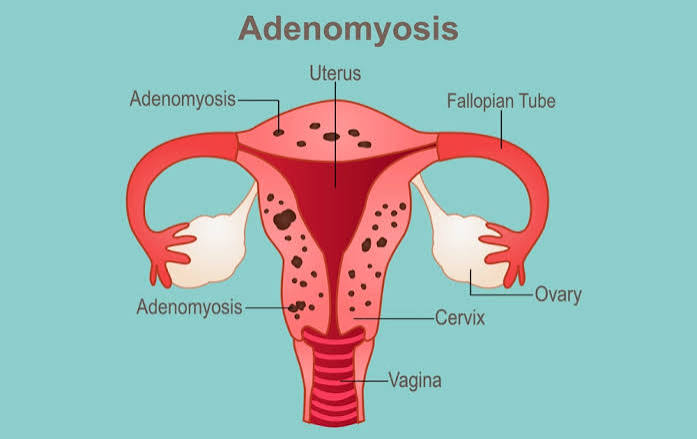
The uterus has two main layers: an inner lining called the endometrium, which sheds each month as a period, and a thick muscular wall called the myometrium.
In adenomyosis, tissue from the inner lining grows into the muscular wall. This tissue continues to respond to monthly hormone changes, thickening and bleeding within the muscle. The result is inflammation, pain and a uterus that becomes enlarged, tender and “boggy”.
Diffuse or focal
Adenomyosis can spread throughout the uterine wall, known as diffuse adenomyosis, or form a more defined area, known as focal adenomyosis. A distinct, fibroid-like lump of adenomyosis is sometimes called an adenomyoma.
How Is It Different From Endometriosis and Fibroids?
These three conditions are often confused, and they can occur together.
Adenomyosis vs endometriosis
Both involve tissue similar to the uterine lining growing where it shouldn’t. In endometriosis, the tissue grows outside the uterus, on the ovaries, tubes or pelvic lining. In adenomyosis, it grows within the muscle wall of the uterus itself.
Adenomyosis vs fibroids
Fibroids are distinct, rounded growths of muscle and fibrous tissue with a clear edge. Adenomyosis tends to be more spread out and blends into the surrounding muscle, without a clear border. This difference matters for treatment, as fibroids can often be removed cleanly, while adenomyosis usually cannot.
Who Gets Adenomyosis?
The exact cause isn’t fully understood, and adenomyosis can affect women of any reproductive age. It’s most often diagnosed in women in their 40s and 50s, but improved imaging means it’s increasingly being identified in younger women too.
Factors that may be linked to a higher risk include:
- Having had children
- Previous surgery on the uterus, such as a caesarean section or fibroid removal
- Endometriosis
- Being in the later reproductive years
Adenomyosis usually improves after menopause, when oestrogen levels fall.
Signs and Symptoms
Some women with adenomyosis have no symptoms at all. Others experience:
- Heavy periods – soaking through pads or tampons quickly, passing clots or flooding
- Painful periods – often severe, crampy and getting worse over time
- Prolonged periods – bleeding that lasts longer than usual
- Chronic pelvic pain – a dull ache or pressure, even between periods
- Pain during sex – often felt deep inside
- A swollen lower abdomen – due to an enlarged uterus
- Tiredness – often from anaemia caused by heavy bleeding
Adenomyosis and Fertility
Research suggests that adenomyosis may be linked to difficulty conceiving, a higher risk of miscarriage and some pregnancy complications. However, many women with adenomyosis go on to have healthy pregnancies.
If you have adenomyosis and are planning a pregnancy, or have been trying without success, it’s worth discussing your options with a gynaecologist. Treatment can often be tailored to protect your fertility.
How Is Adenomyosis Diagnosed?
For a long time, adenomyosis could only be confirmed after a hysterectomy, by examining the removed uterus. Today, imaging has improved considerably.
Examination
During a pelvic examination, the uterus may feel enlarged, soft and tender.
Ultrasound
A transvaginal ultrasound is usually the first test. Certain features, such as a thickened, uneven uterine wall, small cysts in the muscle or a globular-shaped uterus, can point to adenomyosis.
MRI
An MRI scan gives a more detailed view and can help distinguish adenomyosis from fibroids, especially when planning treatment.
Treatment Options
The right treatment depends on your symptoms, your age and whether you want to have children.
Pain relief
Anti-inflammatory painkillers, taken from the start of your period, can ease pain and may reduce bleeding.
Medication to reduce bleeding
Tranexamic acid, taken during your period, can reduce heavy bleeding.
Hormonal treatments
Because adenomyosis responds to hormones, treatments that thin the uterine lining or reduce periods can help. Options include:
- A hormonal intrauterine device (IUD) – which releases a progestogen directly into the uterus and is often very effective at reducing bleeding and pain
- Progestogen tablets
- Combined contraceptive pills
- Medications that temporarily lower oestrogen levels – sometimes used for short periods
Hormonal treatments manage symptoms rather than cure the condition, and symptoms may return when they’re stopped.
Uterus-preserving procedures
For some women, particularly those with focal adenomyosis who want to keep their uterus, surgery to remove the affected area may be an option. This surgery is more complex than fibroid removal because adenomyosis lacks a clear border, and it isn’t suitable for everyone.
Other procedures, such as uterine artery embolisation, may be considered in selected cases.
Hysterectomy
A hysterectomy, removing the uterus, is the only definitive cure for adenomyosis. It may be considered for women with severe symptoms who have completed their families and haven’t found relief with other treatments. In many cases, it can be performed through minimally invasive (keyhole) surgery.
Living With Adenomyosis
Alongside medical treatment, these steps may help you feel better:
- Track your periods – note bleeding, pain and other symptoms to share with your doctor
- Check your iron – heavy bleeding can cause anaemia; ask about a blood test
- Use heat – a warm compress or hot water bottle can ease cramps
- Stay active – gentle exercise may help with pain and mood
- Speak up – if your treatment isn’t working, let your doctor know, as there are often other options
You Don’t Have to Just Live With It
Adenomyosis is common, real and treatable. If heavy, painful periods are wearing you down, the right diagnosis can open the door to treatments that make a real difference.
Consult a gynaecologist if your periods are becoming heavier or more painful, or if you have ongoing pelvic pain.
Please note that this article provides general health information and cannot replace a diagnosis or treatment plan from a doctor who has examined you.
