

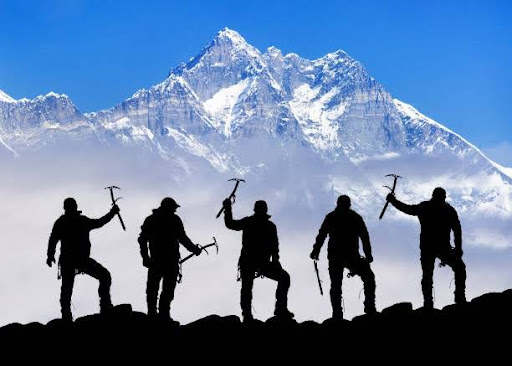
The world’s highest mountain, Mount Everest, is a well-liked travel destination for thrill-seekers and climbers. But ascending the mountain is a risky and difficult task that calls for strength, endurance, and competence. Situated in Mount Everest’s death zone, Rainbow Valley is one of the mountain’s most hazardous locations.
I go into the history, legends, and current events surrounding Rainbow Valley Mount Everest in this blog entry concerning the area.
Fast Facts About Everest’s Rainbow Valley
- Tenzing Norgay and Edmund Hillary made the first-ever verified climb of Mount Everest in 1953. Over 300 climbers have sadly lost their lives on the peak since then, the most of them died inside the Death Zone.
- Because of the decreased air pressure at high altitudes, a person can only breathe in roughly 30% of the oxygen that they would at sea level.
- In the Everest Death Zone, a person used to sea-level conditions might pass out in two to three minutes without sufficient acclimatization.
- Climbers often need to spend up to 12 hours on the arduous 1.72km walk from South Col to Everest’s summit due to the extreme conditions found in the Death Zone.
- According to the “Mortality on Mount Everest” study, acute exhaustion and delayed summit timings are early predictors associated with further fatalities.
- One in four Everest climbers may experience retinal hemorrhages; while these conditions frequently get better when they descend to lower elevations, they can still be lethal in the Death Zone.
On Mount Everest, where is the Rainbow Valley located?
Rainbow Valley sits above Everest’s 8,000-meter summit.
The lesser-known region of Everest, sometimes referred to as the “Rainbow Valley,” reveals the darker side of the mountain. The reality is a far cry from the idyllic picture that the term may evoke. This area is a haunted cemetery for climbers who have suffered untimely deaths. At a height of more than 8,000 meters, the bodies are scattered beneath Mount Everest’s northern slope, a terrifying reminder of the mountain’s dangers.
The region gets its colorful name from these bodies, which are dressed in vivid orange, red, blue, and green coats. Tents, cans, and oxygen tanks are among the multicolored debris that adds to this desolate site’s rainbow-like aspect.
What is the origin of the name Rainbow Valley MT Everest?
The many vibrantly colored jackets and equipment belonging to the dead climbers are the source of the term Rainbow Valley Mount Everest. They are seen, strewn across the slopes blanketed with snow. These hues combine to provide a stunning rainbow-like image that is strange and eerie.
The phrase “Rainbow Valley” was not originally used, but it gained traction between 1990 and 2010 when the number of fatalities on Mount Everest rose. The death zone serves as a somber memorial to those who have lost their lives attempting to complete this ultimate climbing task as well as a sobering reminder of the risks and perils associated with trying to summit the highest peak in the world.
More than 300 climbers have lost their lives in the Death Zone since 1922. 2015 was the bloodiest year on Everest due to an avalanche that claimed the lives of at least 19 climbers. It was a tragic milestone. As the number of casualties continues to rise, Rainbow Valley is home to an ever-expanding array of vivid colors.
What is causing the bodies to pile up in Rainbow Valley Mount Everest?
There is only room for one person at a time on the incredibly tight trail that leads to the summit in the death zone. As a result, climbers who die along this dangerous section have their bodies pushed down to Rainbow Valley and the area below. Therefore, the largest open-air cemetery in the world will serve as the ultimate resting place for anyone who passes away in the death zone.
Climbing up Mount Everest and in Rainbow Valley is a risky undertaking that carries a significant risk of harm or death. The area’s climbing dangers include falls, avalanches, hypothermia, frostbite, and altitude sickness. Because of this, over the years, a large number of climbers have perished on Mount Everest, leaving behind their bodies—often in Rainbow Valley.
It is almost impossible to recover everybody because of the challenging terrain and high altitude. As a result, they stay on the mountain, leaving behind a gruesome environment that acts as a sobering reminder of the risks involved in climbing.
What Befalls Those Who Pass Away in Rainbow Valley?
Most of these deaths occur in the “death zone” of Everest, which is above an elevation of 8,000 meters. Survival is constantly hampered by the inhospitable environment, which is characterized by thin air, severe weather, and strong winds. The death zone’s tight paths leave little room for the dead, frequently shoving them aside to find their final resting place in Rainbow Valley.
Rainbow Valley’s extreme altitude and challenging terrain make recovering dead bodies a risky, expensive, and frequently fruitless undertaking. Many of the bodies that were left behind on the mountain as a result have become climbing landmarks, acting as a somber reminder of the risks involved in climbing.
Retrieving a body costs more than $70,000. Even when this amount is paid, the recovery procedure is still difficult and could result in more deaths. Two Nepalese mountain climbers died in 1984 trying to retrieve a body from the death zone. Even with plenty of money, there’s no guarantee that a body will be recovered. There are more bodies in Rainbow Valley than there are retrieval teams ready to take on.
A climber who has died in Mount Everest’s Rainbow Valley
Everest has a long history of climbing, thus there are many well-known tales of past climbers. Even though the ascent can take months, mountaineers are known to tell legendary stories about the peak and some of the well-known people who have died on Everest and are still alive in Rainbow Valley. Among these tales, the most well-known ones are Hannelore Schmatz, Sleeping Beauty, and Green Boots.
1. The Green Boots
On Rainbow Valley Mt Everest‘s main Northeast ridge route, the unidentified body (unofficially) of a climber promoting green boots became a monument. The name comes from the vivid green mountaineering boots that were apparent to other climbs and adorned the body of the deceased climber.
A horrible event occurred to Green Boots during the disastrous 1996 Everest expedition. The body’s location—in a busy area close to the summit—serves as a terrifying reminder of how dangerous the mountain can be. This eerie scene, which serves as a sobering reminder of the hazards and difficulties they confront during their journey, is frequently passed by climbers en route to the summit.
2. Francys Arsentiev’s Sleeping Beauty
On May 22, 1998, Francys Arsentiev, dubbed Sleeping Beauty, became the first American woman to reach the top of Mount Everest without the need for oxygen support. But following her husband’s and Francy’s successful summit ascent, she started to feel nervous going down. After three days, a rescue squad discovered her stuck on the mountain without further oxygen.
She was critically frostbitten, scarcely breathing, and on the verge of death when the team found her. Although the team made every effort to rope her down the mountain as far as they could, it was too difficult to lower her any farther. They thus abandoned her to die in the shadow of Mount Everest. They called her “Sleeping Beauty” after seeing her resting on her back, looking like a contented sleeper.
3. Mountaineer from Germany, Hannelore Schmatz
The first female mountaineering fatality on Mount Everest’s slopes was German mountaineer Hannelore Schmatz. She and her spouse went up the mountain in 1979 with a group of six climbers and five sherpas. The group made it to the peak with triumph. But Hannelore and American climber Ray Genet became too tired to return on the descent. They decided to stay overnight in the death zone with a sherpa.
After a snowfall, Ray Genet succumbed to hypothermia. Hannelore later fell and never came back up, dying at 8290 meters, but she and the sherpa made it out alive. Her body stayed on the mountain for years, and when two climbers perished trying to retrieve it, it became the focus of a terrible tale. Her body was eventually carried off by powerful winds.
4. Scott Miller
An accomplished mountaineer, Scott Fischer has ascended Everest several times before. Nevertheless, he was fatigued and experiencing the consequences of high altitude during his tragic climb in 1996. Even though his teammates did their best to find and rescue him, Scott finally gave up on his physical and environmental difficulties. On the peak that he had grown to know so well, he sadly lost his life.
His death and the deaths of several others on that fatal day have remained a constant reminder of the harshness of Everest and the necessity of meticulous planning, preparation, and judgment when ascending at such high heights.
The film “Everest” did a great job of documenting Fischer’s story. Check out my blog post on the top Everest movies if you’d like to view more amazing films of a similar kind!
Key insights: Everest’s Rainbow Valley
Though many obstacles and dangers are involved, climbing Mount Everest remains the ultimate goal for many climbers worldwide. The unmatched sense of achievement one gets from reaching the top of Earth inspires people to take these risks.
With thousands of successful summits and a death rate of less than 1%, Mount Everest continues to be a popular travel destination for explorers worldwide. The southern route from Nepal and the northern route from Tibet are the two main ways that go to the summit. Both the most popular and somewhat faster way is the southern one, which Tenzing Norgay and Sir Edmund Hillary famously used in their historic 1953 climb.
Setting off on an Everest expedition requires a combination of past high-altitude climbing expertise, steadfast dedication, physical stamina, and mental toughness. Climbers must overcome unique hurdles posed by the unfavorable climate and great elevation to fulfill their aim of reaching the summit.
Precise planning, extensive training, and a determined attitude are essential for individuals who are willing to step outside of their comfort zones and take on the Everest quest. The chance to climb the highest mountain in the world and see the planet from 8,848 meters (29,029 feet) above is a once-in-a-lifetime event and, despite the risks involved, a dream for many daring people.
