

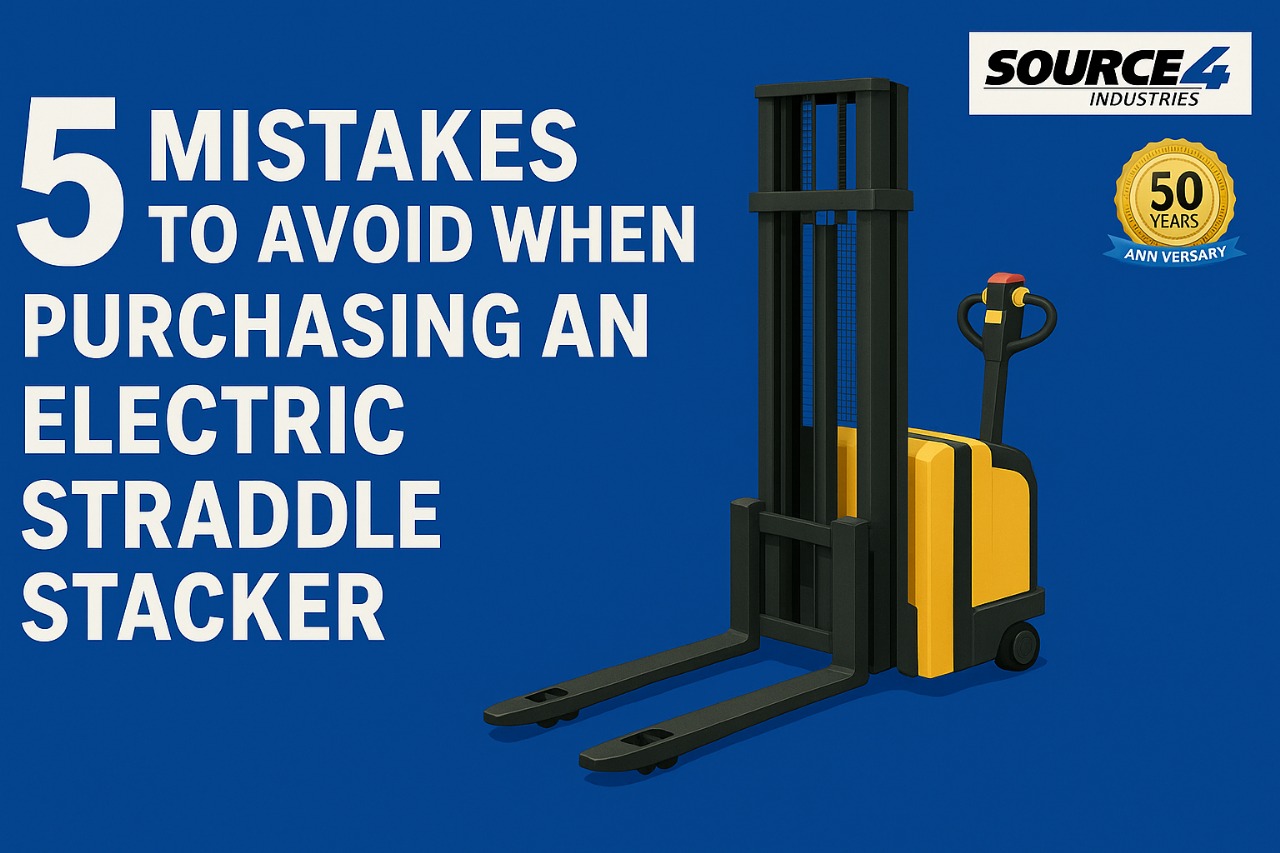
Electric straddle stackers are quickly becoming a warehouse, manufacturing, and retail backroom staple- and for good reason. These incredibly versatile machines fill the gap between manual pallet jacks and electric forklifts with their ideal efficiency, accuracy, and safety. But as with any equipment purchase, buying the wrong model can equate to operational frustration, lost dollars, and long-term inefficiencies. This blog will list five of the most typical mistakes to steer clear of while purchasing an electric straddle stacker.
1. Failing to Consider Load Capacity and Lift Height Needs
The most common mistake that buyers commit is underestimating or overestimating the load capacity and lift height needs. Every facility has specific requirements depending on the types of inventories, racking systems, and storage sizes.
Why it matters: Choosing an electric straddle stacker that cannot lift heavy loads or reach the highest shelves results in workflow disruptions and safety risks.
Avoid it: It is important to analyze the weight and size of your standard loads. Once done, match the figures against the stacker’s rated capacity and lift height. If you’re unsure, it is wise to consult a material handling expert. Doing so can help you evaluate your workspace and recommend the right model.
2. Not Considering Aisle Width and Maneuverability
Electric straddle stackers provide less maneuverability, particularly in thin aisles. Purchasing a unit that is larger than your warehouse configuration can make everyday operations a great deal to handle.
Why it matters: Inefficient operations, possible product damage, and higher operator fatigue result from equipment size and aisle width mismatch.
Steer clear of it: Measure aisle widths precisely and evaluate your turning radius requirements. If space is extremely tight, look into straddle stackers with a reduced chassis size or even electric forklifts with unique narrow-aisle designs.
3. Forgetting Battery Performance and Charging Infrastructure
Battery life is the cornerstone of any electric stacker’s operation. Selecting a low-capacity battery or forgetting your facility’s charging infrastructure can result in unplanned downtimes and lower productivity.
Why it matters: If your stacker is unable to survive a complete shift or charges too slowly, you are risking bottlenecks in your material flow process.
Avoid it: Consider your operating times and select a battery that accommodates multi-shift operation, or buy an extra battery for hot-swapping. Also, consider your existing power setup to make sure it is compatible with the charging system. Companies that incorporate smart battery management, like innovations in new electric forklifts, are well worth the cost.
4. Ignoring Serviceability and Maintenance Support
Electric straddle stackers, as with all material handling equipment, require periodic maintenance to remain in top working condition. Too many purchasing managers, however, are interested only in specs and price, ignoring long-term serviceability.
Why it matters: Inadequate support, restricted parts supply, or cumbersome maintenance requirements can result in extended downtimes.
Avoid it: Select a stacker brand that has a reputation for aftermarket support and simple-to-source parts. Find suppliers that provide scheduled maintenance packages or partner with reputable players in industrial servicing, like those with expertise in Lincoln Lubrication systems, which ensure equipment stays well-lubricated and running smoothly.
5. Selecting Price Over Total Value
Although budgeting is crucial, the lowest-priced electric straddle stacker does not always offer the best results. Poor performance, maintenance, and equipment life are commonly compromised for the least expensive option.
Why it matters: Short-term cost savings could become a long-term money drain if the machine doesn’t work efficiently or constantly breaks down.
Steer clear of it: Look at the overall cost of ownership (TCO)- that is, purchase price, energy usage, maintenance, operator training, and replacement parts. Spending more on a quality product initially will pay greater dividends in the long term.
Final Thoughts
Buying an electric straddle stacker is not merely a transaction. It’s a strategic move that directly impacts the productivity and safety of your operations. By steering clear of the pitfalls discussed here, you can make sure that your new equipment pays dividends from day one.
Whether you’re adding to your electric forklift fleet or bringing your first stacker on board, keep these things in mind. The performance, safety, and support must take precedence over short-term cost savings. And don’t forget to keep your machines running smoothly with regular servicing and lubrication- trusted solutions such as Lincoln Lubrication products can pay big dividends by helping extend the life of your equipment.
