

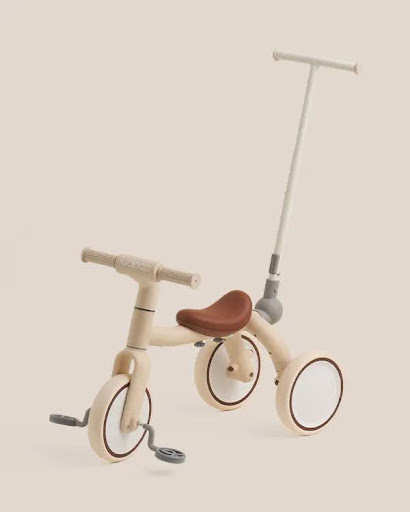
Balance bikes have revolutionized how young children learn to ride, offering a natural and intuitive approach to mastering two-wheeled mobility. Unlike traditional bicycles with training wheels, these pedal-free bikes allow children to focus on the fundamental skill that makes cycling possible: balance. As parents and educators increasingly recognize their value, childrens balance bikes have become an essential tool in early childhood development.
Learning to coordinate body movements while maintaining balance presents a significant challenge for toddlers and preschoolers. Their developing motor skills, spatial awareness, and confidence must all work together harmoniously. Many children struggle with the fear of falling or the frustration of not being able to control their movements, which can discourage them from pursuing physical activities that build these crucial abilities.
Balance bikes address these challenges by transforming skill development into an enjoyable adventure. They promote core strength, spatial awareness, and motor coordination while allowing children to progress at their own pace. Beyond physical benefits, these simple yet effective tools foster independence, boost self-esteem, and create positive associations with outdoor play and exercise that can last a lifetime.
Understanding Coordination and Balance
Coordination and balance form the foundation of nearly every physical activity children will encounter throughout their lives. These interrelated skills enable toddlers to walk steadily, navigate stairs, catch a ball, and eventually participate in sports and recreational activities. During the early years, the brain rapidly develops neural pathways that connect sensory input with motor responses, making this period critical for establishing these fundamental abilities.
Between ages two and five, children experience remarkable growth in their vestibular system, which controls balance and spatial orientation. They progress from tentative, wide-stance walking to running, jumping, and navigating uneven surfaces with increasing confidence. Their proprioception—the body’s awareness of its position in space—sharpens considerably during this window. Meanwhile, bilateral coordination emerges as children learn to use both sides of their body in synchronized or alternating patterns, essential for activities ranging from climbing to eventually pedaling a bicycle.

When these developmental milestones unfold naturally through active play, children build not only physical capabilities but also cognitive connections. The cerebellum, responsible for coordinating movement, works in concert with other brain regions to process spatial information and plan motor sequences. Children who develop strong coordination and balance early tend to approach new physical challenges with greater enthusiasm and persistence, creating a positive feedback loop that encourages continued active exploration of their environment.
Introducing Balance Bikes
Balance bikes are streamlined two-wheeled vehicles designed specifically for young children, typically between 18 months and five years old. Unlike conventional bicycles, they have no pedals, chains, or training wheels. Children propel themselves forward by pushing off the ground with their feet while seated, allowing them to glide and steer without the complexity of pedaling. This elegant simplicity makes balance bikes fundamentally different from traditional learning methods that often overwhelm beginners with multiple simultaneous tasks.
The design philosophy behind balance bikes prioritizes the most essential cycling skill: maintaining equilibrium while in motion. When children use training wheels, they develop a false sense of stability that doesn’t translate to actual bike riding. The transition from training wheels to a standard bicycle often proves traumatic because children must suddenly learn balance from scratch. Balance bikes eliminate this problematic gap by teaching equilibrium first, making the eventual addition of pedals feel like a natural progression rather than a frightening leap.
Children who master balance bikes typically transition to pedal bicycles without difficulty, often skipping training wheels entirely. The confidence gained from controlling their speed with their feet creates a secure foundation for learning. Most children can move from a balance bike to a regular bicycle within days rather than weeks or months. This approach respects children’s developmental readiness, allowing them to build skills incrementally while experiencing immediate success and enjoyment, which reinforces their motivation to continue practicing and improving.
Promoting Physical Development
Balance bikes engage multiple muscle groups simultaneously, creating a comprehensive workout disguised as play. As children push off the ground repeatedly, they strengthen their leg muscles, particularly the quadriceps, hamstrings, and calves. The continuous effort required to propel themselves forward builds endurance gradually, increasing their stamina for physical activity without the monotony of structured exercise. The seated position and forward motion also engage core muscles as children work to maintain upright posture while navigating different terrains and speeds.
Gross motor skills flourish through balance bike use as children coordinate large muscle movements with spatial awareness. Steering requires them to shift their body weight deliberately, teaching them how subtle movements create significant directional changes. They learn to anticipate how their actions will affect their trajectory, developing the ability to plan movements in advance rather than simply reacting. This forward-thinking approach to physical activity represents a sophisticated cognitive-motor integration that benefits countless future activities, from sports to dance to everyday navigation of their environment.
The dynamic nature of balance bike riding constantly challenges children’s equilibrium in productive ways. Unlike static balance exercises, riding requires continuous micro-adjustments as terrain changes, speed varies, and turns approach. Children develop what therapists call “dynamic balance”—the ability to maintain stability while moving and responding to environmental changes. Their vestibular system receives rich sensory feedback with every ride, strengthening the neural pathways that process balance information. Over time, these repeated experiences create automatic responses, allowing children to balance effortlessly while their conscious attention focuses on navigation, speed control, and enjoying the experience of movement through space.
Encouraging Exploratory Play
Balance bikes transform ordinary outdoor spaces into exciting territories waiting to be discovered. Children naturally seek variety in their riding experiences, gravitating toward gentle slopes, smooth paths, grassy areas, and textured surfaces that offer different sensations and challenges. This intrinsic curiosity drives them to test their abilities in diverse conditions, expanding their comfort zone incrementally. A slight downhill grade that seemed daunting yesterday becomes today’s thrilling adventure, while tomorrow brings interest in navigating around obstacles or riding on different surfaces.
The independence balance bikes provide encourages children to make decisions about their play. They choose their speed by controlling how forcefully they push off, decide which paths to explore, and determine when to attempt something more challenging or return to familiar territory. This autonomy fosters decision-making skills and risk assessment in a low-stakes environment where consequences remain manageable. When children occasionally misjudge a turn or move too quickly, their feet provide immediate braking and stabilization, allowing them to learn from minor mistakes without serious falls.
Social exploration flourishes when children ride balance bikes together. They naturally create games, races, and follow-the-leader scenarios that build cooperation and friendly competition. Watching peers attempt new challenges inspires children to expand their own capabilities, while collaborative play teaches them to navigate shared spaces respectfully. Parks and playgrounds become dynamic learning environments where physical skills, social interactions, and imaginative play converge, creating rich developmental experiences that screen-based activities simply cannot replicate.
Educational Benefits of Balance Bikes
Balance bikes serve as powerful learning tools that extend far beyond physical development, engaging children’s cognitive abilities in meaningful ways. Each riding session presents countless micro-decisions that require problem-solving: determining the best path around an obstacle, calculating whether a slope is manageable, or figuring out how to navigate a tight turn without losing momentum. Children constantly process sensory information—visual cues about terrain ahead, proprioceptive feedback about body position, vestibular input about balance—and make rapid adjustments based on this data. This complex mental processing strengthens executive function skills, including planning, adaptability, and self-regulation.
Spatial reasoning develops naturally as children learn to judge distances, angles, and their relationship to objects in their environment. They begin understanding concepts like speed and momentum through direct experience rather than abstract instruction. When a child realizes that pushing off harder makes them go faster but also makes stopping more challenging, they’re engaging in cause-and-effect reasoning. They learn to estimate whether gaps between obstacles are wide enough to pass through, developing mathematical thinking about measurement and comparison. These spatial and logical skills transfer to academic contexts, supporting geometry comprehension, scientific thinking, and even reading as children learn to navigate text on a page.
The trial-and-error nature of balance bike mastery teaches persistence and growth mindset principles organically. Children experience immediate feedback from their actions—a wobbly turn teaches them to lean differently next time, while a successful glide down a gentle hill reinforces effective technique. They learn that skills improve through practice rather than being fixed abilities, building resilience that serves them in academic challenges and social situations. The concrete, physical nature of these lessons makes abstract concepts like perseverance and gradual improvement tangible and memorable, creating mental frameworks children apply when facing difficulties in other areas of their development.
Enhancing Confidence and Independence
Mastering a balance bike provides children with a profound sense of accomplishment that radiates into other areas of their lives. The progression from tentative first pushes to confident gliding happens incrementally, with each small success building upon the last. Children internalize the message that they can achieve difficult things through practice and determination. This self-efficacy—the belief in one’s ability to succeed—becomes a psychological asset they carry into new challenges, whether learning to swim, attempting puzzle completion, or navigating social situations with unfamiliar peers.
The independence balance bikes afford children transforms their relationship with their environment and their caregivers. For perhaps the first time, they can travel faster and farther than walking allows, experiencing a thrilling sense of autonomy. They make moment-to-moment decisions without adult intervention, learning to trust their judgment and capabilities. Parents who might hover anxiously during other activities often find themselves stepping back as they watch their children competently navigate paths and manage their speed. This mutual trust—children trusting themselves and parents trusting their children—strengthens the parent-child relationship while encouraging healthy separation and individuation.
The visible nature of balance bike competence also earns children recognition from peers and adults, further boosting self-esteem. Other children at the park notice skilled riders and often express admiration or interest, creating positive social interactions. Younger siblings look up to balance bike riders as role models, giving children a sense of being capable and admired. Adults frequently comment on children’s riding abilities, providing external validation that reinforces internal confidence. These social affirmations, combined with the genuine skill children have developed, create authentic self-confidence rather than empty praise, giving children realistic assessments of their growing capabilities and encouraging them to pursue additional challenges with optimism and enthusiasm.
Tips for Choosing the Right Balance Bike
Selecting the appropriate balance bike requires attention to several key factors that ensure comfort, safety, and successful skill development. The most critical consideration is proper fit, determined primarily by inseam measurement rather than age. Children should be able to sit on the seat with their feet flat on the ground and knees slightly bent, allowing them to push off effectively and catch themselves if they lose balance. A bike that’s too large forces children onto their tiptoes, creating instability and discouragement, while one that’s too small limits their ability to develop proper riding posture and stride length.
Weight matters significantly for young riders who must maneuver and occasionally lift their bikes. A balance bike should weigh no more than 30% of the child’s body weight, ensuring they can handle it independently. Lightweight materials like aluminum offer durability without excessive heft, though quality wooden models can also provide good balance between sturdiness and manageability. Adjustable seat heights extend the bike’s usable lifespan, accommodating growth spurts and potentially serving multiple children in a family, making this feature particularly valuable for budget-conscious parents.
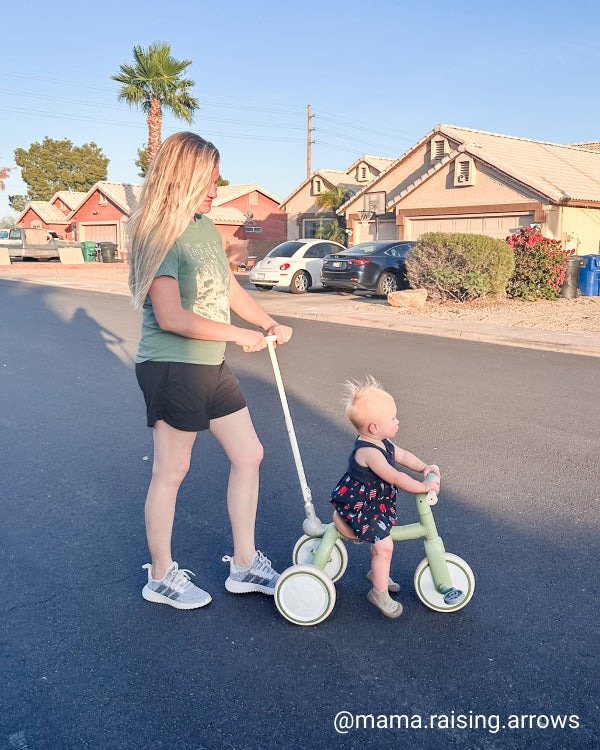
Tire type influences riding experience and maintenance requirements. Air-filled tires provide better shock absorption and traction on varied terrain, creating a smoother ride that encourages longer sessions and more adventurous exploration. Foam tires require no maintenance and never go flat, offering convenience for families who want minimal upkeep, though they transmit more vibration and may feel less stable on uneven surfaces. Handlebar design should allow comfortable grip positioning with slight bends at the elbows, while steering limiters can prevent overly sharp turns that might cause falls during the initial learning phase. Brands like Kidpop offer models with thoughtful features such as adjustable components and lightweight construction that accommodate growing children’s needs.
Safety Considerations
While balance bikes are inherently safer than traditional bicycles with training wheels due to their low center of gravity and foot-braking capability, parents should still implement important safety measures. Proper protective gear forms the first line of defense against injuries, with a correctly fitted helmet being non-negotiable for every ride. The helmet should sit level on the head, covering the forehead, with straps forming a V-shape under the ears and fastened snugly enough that only two fingers fit between the chin and strap. Many children resist helmets initially, but establishing this requirement from the very first ride creates an automatic association between riding and head protection.
Choosing appropriate riding environments significantly reduces risk during the learning process. Begin in flat, open spaces free from traffic, pedestrians, and obstacles—empty parking lots, tennis courts, or quiet park paths work well for initial practice. Smooth surfaces like asphalt or concrete allow easier gliding than grass, helping children experience success quickly, though slightly textured paths provide better traction for pushing off. As competence grows, gradually introduce gentle slopes, wider turns, and varied terrain, always supervising closely until children demonstrate consistent control and good judgment about their capabilities and limitations.
Teaching children basic safety rules establishes habits that will serve them throughout their cycling lives. Emphasize looking ahead rather than down at the ground, which improves balance and helps them anticipate obstacles. Practice stopping techniques, ensuring children understand how to drag their feet to slow down gradually rather than attempting sudden stops that could cause tumbles. Establish clear boundaries about where riding is permitted and where they must walk their bikes, particularly near streets, driveways, or crowded areas. Regular bike inspections checking for loose parts, proper seat height adjustments as children grow, and handlebar stability ensure the equipment remains safe and functional, preventing mechanical issues that could lead to accidents or diminish children’s confidence in their riding abilities.
Building Skills and Confidence for Life
Balance bikes represent far more than simple riding toys—they are comprehensive developmental tools that nurture physical capabilities, cognitive growth, and emotional confidence simultaneously. By allowing children to master balance naturally before introducing the complexity of pedaling, these ingenious devices eliminate frustration and fear while accelerating skill acquisition. The physical benefits of strengthened muscles, improved coordination, and dynamic balance create a foundation for lifelong active living, while the cognitive challenges of navigation and problem-solving sharpen young minds in engaging, practical ways.
Beyond measurable skills, balance bikes cultivate intangible qualities that shape children’s approach to challenges throughout their lives. The independence gained from self-propelled exploration, the confidence earned through genuine accomplishment, and the resilience developed through persistent practice create psychological assets that extend far beyond the riding path. When children experience the joy of gliding freely, controlling their speed and direction, they internalize powerful messages about their capabilities and potential. Investing in a quality balance bike and encouraging regular outdoor play provides children with experiences that build not just cycling skills, but character, confidence, and a love of active exploration that will serve them well into adulthood.
