

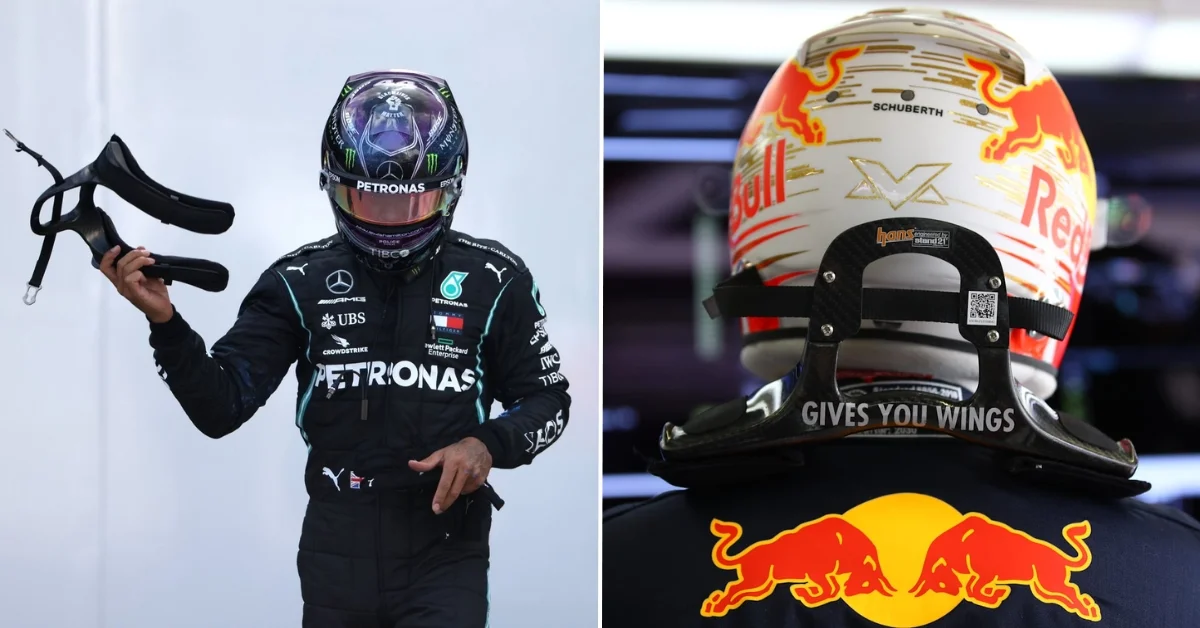
The Head and Neck Support (HANS) device is one of the most important safety innovations in Formula 1. And this discipline also has many other features that make it exciting to wager by using the popular betting site in Bangladesh 1xBet.
It is designed to protect drivers from severe head and neck injuries during high-speed crashes. Introduced into Formula 1 in 2003 and now mandatory across all major motorsport categories, HANS has dramatically reduced the risk of fatal basal skull fractures.
HANS works by controlling the movement of a driver’s head relative to their torso during sudden deceleration. In a Formula 1 car, drivers are secured tightly by a multi-point safety harness. Speaking about Formula 1 cars, the popular betting site in 1xBet Bangladesh will allow you to bet on the performances of those extraordinary machines too.
While the torso is firmly restrained by these belts, the head remains free to move. In a violent frontal or angled impact, this difference can cause the head to snap forward with extreme force, placing enormous strain on the neck and skull. HANS addresses this exact problem.
A fantastic and well-designed safety measure
The device itself is a lightweight, rigid yoke made from carbon fiber or similar composites. It sits on the driver’s shoulders and rests against the chest, fitting comfortably under the helmet and inside the cockpit. 2 strong tethers connect the HANS device to anchor points on either side of the helmet. These tethers are designed to allow normal head movement during driving, such as turning to check mirrors, but become critical in a crash.
When a sudden impact occurs, the driver’s body is restrained by the seat belts, and the HANS device is held in place by those same belts passing over it. As the head begins to move forward, the tethers tighten and transfer the load from the helmet to the HANS device and then to the driver’s torso. This load-sharing significantly reduces the forces acting on the neck and base of the skull, preventing excessive stretching or snapping motions.
HANS is particularly effective in frontal and near-frontal impacts, which are common in Formula 1 accidents. It also offers protection in angled crashes by limiting rotational forces on the head. Importantly, the device does not restrict driver performance or visibility and is engineered to work seamlessly with other safety systems, with 3 of them being:
- the halo;
- the survival cell;
- and the energy-absorbing barriers.
In modern Formula 1, HANS is a clear example of how smart engineering can save lives, turning once-fatal accidents into survivable incidents. All of this while allowing drivers to compete at the highest level of speed and risk.
