

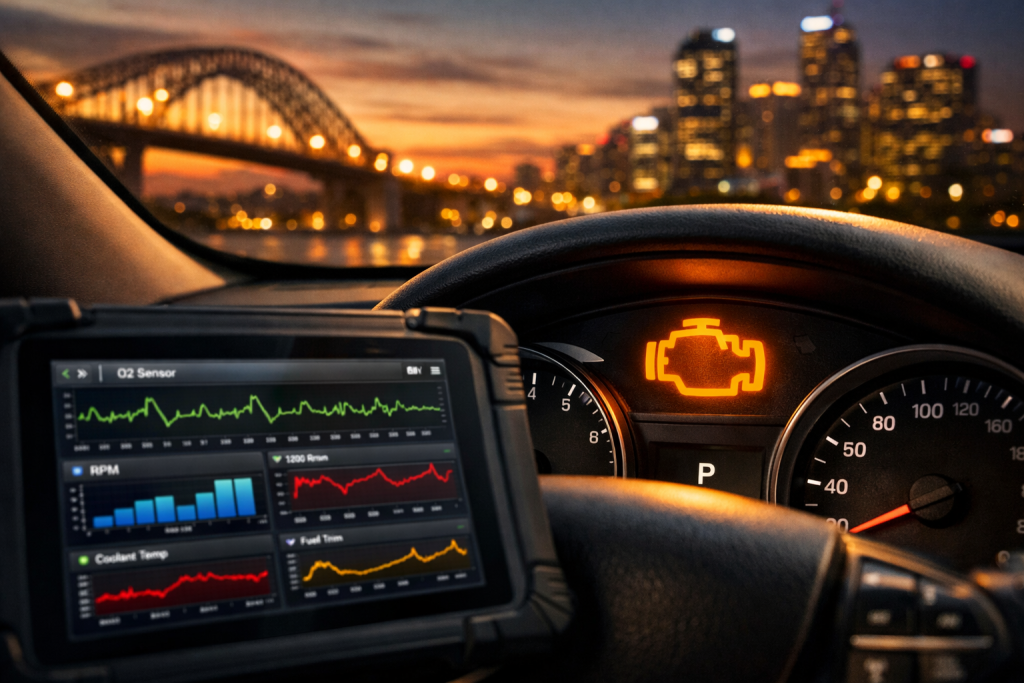
That moment your dashboard lights up—we’ve all been there. Whether you’re cruising down Kingsford Smith Drive or navigating the roundabouts in Chermside, a new warning light is an unwelcome surprise. But here’s some good news: getting to the bottom of it isn’t the mystery it used to be.
For today’s drivers, modern Brisbane car repair is less about guesswork and more about digital conversation. Knowing what happens during a true diagnostic check is key to getting the right car repair service.
Why Your Car Isn’t Just a Machine Anymore
Look around your car’s cabin. Beyond the steering wheel and pedals, you’re surrounded by digital screens and silent computers. Your vehicle is a network. Little electronic brains manage the engine, transmission, brakes, and even your air conditioning. When something feels ‘off,’ these computers don’t just fail. They log clues. The warning light is your heads-up that there’s a note in the system. The real skill for a modern mechanic Brisbane service is not just reading that note, but understanding the whole story behind it.
A basic scanner from the auto shop can pull a generic trouble code. It might say something like “P0171 – System Too Lean.” That tells you the engine’s air-fuel mixture is off. But it doesn’t tell you why. Is it a faulty oxygen sensor? A dirty mass airflow sensor? A small vacuum leak? This is where the real work of diagnosis begins, separating a simple code reader from genuine expertise in auto repair Brisbane service.
The Step-by-Step Diagnostic Dance in a Brisbane Workshop
So, what happens when you bring your car to a shop you trust for Brisbane car repair service? It’s a process that blends technology with old-fashioned know-how.
The Conversation Before the Connection
It starts with you. A good technician will ask specific questions before they ever plug in a computer. “Did you hear anything strange?” “Does it happen more when the engine is cold or after a long drive?” Your answers are the first and most crucial data points, setting the direction for the entire investigation. Your experience behind the wheel provides context no scanner can.
The Digital Interrogation
Next, they’ll connect a professional-grade scan tool. This isn’t a generic reader. It’s the shop’s lifeline to your car’s central nervous system. It pulls all the stored codes and, more importantly, the ‘freeze frame’ data—a snapshot of the engine’s condition at the exact moment the fault occurred. This gives clues about whether the problem happens under load, at idle, or at a specific temperature. Using this level of professional equipment and accessing manufacturer-specific data are hallmarks of a workshop operating to high national standards, such as those outlined in the Australian Government’s guide for registered automotive workshops.
The Live Data Performance
Here’s where it gets interesting. The scan tool can show a live stream of data from every sensor. Imagine watching a heart monitor, but for your car. A skilled car mechanic Brisbane service watches the dance of numbers—fuel trim, oxygen sensor voltage, engine load. They’re looking for the one value that’s out of step with the others. This live performance often points directly to the culprit.
The Active Test – Asking the Car to Perform
The best tools allow for ‘bi-directional control.’ This means the mechanic Brisbane can ask the car to do things. They can command a specific fuel injector to fire or tell a solenoid to click on. By asking a component to work and watching the live data for the correct response, they move from a strong suspicion to a confirmed diagnosis.
Why This Precision Saves You Headaches (and Money)
This detailed process isn’t just for show. It has a direct impact on your wallet and your time. I learned this lesson myself a while back. An old car of mine had a persistent rough idle. The first garage saw a code for the idle air control valve and replaced it. The problem came back two days later. Frustrated, I took it to a different local car mechanic in Brisbane. They did the full live data dive and an active test. Turns out, a tiny, brittle vacuum hose behind the engine had a crack almost invisible to the eye. A $15 hose fix versus the cost of a new valve.
The second shop saved me money because they invested the time to diagnose, not guess. Knowing your rights as a consumer is just as important as a good diagnosis. In Queensland, you have the right to a detailed quote and clear communication about repairs. You can read about all your protections on the official Queensland Government website.
That’s the core of the modern vehicle repair Brisbane technique. It’s about fixing the root cause, not just the most obvious symptom. For you, it means less downtime, fewer repeat visits, and confidence that the repair will stick.
Finding a Mechanic Who Speaks Your Car’s Language
So, how do you find this kind of shop for your Brisbane car repair? It comes down to a conversation. When you call or visit, listen to the questions they ask. Do they seem interested in the symptoms? You can ask them directly: “Can you walk me through how you diagnose a problem like this?”
A transparent auto repair shop will be happy to explain its process. Look for a place that prioritizes an accurate diagnosis before any repair work begins. After all, a proper diagnosis from a trusted Brisbane car repair expert is the quickest path from that annoying dashboard light back to peace of mind on the road.
