

In 2025–2026, the no code app builder movement has matured into one of the most transformative forces in software creation. What once required teams of developers, months of coding, and budgets in the tens or hundreds of thousands of dollars can now be accomplished by founders, small business owners, product managers, designers, marketers, and even non-technical domain experts — often in days or weeks instead of months or years.
A no code app builder empowers anyone to create fully functional, production-ready mobile apps (iOS & Android), progressive web apps (PWAs), and responsive web applications using visual drag-and-drop interfaces, pre-built components, logic flows, databases, user authentication, payments, push notifications, and native device features — all without ever opening a code editor. Platforms in this category have removed the traditional technical gatekeepers, democratizing app development and enabling rapid experimentation, faster time-to-market, lower costs, and continuous iteration based on real user feedback.
This article explores what makes a modern no code app builder powerful, how the best platforms work in practice, the kinds of apps people are building today, the realistic strengths and limitations, and why 2026 is widely considered the year no code tools finally became serious competition to traditional development for many categories of products.
Why No Code App Builders Exploded in Popularity
Several macro trends converged to make no code app builders mainstream:
- Skyrocketing demand for custom software — every business, creator, and community now needs a digital presence, internal tool, customer portal, marketplace, or mobile experience.
- Developer shortage and high freelance/agency rates — good developers are expensive and hard to find, especially for early-stage MVPs or internal tools.
- Rise of “citizen developers” — non-technical founders, product managers, marketers, operations leads, and subject-matter experts want to build without waiting for engineering resources.
- Maturation of visual development tools — drag-and-drop interfaces, real-time previews, component libraries, logic builders, and integrations have become powerful enough to ship production-grade apps.
- Economic pressure to move fast — startups and SMBs must validate ideas and capture market share quickly; waiting 6–12 months for a native app is no longer viable.
Together, these forces created perfect conditions for no code app builders to go from niche experimentation tools to serious alternatives for many categories of applications.
How a Modern No Code App Builder Actually Works
Most leading no code app builders follow a similar layered architecture, even if the visual metaphors and terminology differ:
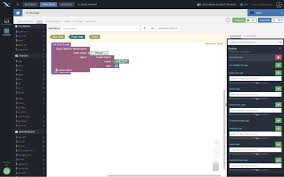
- Visual canvas / editor — drag-and-drop interface where you place UI components (buttons, lists, forms, images, maps, videos, charts, etc.) and arrange layouts responsively for mobile and web.
- Data layer — built-in or external databases (often spreadsheet-like tables or relational models) to store users, products, orders, bookings, content, etc.
- Logic & workflows — visual action builders or flow charts to define what happens when users click, submit forms, reach certain pages, receive payments, trigger timers, or receive external webhooks.
- User authentication & permissions — sign-up/login flows (email, social, magic links, phone), role-based access control, and privacy rules.
- Integrations & APIs — native connectors to Stripe, Airtable, Google Sheets, Zapier, Make, Twilio, SendGrid, Firebase, Supabase, and hundreds of other services.
- Native mobile & PWA publishing — one-click generation of iOS/Android apps (via App Store & Google Play) and progressive web apps that install like native apps.
- Preview & testing — real-time preview on desktop and mobile, shareable test links, and sometimes built-in simulators.
- Publishing & hosting — instant deployment with custom domains, SSL, CDN delivery, and automatic scaling.
The best platforms abstract away 90–95% of traditional coding complexity while still giving advanced users escape hatches (custom JavaScript, CSS overrides, API calls, webhooks) when needed.
What Kinds of Apps Can You Build with a No Code App Builder in 2026
The range of applications being built on no code platforms in 2026 is remarkably broad:
- Consumer mobile apps — marketplaces, social networks, dating apps, fitness trackers, habit builders, local service directories
- Customer portals & dashboards — booking systems, client portals, membership communities, subscription content platforms
- Internal business tools — CRM, inventory trackers, project management, employee onboarding, asset management, field service apps
- E-commerce & marketplaces — product catalogs, service marketplaces, digital product stores, event ticketing
- Community & content platforms — forums, knowledge bases, directories, job boards, review aggregators
- Automation & workflow apps — lead capture, form-to-CRM pipelines, approval workflows, notification systems
- Education & coaching — course platforms, student portals, coaching schedulers, membership communities
The sweet spot tends to be data-driven, user-centric applications that involve user accounts, content management, payments, notifications, and mobile access — exactly the kind of apps that are expensive and slow to build traditionally but very achievable with mature no code tools.
Strengths and Realistic Limitations of No Code App Builders
Modern no code app builders excel in many areas:
- Speed to launch — MVPs that once took 6–12 months can now ship in weeks or even days.
- Cost — total cost is often 5–20× lower than hiring a dev team for equivalent functionality.
- Iteration — non-technical founders can make design, content, and logic changes instantly without developer bottlenecks.
- Ownership & control — most platforms allow full export or give reasonable data portability.
- Scaling — many platforms now support tens of thousands to hundreds of thousands of users with good performance.
Realistic limitations still exist and should be understood upfront:
- Very high-scale or ultra-complex logic (millions of concurrent users, advanced algorithms, heavy real-time multiplayer) often still requires custom code.
- Highly custom UI animations or brand-specific micro-interactions may need developer polish.
- Some niche device features (advanced AR, hardware sensors) are not yet fully supported.
- Vendor lock-in risk exists — migrating away from a no code platform can be costly once you have thousands of users.
- Performance ceilings — while many apps run smoothly at scale, extremely data-heavy or compute-intensive apps may eventually need traditional backends.
The best creators and companies treat no code as the default starting point and only move to custom code when they clearly outgrow the platform’s capabilities — a pattern that happens far less often than skeptics predicted just a few years ago.
Choosing the Right No Code App Builder for Your Project
The no code space in 2026 is mature enough that different platforms have carved out clear strengths:
- Some excel at beautiful native mobile apps with rich animations and device features.
- Others focus on internal tools and admin dashboards with deep database logic.
- Several are strongest for marketplaces, communities, and membership platforms.
- A few prioritize speed and simplicity for founders who want to launch fast and iterate.
When evaluating which no code app builder to use, consider:
- Primary output (native iOS/Android vs. PWA vs. web-first)
- Complexity of data relationships and logic you’ll need
- Budget (some platforms have generous free tiers, others start at $25–$100+/month)
- Native integrations you already use (Stripe, Airtable, Zapier, Supabase, etc.)
- Mobile vs. desktop priority
- Team size and technical comfort level
- Long-term ownership and export options
Testing a few platforms with a small proof-of-concept project is usually the fastest way to feel which one “clicks” for your specific idea.
The Bigger Picture: No Code App Builders and the Democratization of Software Creation
We are living through one of the most important shifts in software history: the barrier to creating digital products has dropped from “you must be a professional developer” to “you must be able to think clearly and use a visual editor.” No code app builders are the primary vehicle for that change.
They allow domain experts — teachers, doctors, coaches, chefs, fitness trainers, event organizers, real estate agents, consultants, creators — to build the exact tools their communities need without waiting years or spending hundreds of thousands of dollars. They let founders test business ideas in weeks instead of quarters. They let companies launch internal tools that would never justify a full dev team.
This democratization is not just about efficiency — it’s about who gets to create. When the tools become accessible, the ideas that get built are more diverse, more human-centered, and more closely matched to real needs.
The no code app builder era is still early. The tools are powerful today, but they will become dramatically more capable in the next 24–36 months. If you’ve been waiting for the “right time” to turn an idea into an app, that time is already here — and it’s only going to get easier, faster, and more powerful from this point forward.
The canvas is blank, the tools are ready, and the audience is waiting. Whether you want to hire freelancers to help build on a no code platform or become a freelancer who specializes in no code delivery, the opportunity has never been clearer.
The next great app isn’t waiting for a developer — it’s waiting for someone with a clear vision and the right no code app builder.
