

Humanoid robots are transforming industries, healthcare, and domestic life by performing tasks with precision and flexibility. At the heart of these machines, humanoid robot motor systems drive limbs and joints, enabling complex human-like movements. Ensuring the safety of these motors is critical, as failure can cause damage, injury, or downtime. Proper safety measures reduce risk while improving reliability and longevity of robotic systems.
Safety is a multi-layered concern, encompassing mechanical, electrical, operational, and software-related factors. Each dimension must be addressed systematically to protect both humans and machinery. This article explores these aspects in detail, offering practical guidelines. Implementing these precautions helps organizations operate humanoid robots safely and efficiently.
Understanding Humanoid Robot Motor
A humanoid robot motor powers the robot’s joints and actuators, translating commands into movement. These motors are engineered to replicate human motions, requiring precision, speed, and load handling. They can include servo motors, stepper motors, or brushless DC motors, each selected based on the task requirements. Understanding their specifications ensures safe deployment and operation in complex environments.
Engineers must evaluate torque limits, dynamic loads, and motion range to prevent mechanical failures. Knowledge of these factors supports protective housing, control algorithms, and operator training. By understanding motor behavior, teams can reduce the risk of accidents. Proper planning ensures that humanoid robots perform reliably in both controlled and human-centric environments.
Mechanical Safety Considerations
Motor Housing and Shields
Motor housings protect internal components and prevent accidental contact with moving parts. Robust materials and secure attachments reduce exposure to debris or impacts. Shields also help prevent pinch points where limbs or clothing may be caught during motion. Proper labeling and barriers enhance safety awareness and reduce operator errors.
Designing clearances around joints prevents unintended entanglement. Interlocks or safety covers can stop the motor if opened during operation. Effective housing ensures both the motor and nearby personnel remain safe. These mechanical safeguards are the foundation for safe robotic operations.
Routine Maintenance
Regular inspections prevent wear-related failures and maintain motor efficiency. Lubrication, fastener tightening, and replacement of worn components protect both machine and operator. Maintenance routines should follow manufacturer guidelines and documented schedules for consistency. Personal protective equipment reduces injury risk during service activities.
Technicians should check for vibration, overheating, or abnormal noises to catch early signs of failure. Keeping maintenance records supports accountability and predictive scheduling. Routine care ensures motors operate safely over their expected lifespan. Consistency in maintenance enhances overall system reliability.
Load Management
Humanoid robot motor systems have specific torque and payload limits that must not be exceeded. Exceeding load capacity can lead to overheating, mechanical stress, or component damage. Torque sensors and current limiters help prevent motors from operating beyond safe parameters. Proper planning of the humanoid robot motor assembly ensures that each joint handles the intended load safely during operation.
Monitoring load distribution ensures stability during complex movements. Software can enforce safe motion limits based on real-time feedback. Preventing overload reduces mechanical failure risk and safeguards operators. Load management is essential for both performance and safety.
Electrical Safety Considerations
Voltage and Current Control
Voltage and current must be carefully regulated to avoid shocks or motor damage. Overvoltage or overcurrent can lead to component failure or fire hazards. Using fuses, regulators, and current limiters prevents unsafe electrical conditions. Continuous monitoring identifies potential anomalies early, allowing corrective action before accidents occur.
Power supply compatibility with motor specifications is critical for safe operation. Sudden surges or fluctuations can compromise system integrity. Voltage and current management protects both motors and operators. Controlled electrical parameters form a vital part of humanoid robot safety protocols.
Insulation and Grounding
Proper insulation protects wiring and motor parts from contact, moisture, or abrasion. Grounding provides a safe path for stray currents, reducing electrical shock risk. Regular testing ensures insulation and grounding remain effective over time. Any deterioration should be addressed immediately to maintain operational safety.
Safety audits and resistance testing prevent electrical accidents. Grounding systems complement physical barriers and covers. Insulation failures are a common source of hazards that can be prevented with vigilance. Proper electrical safety protects both humans and machinery simultaneously.
Emergency Power Cutoff
Emergency power cutoffs allow immediate shutdown of motors in dangerous situations. This prevents both mechanical and electrical hazards from escalating. The system should be accessible, clearly marked, and regularly tested for reliability. Integration with software ensures rapid response to critical thresholds.
Cutoff systems are essential in human-robot interaction environments. Quick activation can prevent injuries during malfunctions. They act as a fail-safe for operators and equipment alike. Emergency power management is a key safety component of humanoid robotics.
Operational Safety Considerations
Safe Motion Programming
Programming safe movement ensures limbs operate within defined limits to prevent collisions or mechanical failure. Implementing humanoid robot motor constraints during motion planning is essential for safety. Algorithms must control speed, acceleration, and trajectory to reduce risk. Simulation tools allow testing of motions before real-world deployment, enhancing operational safety.
Proper trajectory limits reduce the risk of hardware damage or injury. Motion constraints should consider robot weight and torque. Safe software logic is critical in both controlled and unpredictable environments. Motion planning safeguards both operators and robots.
Operator Training
Trained operators understand motor behavior and emergency protocols. Training covers specifications, inspection routines, and troubleshooting. Hands-on exercises in controlled environments improve skills and safety awareness. Certification programs reinforce adherence to operational guidelines and safety standards.
Operators must recognize abnormal motor behavior and respond appropriately. Continuous education ensures familiarity with updates and new safety measures. Training prevents accidents caused by human error. Competent operators are the first line of safety for humanoid robots.
Environment Awareness
Safe operation requires a controlled environment with clear pathways and stable surfaces. Sensors help robots detect obstacles and adjust movement accordingly. Environmental hazards, such as wet floors or clutter, should be eliminated. Maintaining spatial awareness reduces collision and injury risks.
Proper lighting and operational space minimize accidents. Sensor integration complements operator vigilance. Environmental readiness ensures smooth and secure robot operation. Safe surroundings are as important as internal motor safeguards.
Software and Control Safety
Motion Control Algorithms
Algorithms regulate speed, torque, and joint positions to ensure safe movement. Redundant checks keep the robot within operational limits. Adaptive algorithms can respond to changes in load or resistance. Algorithm testing in simulations ensures reliable and predictable performance.
Regular review prevents software drift or unintended behavior. Motion constraints reduce mechanical stress and injury potential. Proper algorithm design is essential for safe humanoid robotics. Software safety complements mechanical and electrical precautions.
Sensor Integration
Integration of sensors allows robots to respond to obstacles and human presence safely. Force, proximity, and vision sensors feed real-time data into control systems. Calibrating sensors ensures accurate detection and response. Accurate humanoid robot motor monitoring depends on well-integrated sensors for safe operation.
Regular testing verifies correct readings and responses. Sensor redundancy improves reliability during unexpected events. Proper integration enhances human-robot interaction safety. Sensors act as the robot’s “eyes and touch,” protecting both humans and machinery.
Regular Updates and Monitoring
Software updates improve safety features, patch vulnerabilities, and enhance algorithms. Continuous monitoring tracks motor temperature, load, and voltage. Automated logging supports predictive maintenance and incident investigation. Updates ensure compliance with the latest safety standards.
Monitoring allows early detection of anomalies before they escalate. Logging supports accountability and operational analysis. Regular maintenance of software complements hardware safeguards. Updated systems maintain high reliability and safety.
Emergency Protocols
Even with careful planning, emergencies can occur. Clear protocols are essential to minimize risk:
- Emergency Stop Activation: Immediately cut power to halt motor movement.
- Operator Evacuation: Move personnel away from the robot to prevent injury.
- Incident Assessment: Inspect the humanoid robot motor, wiring, and mechanical components before resuming operation.
- Documentation: Record the incident to identify causes and improve safety procedures.
- Preventive Measures: Implement new safeguards or adjust operational limits based on findings.
Why Go with HONEST Automation?
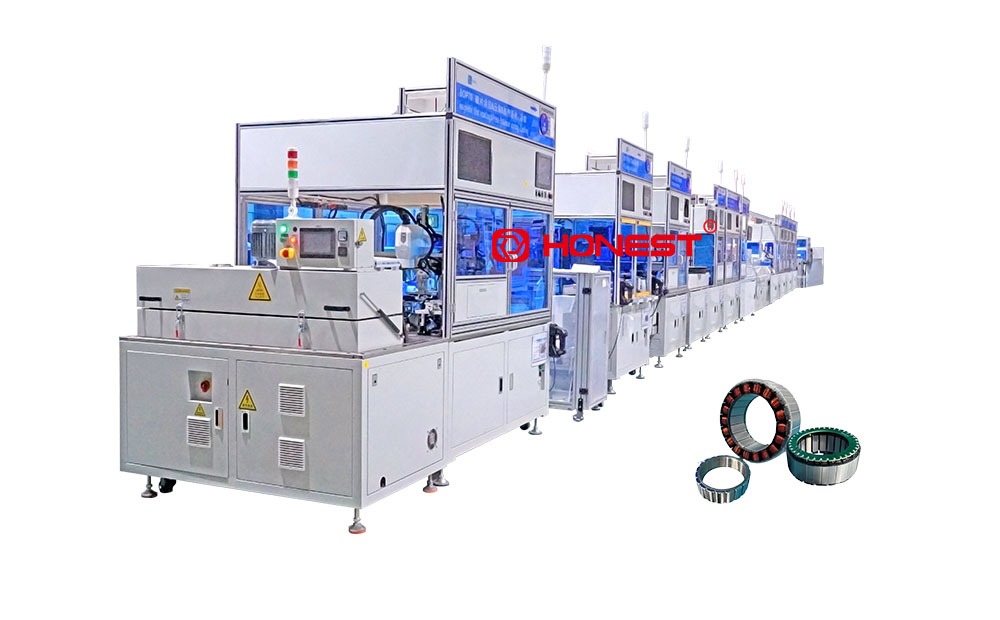
HONEST Automation specializes in designing and manufacturing intelligent equipment for motor assembly and advanced robotics applications. Their automated systems improve precision, reduce labor costs, and ensure consistent quality in every production line. Digital monitoring and real-time tracking are integrated into all systems. The company delivers safe, reliable, and scalable automation solutions for industrial and robotics applications.
The company provides standardized processes and customized solutions for robotic motor systems worldwide. Their equipment emphasizes durability, ease of maintenance, and optimized production efficiency. By combining innovation, safety, and operational excellence, HONEST Automation strengthens the development of humanoid robot motor systems globally.
Conclusion
Protecting a humanoid robot motor requires attention to mechanical, electrical, operational, and software safety. Protective housing, load management, and maintenance reduce mechanical hazards. Voltage regulation, grounding, and emergency cutoffs prevent electrical accidents.
Safe motion programming, operator training, and sensor integration mitigate operational risks. Algorithm monitoring, software updates, and regular checks maintain reliability. Emergency protocols ensure swift and effective responses to incidents. Comprehensive safety measures maximize benefits while minimizing risks in humanoid robotics.
