

You want clear answers about your teeth. You also want care that respects your time, your body, and your money. Choosing a general dentist who uses digital X-rays gives you that. Traditional X-rays use more radiation, take longer, and can hide small problems. Digital images tell a different story. They show sharp detail, appear in seconds, and help your dentist spot trouble before you feel pain. Early care means smaller fillings, fewer emergencies, and stronger teeth for daily life. This matters whether you need a simple checkup, a filling, or dental crowns in Leduc, AB. It also matters if you feel nervous about X-rays or worry about radiation. In this blog, you will see three clear reasons to choose a dentist who offers digital X-rays, so you can step into your next appointment with calm, steady confidence.
1. You reduce radiation for yourself and your family
Every X-ray uses radiation. You cannot erase that. You can lower it. Digital X-rays use much less radiation than older film X-rays. That matters to you. It matters even more for children, pregnant people, and anyone who needs regular images.
The Centers for Disease Control and Prevention explains that any extra radiation adds to your lifetime dose. You want that extra amount as low as you can get it. Digital X rays move you in that direction.
Approximate radiation from common dental X-rays
| Type of X ray | Typical method | Relative radiation level |
|---|---|---|
| Single bitewing | Digital | Lowest |
| Full mouth series | Digital | Low |
| Single bitewing | Traditional film | Low to medium |
| Full mouth series | Traditional film | Medium |
Numbers differ by office. The pattern stays the same. Digital images use less. You still get clear pictures. You protect your body from extra exposure.
Here are three simple ways that choice helps you.
- You face less risk when you need repeat X-rays for braces or implants.
- Your child can get needed images with less radiation over many years.
- You avoid film retakes that add more exposure when pictures do not turn out.
The U.S. Food and Drug Administration urges smart use of dental X-rays. Digital systems support that. You still get the information you need. You do not carry more radiation than needed.
2. You catch problems early and avoid painful surprises
Tooth decay and gum disease grow in silence. You often feel nothing until damage is serious. By then, you may need a root canal, a crown, or even an extraction. Digital X-rays help your dentist see small changes before you feel them.
Traditional film can blur fine details. Digital images show sharp lines and clear contrast. Your dentist can zoom in, adjust light, and compare today’s image with older ones with ease. That leads to early warnings.
With early warnings you can:
- Fix tiny cavities with small fillings.
- Watch slow changes instead of rushing into large treatment.
- Plan care before you face a sudden toothache.
This early view is crucial when you need dental crowns or other large work. A digital X-ray can reveal cracks under old fillings, dark spots near the nerve, or bone loss around roots. You and your dentist can then decide if a filling is enough or if a crown will protect the tooth from breaking.
Think about three common problems.
- A hidden cavity forms between two back teeth.
- A crack spreads under a large metal filling.
- Bone slowly shrinks around a tooth with gum disease.
Digital X rays can show each of these early. You then avoid sudden swelling, weekend emergencies, and rushed choices. You gain time to ask questions, plan costs, and choose the right treatment for your life.
3. You get faster visits and clearer conversations
Time in a dental chair can feel long. Waiting for the film to develop makes it longer. Digital X-rays remove that wait. The image appears on a screen within seconds. That shortens your visit and calms tension for children and anxious patients.
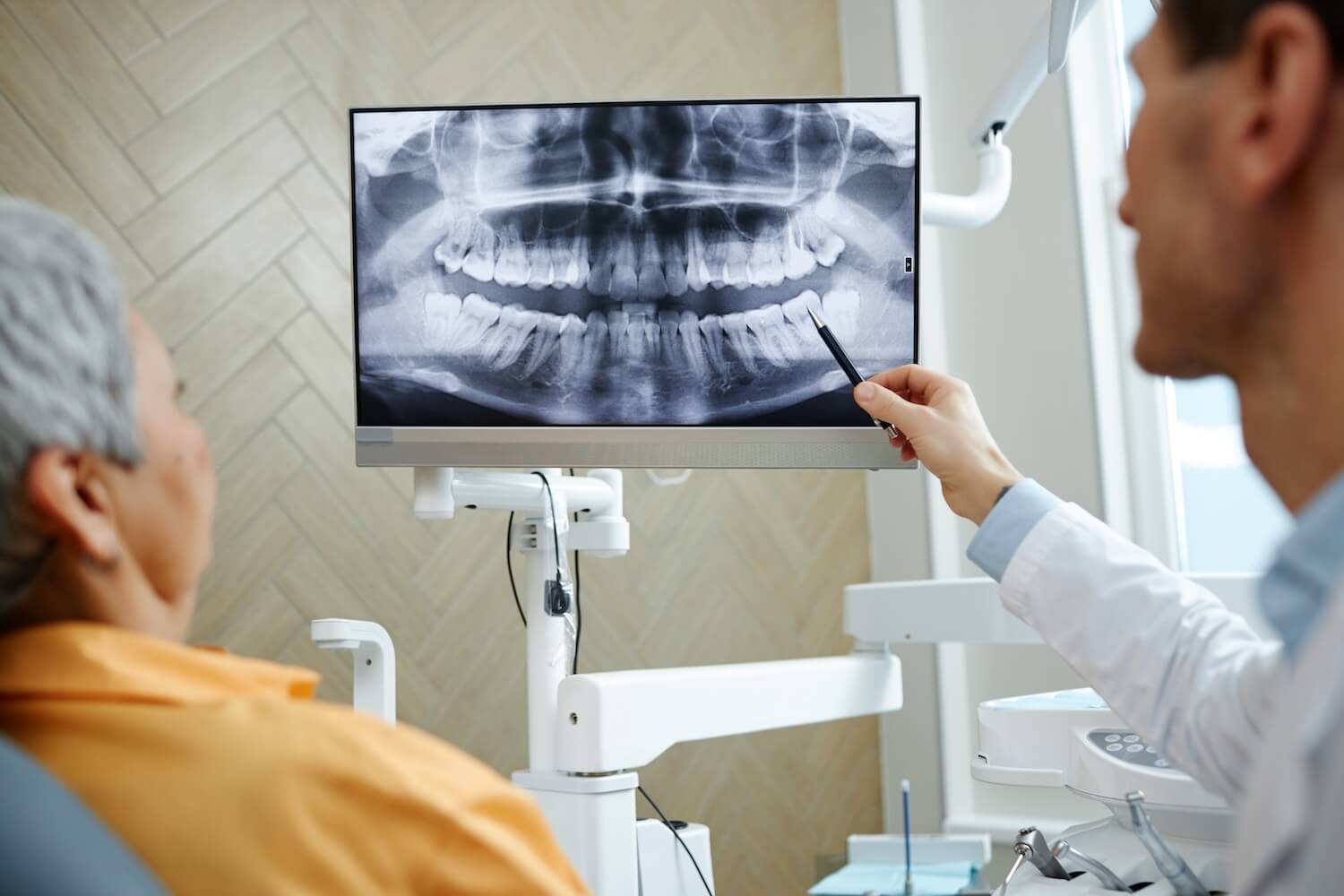
Speed is only one benefit. Clarity is another. You can sit face-to-face with your dentist and look at the same image. You can see the dark spots and lines. You can see where bone supports your teeth and where it does not. That picture turns a confusing talk into a clear plan.
Digital X-rays support better conversations in three ways.
- You see your own teeth on a large screen, not as small film squares.
- Your dentist can mark, zoom, and show before and after images.
- You can ask focused questions about what you see, not what you imagine.
This matters for family care. A parent can sit with a child and see the same image. You can ask about crowding, missing teeth, or signs of thumb sucking. You can decide together if your child needs orthodontic care or if you can wait and watch.
Digital files can also be stored and shared easily. If you need a second opinion, implant surgery, or orthodontic care, your dentist can send images quickly. You avoid repeat X-rays and extra visits. You save time, money, and stress.
How to choose a general dentist who uses digital X-rays
When you look for a general dentist, ask clear questions about X-rays. Do not feel shy. Your mouth and your health are at stake. A good office will welcome your concern.
You can ask:
- Do you use digital X-rays for routine checkups and emergencies?
- How often do you take X-rays for adults and for children?
- How do you decide when someone truly needs new images?
- Can you show me my images on a screen and walk me through them?
Listen to the answers. You want a dentist who explains things in plain language. You also want a team that uses lead aprons, thyroid collars, and careful limits on how often images are taken.
When you choose a general dentist who offers digital X-rays, you choose lower radiation, earlier care, and clearer talks. You also choose a modern office that respects your time and your trust. That choice protects your teeth today and your health for many years ahead.
