

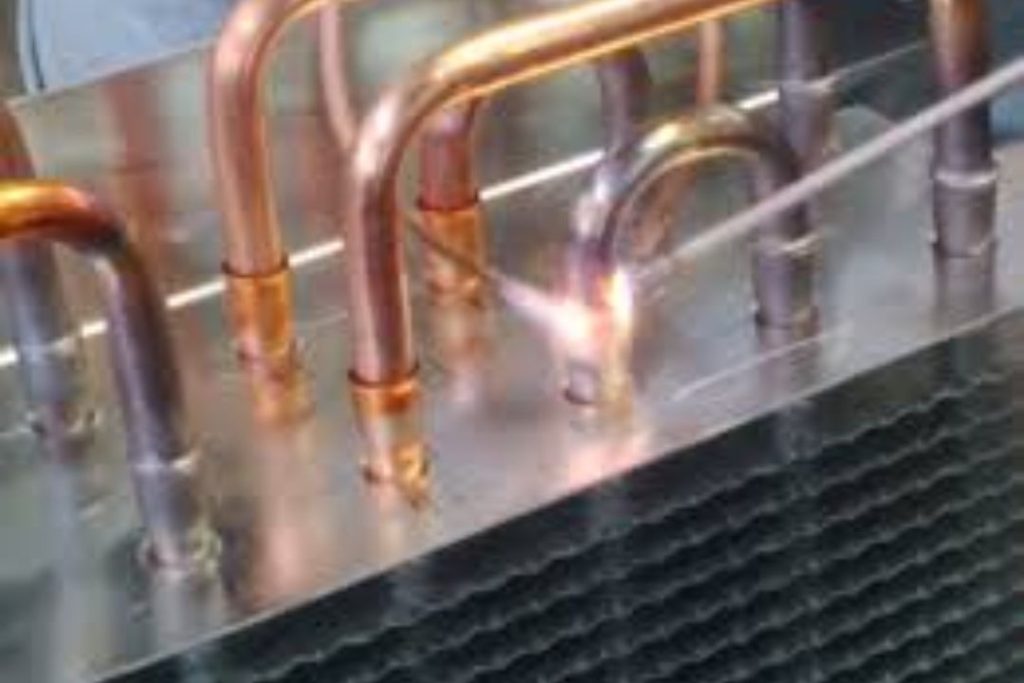
HVAC and refrigeration systems are divided into heat exchangers which are designed to transfer heat efficiently between a fluid or air streams. With the current trend of demand of eco-friendly cooling and heating systems, precision copper brazing is gaining popularity among manufacturers to come up with reliable and leak free heat exchangers. The use of advanced technologies like hho welding machine, oxy hydrogen gas welding and oxy hydrogen generator is becoming significant in the enhancement of production quality as well as efficiency.
Research and industry guidelines provided by organizations like the Copper Development Association (CDA), the American Society of Heating, Refribration and Airconditioning (ASHRAE), Air-Conditioning, Heating, and Refrigeration Institute (AHRI), the American Welding Society (AWS), the International Institute of Welding (IIW), and academic publication systems such as Elsevier / ScienceDirect, MDPI, and Springer point to the seriousness of the problem of manufacturing suitable brazed connections in the manufacturing of HVAC systems.
The need for copper in HVAC heat exchangers
The use of copper in the heat exchangers is very common due to its excellent thermal and mechanical characteristics. It is much more thermally conductive than most other engineering metals and in areas of the heat exchanger heat flows rapidly. This enhances efficiency of systems and saves on energy used in the HVAC equipment.
Copper tubes and fins are frequently found in mobile-sized HVAC devices like evaporators, condensers, and refrigeration as an attempt to make the maximum amount of heat transfer.
The benefits of copper as pointed out by the in engineering research by such organizations as the copper development association and ASHRAE include:
- Thermal conductivity to be used in heat transfer.
- Superior corrosion resistant qualities.
- Extended durability in environments where HVAC is used.
- Brazing Compatibility with joining technology.
This is what makes copper an excellent material to use in the manufacture of modern heat exchanger.
Brazing Uses and Applications in the Manufacturing of a Heat Exchanger
Brazing is a process of joining metal used in where filler metal is melted and is delivered into a joint between two base metals, but it does not melt the base metals. The filler metal is introduced by force of capillarity to form tight joints which are very strong and at the same time, leak free.
With HVAC heat exchanger, brazing is applied to connect:
- Copper tubes and headers
- Copper fins and manifolds
- Fridge circuit connection Refrigerant connections Refrigerant circuit connection
In most HVAC applications, it is desired to use brazing instead of traditional welding since the former is performed at lower temperatures bringing about the least distortion as well as conserving the mechanical properties of copper components.
Studies conducted in the engineering databases like ScienceDirect available in Elsevier reveal that when brazing processes are perfected, joint strength and microstructure may also be enhanced which means that the heat exchanger systems will be stable in the long run.
The production of HVAC nowadays is more based on the use of high-quality brazing machines engineered with high accuracy of temperature and stability in the flame.
HHO Welding Machine
An hho welding machine is used to generate hydrogen gas and oxygen gas through the electrolysis of water. These gases are mixed to form a high-temperature flame that can be used to bronze copper components.
Since the production of the gas is done using water and electricity, the system does not require the use of the traditional fuel gas cylinders.
Oxyhydrogen Gas Welding
In oxyhydrogen gas welding, a flame that is produced out of hydrogen and oxygen is used. The resulting combustion is a clean combustion that has high energy production.
Upon combusting hydrogen and oxygen, the reaction has only water vapor as the only by-product and gives out heat.
This renders the oxyhydrogen systems to be environmental friendly as opposed to the traditional fossil fuel torches.
Oxy Hydrogen Generator
Still, hydrogen-oxygen gas mixtures are produced on-site by electrolyzing water by an oxy hydrogen generator. The result of these generators is a stoichiometric gas mix and a stable flame quality which results in improved accuracy and repeatability of brazing.
The industry reports on HVAC indicate that oxyhydrogen brazing systems have a number of advantages such as high safety, low level of fumes as well as quality of joint.
Markets of Precision Copper Brazing in HVAC Production
Strong and Leak-Free Joints
The brazed copper joints offer hermetic seals that avoid any leakage of refrigerant and this is very important to maintain the efficiency of HVAC system as well as environmental compliance.
Better Software Transfers
Brazed joints properly formed promote maximum thermal contact among the components of heat exchangers creating better heat transfer.
Visibly less Oxidation within Tubes
The flames of oxyhydrogen are neutral and highly concentrated and removes oxidation during brazing of copper tubing. This will lengthen the compressor life in refrigeration units.
Accelerated Production rates
Systems that use hydrogen to braise the metal obtain higher brazing temperatures quicker than the traditional torch and carry out better in large-scale manufacturing.
Less Work-Related Injuries and Health
The use of hydrogen combustion also generates more water vapor as opposed to emissions that are carbon-related, cutting down on the amount of fumes and enhancing safety at work.
Privacy of Standards and Quality Control
Production of high performance heat exchanger demands a close adherence to industrial standards.
The major organizations that are concerned with the brazing and HVAC standards are:
- ASHRAE- establishes standards and performance guidelines of HVAC engineering.
- AHRI – offers certification of HVAC equipment.
- Copper Development Association (CDA)- publishes copper design and application guidelines.
- American Welding Society (AWS) – sets codes of brazing and welding.
- International Institute of Welding (IIW) – encourages research in the industrial welding field worldwide.
In order to achieve reliability in terms of HVAC equipment, these organizations put emphasis on designing joints correctly, material compatibility, and control of the process.
The Future of Copper Brazing in HVAC manufacture
With the development of HVAC systems with increased energy efficiency and reduced impact on the environment, it is likely that precision copper brazing technologies have become even more relevant.
The innovations of the future might involve:
- The involvement of robotics on automated brazing systems.
- Alloy hydrogen brazing equipment.
- Quality check of brazed joints with the use of AI.
- Optimised filler alloys are new alloys designed to provide high efficiency heat exchangers.
Studies by institutions such as Elsevier, MDPI, and Springer are still underway on better methods of brazing, optimization of microstructure, and heat exchangers.
Conclusion
Accurate copper braze is still a bread and butter of the HVAC heat exchanger. Using high performance copper products along with the latest technology like; hho welding machine, oxyhydrogen gas welding, and oxy hydrogen generator, manufacturers may attain greater joint power, enhanced heat transfer effect, and high-quality HVAC systems.
With the aid of engineering research and standards, such as ASHRAE AHRI CDA AWS IIW, the current brazing technologies are contributing towards the next generation of HVAC equipment efficientness and long-term viability.
With the increase in demand of eco-friendly cooling and heating system, the acuity of precision copper brazing will definitely remain to be of crucial role in the development of HVAC production at the global level.
