

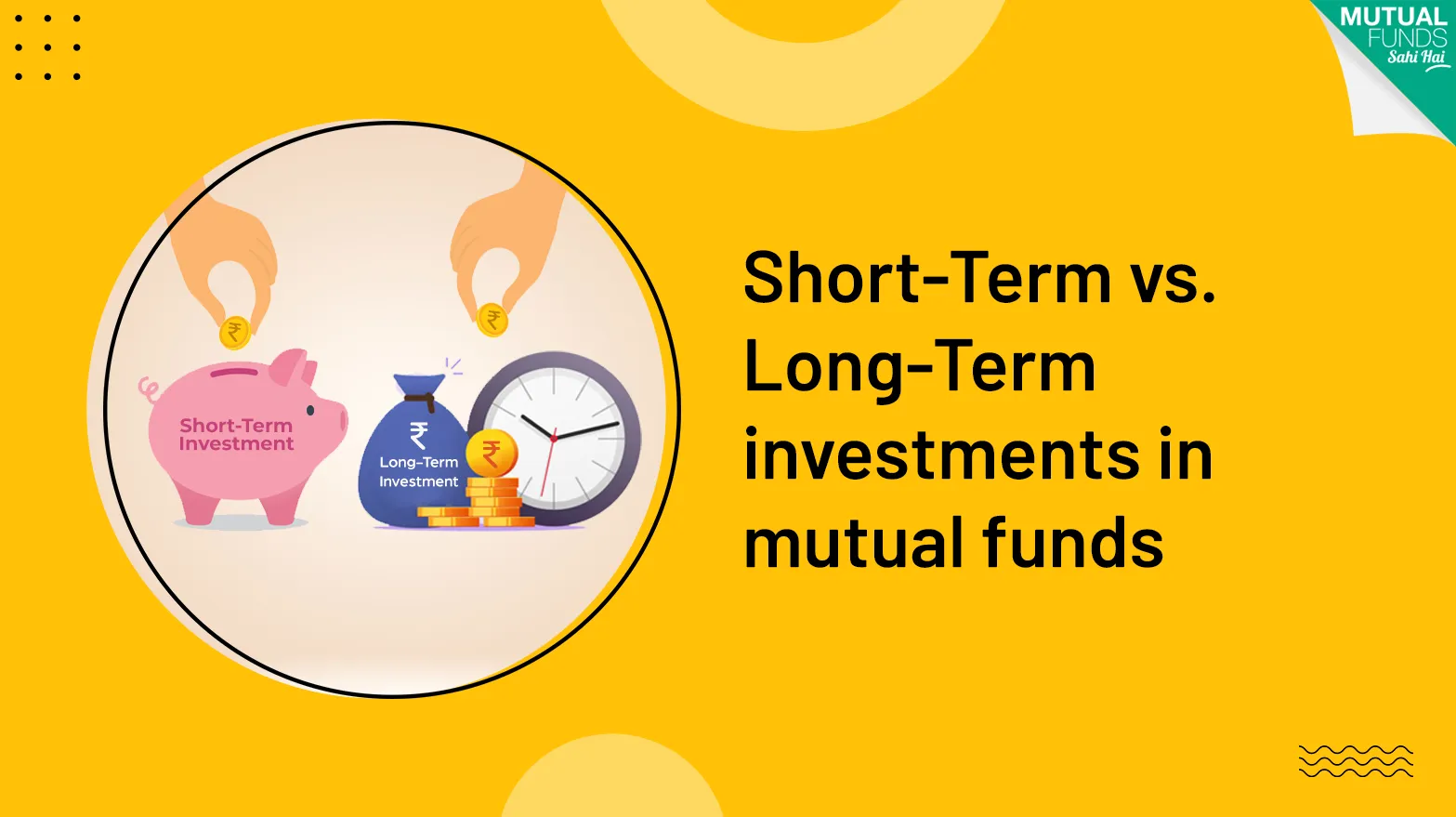
One of the most common challenges investors face is selecting funds that line up with their financial time horizon. When choosing funds, people often just look at returns alone, but duration is just as important when it comes to judging suitability and risk exposure.
A fund that works well for your 10 year long-term plan might be a complete opposite for a short-term need and vice versa. Understanding the difference between short-term and long-term investing is crucial to building a solid and sensible investment strategy.
Why Investment Horizon Matters
Your time horizon says a lot about how much you can tolerate the market ups and downs. Markets can plummet, sometimes really spectacularly, and how you handle that depends largely on when you will need the money.
Short-term investments are all about prioritising stability and liquidity. Long-term investments are all about growth and building wealth. When you mix the two without thinking it through, you are just setting yourself up for days of worry and financial trouble.
If you are saving up for something you will need in the next few months, like an emergency reserve or some short-term expense, you are going to need a completely different approach than someone who is saving up for retirement or building wealth over the long term.
Short-Term Funds: Stability Takes Priority
Short term investing is all about keeping your capital safe and easily accessible. The main objective here is not aggressive return generation, but minimising downside risk while earning reasonable returns.
Debt-oriented funds, like liquid funds, are specifically designed for short-term goals. By sticking to lower-risk investments, they maintain a level of stability that avoids the sharp ups and downs (volatility) typically seen in equity-based products
These sorts of funds are particularly useful for making the most of idle money, keeping an emergency fund ticking over, or just general short-term investments.
Long-Term Funds: Maximizing Growth Potential
Long-term investing allows you to ride the economic expansion and benefit from compounding. Investors with extended horizons can afford exposure to market-linked assets.
Ultimately, the beauty of long-term investing is that it teaches you patience. Over time, the market smooths out the volatility you experience and returns come at a steady phase.
Risk tolerance is intrinsically linked to investment duration. People trying to make quick returns seek predictability. But on the flip side, people looking at the multi-year time horizon are usually okay with volatility for the potential of a higher return in the long run.
For example, if you put short term money in a fund that deals with volatile assets, you will probably end up selling out at the worst possible time.
And if you put long term money in something super conservative, you are probably going to miss out on growth opportunities.
How to Choose the Right Fund?
Picking the right fund category usually comes down to doing your homework. A lot of investors like to compare mutual funds to see how they stack up in terms of risk, returns and the way they are put together.
Comparing funds can help you figure out whether a particular fund is a good fit for your short-term stability needs or if it is better suited to your long-term growth goals.
You want to make sure that your invested money is easily accessible without any exit penalties. Short-term funds come with liquidity as a core priority, alongside stability.
Long-term funds, on the other hand, are all about growing your wealth, rather than liquidating it quickly.
Bottom Line
At the end of the day, choosing between a short-term or long-term fund comes down to your own personal preference and financial goals.
Short-term funds are all about stability and being able to get in and out quickly. Long-term funds are all about growth and making your money work harder for you over time. Neither is inherently better; it just depends on your goals and when you need the money back.
