Living with pets brings immeasurable joy, but it also introduces a set of air quality challenges that non-pet households rarely face. Persistent odors from litter boxes, bedding, and wet fur can embed themselves throughout your home, while airborne dander and shed hair settle on every surface and circulate through your HVAC system. For allergy sufferers and families with young children, these invisible pollutants can trigger sneezing, watery eyes, and respiratory discomfort on a daily basis.
A dedicated pet air purifier addresses these challenges in ways that standard purifiers simply cannot match. Engineered with pet owners in mind, these devices combine advanced filtration with odor neutralization technologies to tackle the specific contaminants that animals introduce into your living space. The result is cleaner air, reduced allergen exposure, and a noticeably fresher home environment for both your family and your furry companions.
This article walks you through everything you need to know to get the most from your pet air purifier — from understanding its core features and setting it up correctly, to integrating air quality monitoring and keeping up with essential maintenance. Follow these practical steps, and optimal home air filtration becomes entirely achievable.
Why Pet Owners Need Specialized Home Air Filtration
Sharing your home with animals means sharing your air with a constant stream of biological material that standard air purifiers aren’t built to handle. Dogs and cats shed hair and microscopic dander year-round, and these particles don’t simply fall to the floor — they become suspended in the air, travel through ventilation systems, and settle into upholstery, bedding, and carpets. Unlike ordinary household dust, pet dander carries proteins that are potent allergens, capable of triggering reactions even in people who weren’t previously sensitive to them.
Beyond particles, pet ownership introduces persistent odor compounds that bond to surfaces and recirculate through the air. Litter boxes release ammonia and hydrogen sulfide, wet fur carries bacterial byproducts, and pet bedding accumulates organic material that generates ongoing odor. These aren’t problems that occasional ventilation or scented sprays can solve — they require active, continuous filtration designed specifically for biological contaminants.
The health consequences of unmanaged pet-related air pollution are well documented. Household members with asthma or allergic rhinitis experience measurably worse symptoms in homes with high dander concentrations. Even those without diagnosed conditions report fatigue, eye irritation, and disrupted sleep when indoor air quality deteriorates. Children and elderly family members are especially vulnerable to these effects.
This is precisely why home air filtration for pet owners demands a specialized approach. General-purpose purifiers may capture some larger particles, but they lack the multi-stage filtration and targeted odor neutralization that animal environments require. A purpose-built pet air purifier addresses the full spectrum of pet-related pollutants, making it an essential investment rather than an optional upgrade for any household with animals.
Essential Features of a Pet Air Purifier: Dust Sensors and Odor Neutralization
Not all air purifiers are created equal, and the gap between a generic unit and one purpose-built for pet homes becomes obvious the moment you examine what’s inside. A true pet air purifier combines several layers of filtration technology, but two components stand out as genuinely non-negotiable: a dust sensor capable of detecting fine particulate matter in real time, and a robust odor neutralization system designed to handle the biological compounds that animals continuously produce. Without both working in tandem, you’re left with a device that addresses only part of the problem.
How a Dust Sensor Enhances Air Quality Monitoring
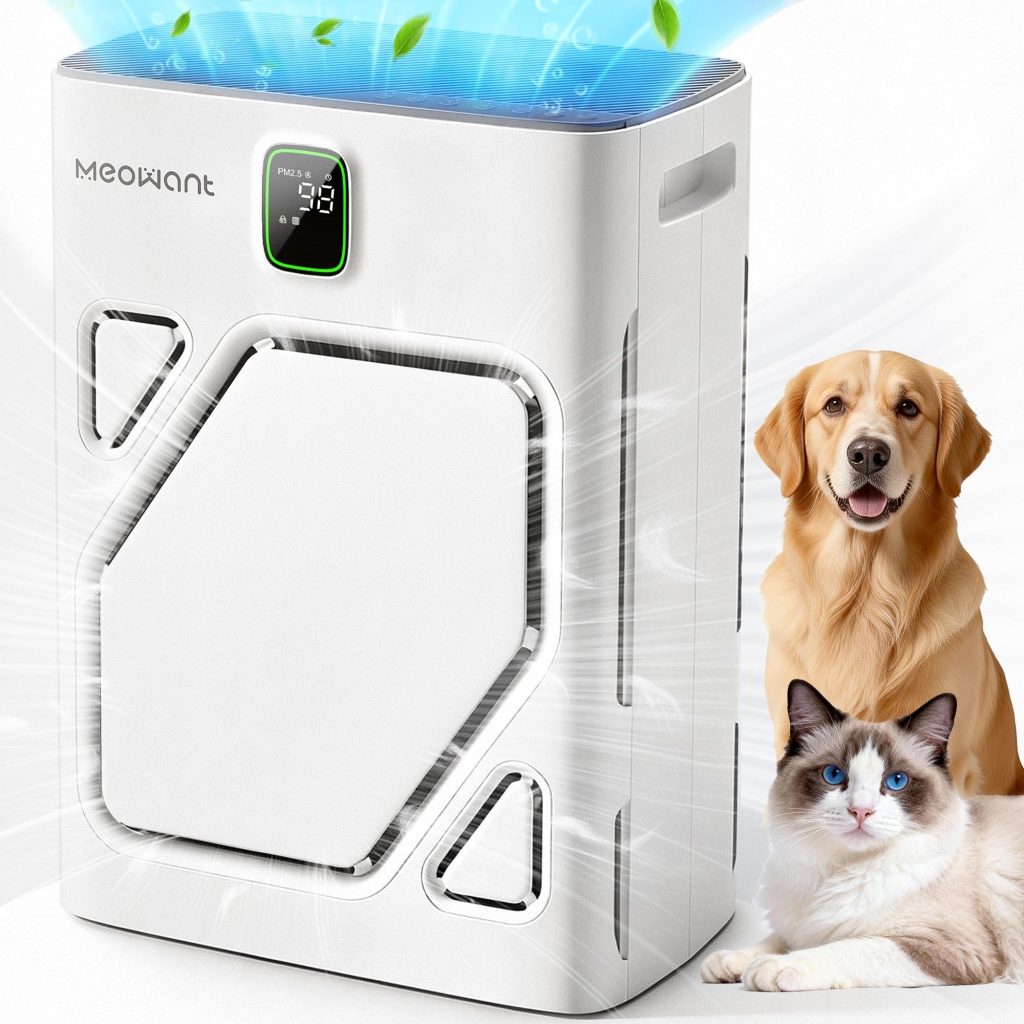
A built-in dust sensor functions as the purifier’s intelligence layer, continuously sampling the air and measuring particulate concentration — including the microscopic dander particles that trigger allergic reactions. When a dog shakes itself dry or a cat grooms near the unit, the sensor detects the resulting spike in airborne particles and signals the purifier to increase fan speed automatically. This real-time responsiveness means the device isn’t running at a fixed, arbitrary setting but instead reacting to actual conditions in your home. Most modern pet purifiers, including those from brands like Meowant that focus specifically on pet household needs, display this data as an air quality index on a color-coded panel, giving you an immediate visual cue of current conditions. The practical benefit is significant: rather than manually adjusting the purifier every time your pet is active, the sensor-driven automation handles it for you, ensuring filtration intensity always matches the actual demand.
Effective Odor Neutralization Methods for Pet Homes
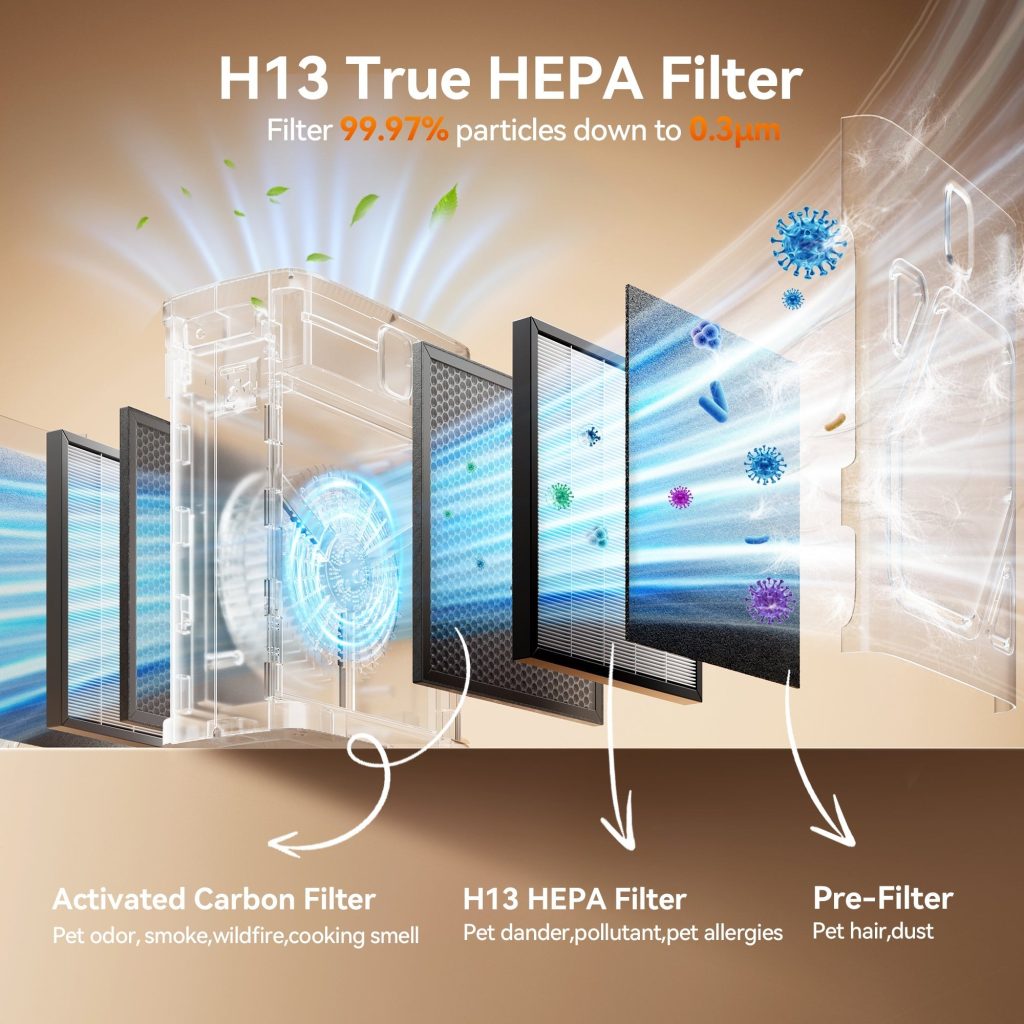
Capturing particles is only half the battle — persistent pet odors require a chemically active solution. Activated carbon filters are the most reliable technology for this purpose, using a porous carbon matrix to adsorb volatile organic compounds, ammonia from litter boxes, and the sulfur-based molecules responsible for wet-dog smell. The key word is adsorption, not absorption: odor molecules bond directly to the carbon surface and are removed from the airstream rather than simply masked. Some pet purifiers supplement activated carbon with additional odor-control stages, such as a pre-filter treated with antimicrobial agents that prevents bacterial growth — a common source of persistent odor in high-humidity pet environments. Together, these technologies neutralize smells at their molecular source, producing a genuinely fresher home rather than one that simply smells like a scented spray covering something worse underneath.
Step-by-Step Guide to Setting Up and Using Your Pet Air Purifier
Getting your pet air purifier operational correctly from day one makes a measurable difference in how effectively it manages your home’s air quality. Before plugging anything in, remove all packaging materials and locate the filter compartment — most units ship with filters pre-installed, but some require you to seat the HEPA and carbon filter stack yourself before first use. Check the manufacturer’s setup guide to confirm filters are properly aligned, since a misseated filter allows unfiltered air to bypass the system entirely.
Optimal Placement for Maximum Air Filtration
Where you position the purifier matters as much as the device itself. Place it in the room where your pet spends the most time — a living room where your dog lounges, a bedroom where your cat sleeps, or directly adjacent to a litter box area. Position the unit at least 18 inches away from walls and furniture on all sides to allow unrestricted airflow through the intake vents. Avoid corners and enclosed spaces, which create dead zones that limit the purifier’s ability to draw in contaminated air from across the room. For homes with multiple pets spread across different spaces, prioritize the room with the highest dander concentration first, then consider a secondary unit for the next highest-traffic area. Elevated placement — on a low table rather than the floor — can improve circulation in rooms with carpeting, since dander disturbed by foot traffic rises and disperses at mid-room height.
Configuring Settings for Different Pet Scenarios
Once positioned, power on the unit and allow it to run on its highest fan speed for the first 30 to 60 minutes to establish a clean air baseline in the room. After that initial purge, switch to auto mode if available — this lets the dust sensor govern fan speed based on real-time air quality readings rather than running at unnecessary intensity during quiet periods. In households with three or more pets, or during high-shedding seasons, set the default operating mode one step above auto to ensure the purifier keeps pace with elevated dander output. Use the built-in timer function to schedule the purifier to run at full speed roughly 30 minutes before family members typically occupy a room, so the air is already clean when people arrive. During nighttime operation near bedrooms, most units offer a sleep mode that reduces fan noise while maintaining continuous filtration — a practical compromise between air quality and rest.
Integrating an Air Quality Monitor for Reliable System Monitoring
Even a well-configured pet air purifier benefits from an external air quality monitor working alongside it. While built-in dust sensors provide useful real-time feedback, a dedicated standalone monitor measures a broader range of pollutants — including VOCs, humidity, and CO2 levels — that the purifier’s internal sensor may not capture. Placing a monitor in a different part of the room, or in an adjacent space the purifier doesn’t directly serve, gives you a complete picture of air quality across your home rather than just at the purifier’s intake point.
Setting up the integration is straightforward. Position the external monitor at breathing height — roughly three to four feet off the floor — away from direct airflow from the purifier to get an accurate ambient reading rather than a measurement of already-filtered air. Many modern monitors connect to a smartphone app that logs historical data, allowing you to identify patterns: perhaps dander spikes every evening when your dog returns from a walk, or odor compounds rise sharply on humid days. Use these insights to make deliberate adjustments — scheduling the purifier to run at higher intensity during predictable high-pollution windows rather than relying solely on reactive automation. When monitor readings consistently show elevated particulate levels despite the purifier running, treat it as an early signal that filters need attention or that the unit’s placement needs reconsideration. Reliable system monitoring transforms your purifier from a passive appliance into an active, data-informed component of your home’s overall air quality strategy.
Maintenance and Optimization for Sustained Odor and Fur Control
Even the most advanced pet air purifier loses effectiveness without consistent upkeep. Filters become saturated over time, and a clogged HEPA or exhausted carbon layer doesn’t just perform poorly — it can actually restrict airflow and force the motor to work harder, shortening the unit’s lifespan. Building a maintenance routine around your specific pet situation is the most reliable way to sustain the odor control and fur management you set the device up to deliver.
Filter Care and Replacement Schedule
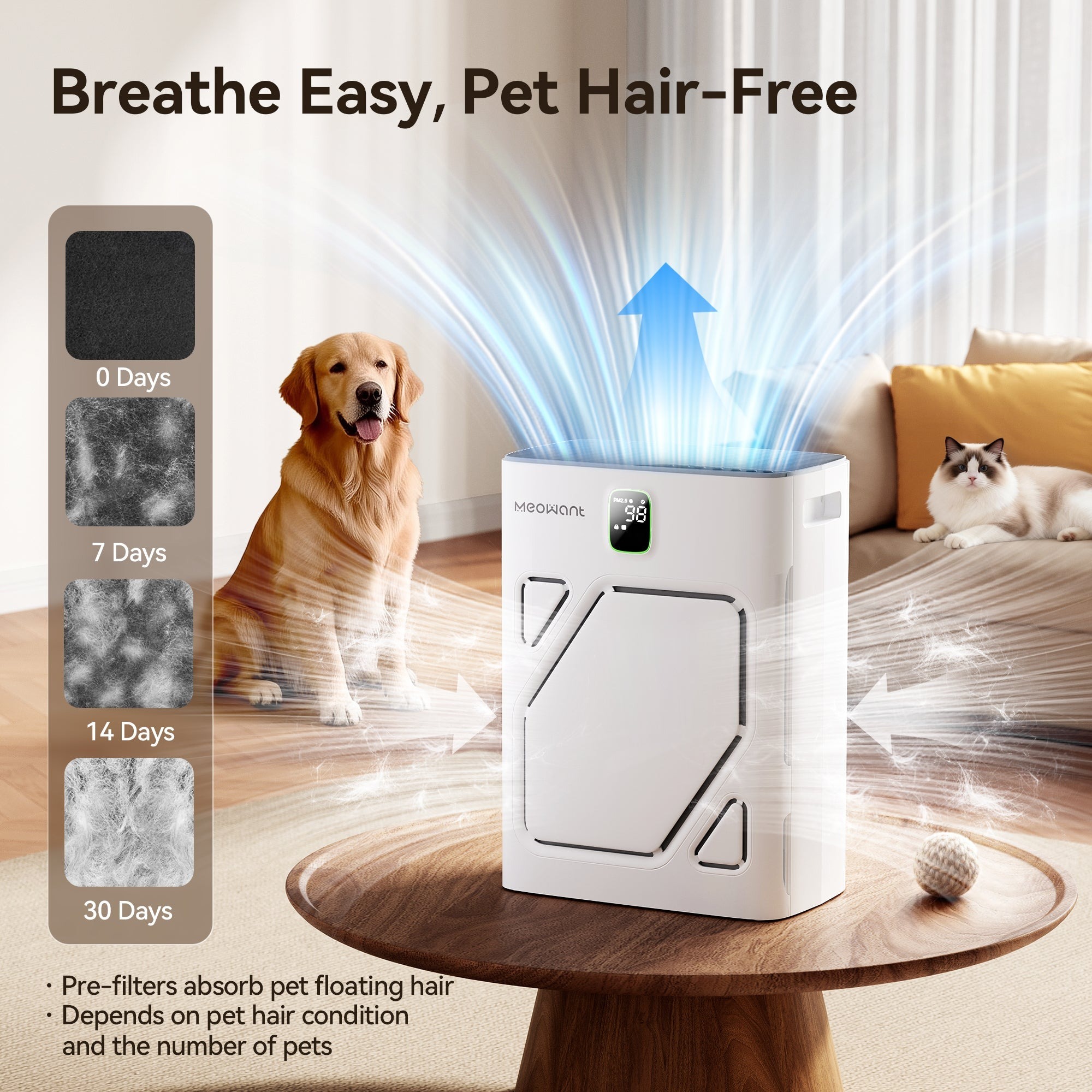
Pre-filters, which capture visible hair and larger debris before it reaches the HEPA layer, should be cleaned every two to four weeks in a pet household — more frequently if you have three or more animals or heavy-shedding breeds. Remove the pre-filter and gently tap it over a trash bin, or use a vacuum brush attachment to clear accumulated fur. Never rinse a HEPA filter with water unless the manufacturer explicitly states it’s washable; moisture damages the fiber matrix and compromises filtration efficiency. The HEPA filter itself typically requires replacement every six to eight months in a multi-pet home, compared to the standard twelve-month cycle recommended for pet-free households. Activated carbon filters exhaust faster than HEPA layers because odor compounds saturate the carbon surface — plan to replace carbon filters every three to four months if litter boxes or multiple animals are involved. Mark replacement dates on a calendar when you install fresh filters so the schedule stays visible rather than forgotten.
Additional Tips for Enhancing Home Air Filtration
Maintenance extends beyond the purifier itself. Vacuuming carpets and upholstery two to three times per week with a HEPA-equipped vacuum removes settled dander before it becomes airborne again, directly reducing the particulate load your purifier must process. Regular grooming — brushing dogs and cats outdoors when possible — cuts the volume of loose hair and dander shed indoors at the source. Washing pet bedding weekly in hot water eliminates the bacterial buildup that generates persistent odor compounds, complementing the carbon filter’s work rather than overwhelming it. If you notice the purifier’s air quality indicator remaining elevated despite recent filter changes, check whether your HVAC filters need replacement, since a dirty central system recirculates contaminants faster than any standalone purifier can clear them. Combining these household habits with a well-maintained purifier creates a layered defense that no single device or cleaning practice can achieve alone.
Breathe Better with Pets: Your Path to Cleaner Home Air
Managing indoor air quality in a pet household is an ongoing commitment, but with the right approach it becomes entirely manageable. A purpose-built pet air purifier — equipped with a responsive dust sensor and effective odor neutralization — forms the foundation of that effort, addressing the dander, fur, and biological compounds that standard devices simply aren’t designed to handle. Pairing it with an external air quality monitor elevates your strategy further, turning reactive filtration into a data-informed system that adapts to your pets’ actual behavior and your home’s specific conditions.
Equally important is the maintenance work that keeps everything performing at its best. Cleaning pre-filters regularly, replacing HEPA and carbon layers on a schedule matched to your pet count, and supporting the purifier with consistent vacuuming and grooming practices ensures your investment delivers lasting results rather than diminishing returns. Every step covered in this article — from initial placement to long-term filter care — builds toward the same goal: a home where clean air is the baseline, not the exception. For animal enthusiasts who refuse to choose between loving their pets and breathing comfortably, that outcome is entirely within reach.