

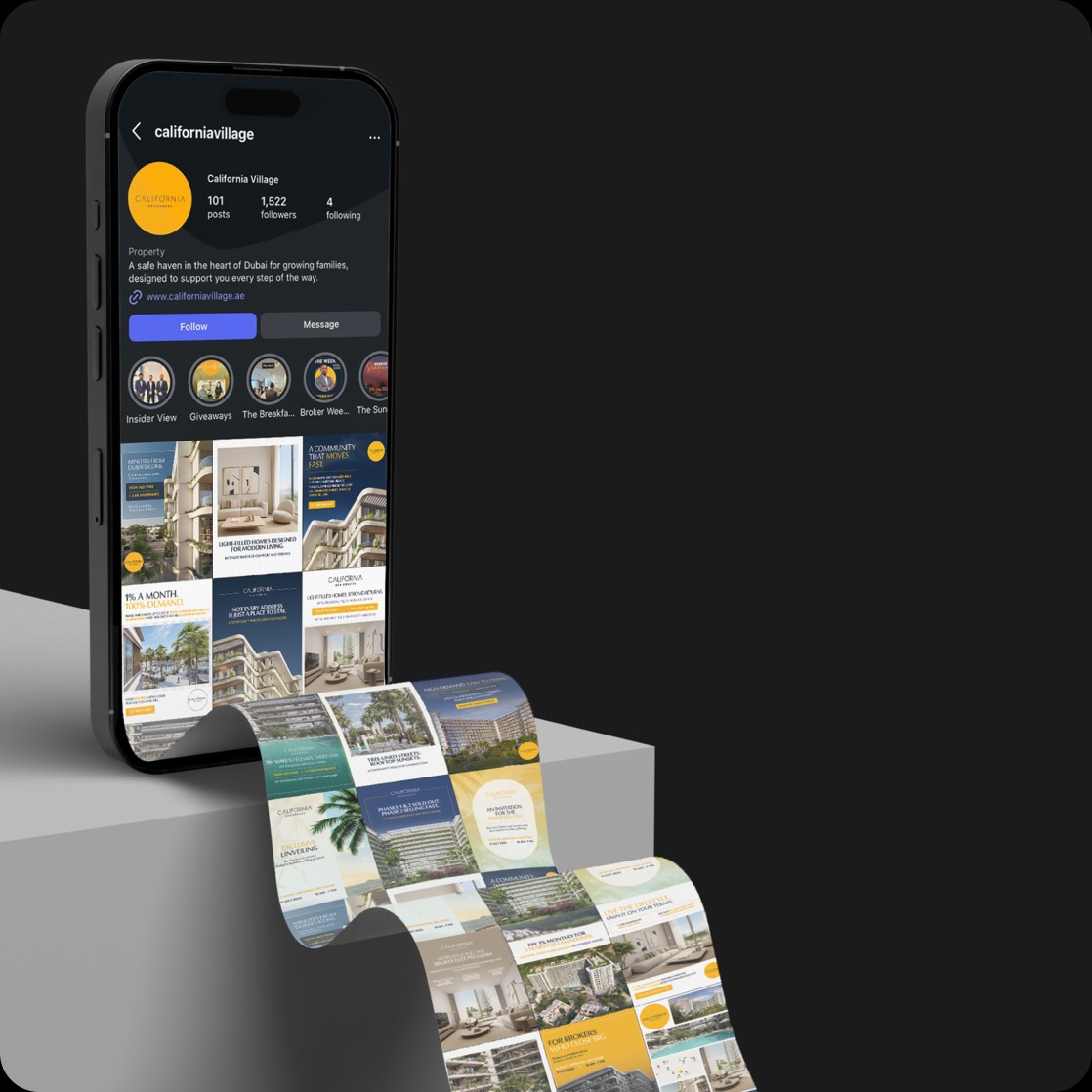
Most developers running paid campaigns already know the frustration. Budgets go out, impressions roll in, and then… not much happens. The phone doesn’t ring. Site visits don’t materialise. The problem isn’t usually the product. A well-priced apartment in a good location sells itself once the right person sees it. Getting that person to actually see it, at the right moment, on the right platform — that’s where most in-house teams fall short.
A dedicated real estate social media marketing agency solves that gap. Not by running more ads, but by approaching the whole thing differently.
Why Property Marketing on Social Media Is a Separate Discipline
Real estate doesn’t behave like a consumer product. You’re not selling something someone can impulse-buy after seeing a Reel. A buyer or investor goes through a long decision cycle, sometimes months long, before they ever submit an enquiry. Social media has to work across that entire cycle — building awareness at the top, building trust in the middle, and creating the conditions for a real conversation at the bottom.
That’s very different from what a general marketing agency does. A generalist might focus on engagement metrics or follower count. A property-focused agency measures what actually matters: qualified enquiries, site visit bookings, broker referrals, and sales pipeline activity.
Mint & Co., for instance, operates specifically in the UAE real estate market and works with developers, brokerages, and property brands to turn online attention into real commercial outcomes. The distinction matters. A team that spends every working day inside one sector builds a different kind of instinct than one that switches between retail and tech and property month to month.
Framing the Right Strategy
Understanding who is buying
Dubai’s property market draws investors from South Asia, Europe, the GCC, and East Africa — sometimes all within the same development’s buyer pool. Strategies that work for a local first-time buyer don’t work for an NRI investor comparing two off-plan options in different cities.
A real estate social media consultant who understands this builds platform strategies around audience segments, not just project names. The creative, the ad copy, the targeting, the call-to-action — all of it gets shaped by who is actually making the decision and what information they need before they’ll commit to a conversation.
Paid campaigns that reach the right people
Organic reach on Instagram and Facebook is too inconsistent to carry a launch on its own. Paid campaigns do the heavy lifting — but only when the targeting is right.
A property-specific paid strategy isn’t just about geography. It layers in income signals, behavioural data, interest categories, and lookalike audiences built from actual buyer profiles. When done properly, developers get in front of people who are genuinely in-market, not just people who once searched for something vaguely property-related.
This kind of targeting is what makes a marketing budget go further. Less wasted spend. More conversations with people who are actually ready to talk.
Instagram and Facebook as visual storytelling platforms
Real estate is a visual category. People don’t commit AED 1.5 million on the basis of a bullet-point list. They want to feel something about a space — the light, the layout, the sense of what a life there might look like.
Instagram is still the dominant platform for this in the UAE market. High-quality visual content, property walkthroughs, lifestyle narratives, and neighbourhood features all serve different parts of the decision journey. Facebook, meanwhile, tends to work better for older investor demographics and for retargeting people who have already shown interest.
Both platforms need different content treatments. What works as a story format doesn’t work as a static post. What works for awareness doesn’t work for a retargeting campaign aimed at people who’ve visited the project page three times. Agencies that manage both channels daily know this intuitively; teams doing it part-time often don’t.
The Content Problem
There is a content quality gap in real estate social media that rarely gets addressed openly. Developers will spend AED 2 million on a sales centre fit-out and then post blurry renders to Instagram from a WhatsApp thread. The disconnect is real, and buyers notice it.
Premium content — properly photographed, properly edited, shot with purpose for each platform’s format — signals quality before a buyer ever visits a site or speaks to a sales agent. It’s not vanity. It’s the first filter.
Mint & Co. produces what they call luxury content creation for real estate brands, meaning the visuals and narrative are built to reflect architectural design, lifestyle appeal, and investment potential in a way that matches the price point of what’s being sold. That alignment between the product and its visual presentation builds trust faster than any campaign optimisation tweak.
LinkedIn and X: The Channels That Build Developer Credibility
Not everything is about direct buyer acquisition. Developer reputation among brokers, institutional investors, and industry media matters just as much.
LinkedIn marketing for real estate plays a specific role here. For brokerage leaders and development company executives, a well-managed LinkedIn presence builds the kind of professional credibility that affects broker referral rates, media coverage, and investor sentiment. Sharing market insights, commenting on policy changes, spotlighting project milestones — these aren’t flashy, but they work.
X (formerly Twitter) serves a similar function for executive positioning. A developer’s CEO commenting intelligently on the direction of Dubai’s property sector doesn’t convert leads directly. Still, it shapes how the brand is perceived by the people who influence buyers, and that filters down.
Community Management: The Part Everyone Underestimates
Comments and DMs on real estate social pages aren’t just engagement metrics. They’re warm leads sitting unanswered.
Someone who comments “what’s the starting price?” on a project video is signalling buying intent. If that comment gets ignored for 48 hours, or gets a generic “DM us for details” reply, the moment is gone. Serious agencies manage this in real time — qualifying the lead, gathering information, and passing it to the sales team in a usable format.
That gap between social interest and sales follow-up is where a huge amount of lead value disappears. Community management isn’t admin work. It’s a pipeline function.
Measuring What Matters
Vanity metrics are easy to produce. Reach, impressions, follower count — these look fine in a monthly report and don’t tell you much about whether the campaign is working commercially.
The reporting that matters tracks reach and engagement as context, then connects it to downstream activity: enquiry volume, cost per lead, lead quality scores, site visit conversion rates, and ultimately — how many of those leads ended up in the sales pipeline.
Mint & Co. builds reporting around these performance metrics, which means clients can see where campaigns are generating real value and where adjustments need to be made. That kind of clarity also means budget decisions are grounded in data rather than gut feel.
How Platform Choice Connects to Lead Quality
Not all platforms generate the same type of lead. This is worth understanding before any budget is allocated.
Instagram tends to drive younger buyers, NRI audiences, and people earlier in their decision journey. Facebook skews toward a slightly older demographic and works well for retargeting. LinkedIn generates fewer leads but they tend to be higher-value — investors, company buyers, relocation decisions. X contributes to credibility rather than direct enquiries in most cases.
A real estate social media marketing agency builds a platform mix that reflects the actual buyer profile of each development. A mid-market townhouse community and a luxury penthouse tower should not be running the same platform strategy.
Why Sector Specialisation is Important
There’s a version of this conversation where the developer says, “We already work with a big agency, they handle everything.” And sometimes that works. But real estate has very specific regulations, very specific buyer psychology, and very specific timing pressures around launches and handovers that a generalist simply doesn’t have built into their muscle memory.
An agency that works exclusively in property has already made every mistake worth making. They know that launch-week paid budgets need to be front-loaded. They know which content formats kill reach. They know that a floor plan graphic outperforms a lifestyle render for certain investor audiences. That institutional knowledge doesn’t exist in a team that does three property accounts among fifty others.
Mint & Co. operates in this niche by design, working with developers and brokerages specifically in the UAE market. The sector focus means their strategies reflect actual Dubai market behaviour — buyer nationality mix, platform preferences, content consumption patterns — not imported assumptions from other markets.
The Bottom Line for Developers
Social media for real estate is not a branding exercise that runs in the background. When it’s set up properly — with the right strategy, the right content, the right paid campaigns, and the right reporting — it becomes a measurable contributor to lead generation and sales velocity.
The developers who treat it that way, and work with a real estate social media marketing agency that treats it that way, get more qualified enquiries, shorter sales cycles, and better returns on their marketing spend. The ones who treat it as a posting calendar managed by a junior in-house hire tend to get followers.
One of those outcomes is worth paying for.
