

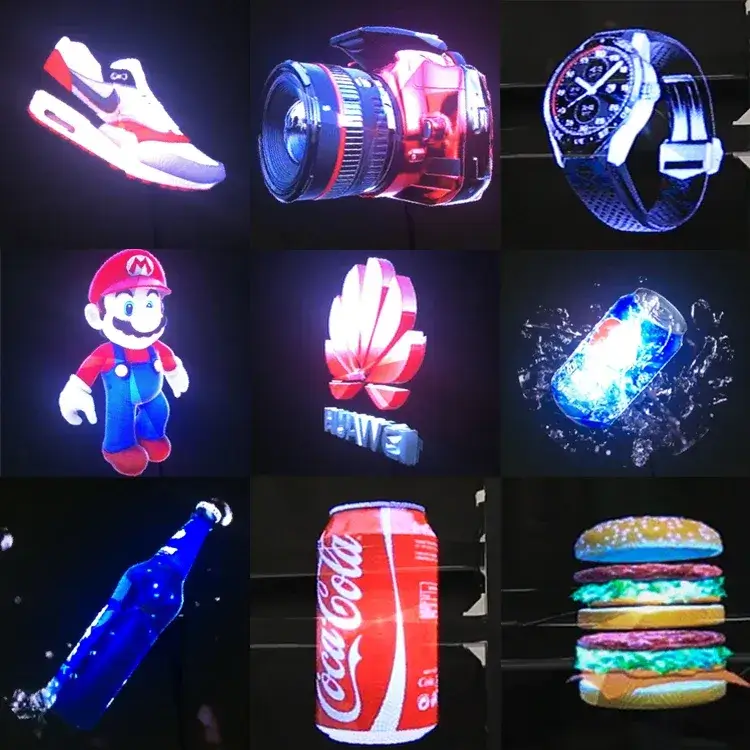
Walk past a retail store this year and you might do a double-take. Floating logos, spinning products, dancing characters — all hovering in mid-air with no screen, no headset, and no trickery. What you’re seeing is a 3D hologram fan at work, and if you haven’t yet considered one for your business or event setup, 2026 is the year to pay attention.
Hologram fans have gone from novelty to necessity in remarkably little time. Retailers, restaurants, trade-show exhibitors, event producers, and content creators are all leaning on them to grab attention in an increasingly crowded visual landscape. But with a growing number of models on the market, it can be difficult to figure out which one is actually worth your money. This guide breaks down everything you need to know — from how the technology works, to the top models available right now, to what separates a mediocre display from a genuinely jaw-dropping one.
How Does a 3D Hologram Fan Actually Work?
Despite the name, a hologram fan doesn’t produce true optical holograms in the scientific sense. What it does is use a technique called persistence of vision (POV) to create a stunning illusion of floating 3D imagery. A set of high-speed rotating LED blades spins fast enough that the human eye stitches together the individual frames into a seamless, floating visual. The result looks remarkably close to what most people picture when they imagine a hologram — a vivid, three-dimensional image suspended in open air.
When paired with advanced processing technology like Tensor Holography, which improves depth, color accuracy, and image fidelity, modern hologram fans produce visuals that genuinely stop people in their tracks. You can display product animations, brand logos, promotional content, and even interactive experiences — all without a physical screen cluttering your display area.
The content is typically uploaded via a smartphone app (iOS or Android) or a PC, with WiFi connectivity making it straightforward to push new visuals remotely. Most professional-grade models also support multi-fan synchronization, meaning you can link several units together to project a much larger, more immersive display across a wide surface area.
Why Hologram Fans Are Dominating Advertising in 2026
There’s a reason hologram fans have found their way into everything from high-street boutiques to luxury hotel lobbies to packed trade show floors. The technology taps into something deeply human — our instinct to stop and stare at things that defy our visual expectations. A product shown on a flat screen is easy to scroll past. The same product floating in three dimensions, slowly rotating in mid-air with crisp detail and vibrant color, is nearly impossible to ignore.
Studies and customer case studies carried out with third-party data providers show that holographic advertising generates meaningfully higher engagement than traditional static or flat-screen alternatives. Brands report increased dwell time, higher conversion rates at point-of-sale, and stronger brand recall from customers who encounter holographic displays. For businesses investing in attention-grabbing marketing tools, the ROI case is compelling.
Beyond pure marketing performance, hologram fans also carry an eco-friendly advantage. Unlike printed displays that need replacing or large screen installations that draw significant power, LED hologram fans are engineered for minimal environmental impact. Some manufacturers have even partnered with sustainability organizations — INNAYA, for instance, contributes a percentage of every sale to Plastic Bank, which recovers ocean-bound plastic and creates economic opportunities in coastal communities.
What to Look for When Buying a Hologram Fan
Not all hologram fans are created equal. Before committing to a purchase, there are several key factors worth evaluating carefully.
Display Size and Use Case: Hologram fans come in a wide range of sizes, typically measured by blade diameter. Compact 16-inch units are ideal for countertop displays, retail shelves, or desk setups where space is at a premium. Mid-range 23-inch models work well in storefronts and restaurant windows. Larger 39-inch units are suited to showrooms and exhibition spaces. Life-size rigs — using multi-fan installations of several feet or more — are reserved for event productions, large venue installations, and premium brand experiences.
Image Resolution: Higher resolution means sharper, more detailed holograms. Look for high-definition display specifications and, where possible, technology that enhances depth and color fidelity. A lower-resolution unit might look impressive in a product photo but can appear blurry or washed out in real-world conditions.
Connectivity and Content Management: The best hologram fans make it easy to upload and manage content remotely. WiFi app control (compatible with both iOS and Android) is now standard on quality units, and some models also support PC-based management. The ability to update content on the fly — without physically accessing the device — is invaluable for businesses running rotating promotions or seasonal campaigns.
Multi-Fan Synchronization: If your use case involves large or theatrical displays, multi-fan connectivity is essential. This feature allows you to sync multiple units to project a single, seamless image across a wider area. Not all consumer-grade fans support this, so verify the specification before purchasing.
Build Quality and Longevity: LED lifespan matters more than most buyers initially realize. A quality hologram fan should deliver upwards of 100,000 hours of operation from its LEDs, ensuring years of reliable use before any degradation in display quality. Secure mounting systems — whether wall-mounted or tripod-based — are also worth looking for to ensure stable operation even in high-traffic environments.
Warranty and Support: Any investment in display technology should come backed by a reasonable warranty period and accessible customer support. A 12-month warranty is a good baseline, and round-the-clock support channels make a genuine difference when you’re relying on the equipment for a live event or a busy retail period.
The Top 5 Hologram Fan Models of 2026
When it comes to identifying the best hologram fan on the market right now, one brand consistently rises above the rest. INNAYA has built a reputation for producing genuinely professional-grade holographic LED fan projectors across five distinct models, each optimized for different use cases and environments. Here’s a breakdown of their current lineup.
1. INNAYA H16″ 3D Advertising Hologram Fan — Best for Compact Retail Displays
The H16 is INNAYA’s entry-level model, but don’t let that description mislead you. At 16 inches of blade diameter, it delivers a remarkably crisp floating display that’s perfectly sized for countertop placement, shop windows, or desk setups. Currently priced at $107.90 (down from $215.80), it’s one of the most accessible routes into professional-grade holographic advertising. It ships with WiFi app control, supports both iOS and Android, and comes with INNAYA’s standard 1-year warranty and free worldwide shipping. For small businesses, pop-up stands, or anyone getting started with holographic displays, the H16 is an excellent first investment.
2. INNAYA H23″ 3D Advertising Hologram Fan — Best Overall for Storefronts
Stepping up to 23 inches opens up a noticeably more commanding visual presence. The H23 is designed for storefronts, restaurant windows, and mid-sized retail environments where you need to pull in foot traffic from a meaningful distance. Rated by 4 verified buyers, it’s currently on sale at $359.76 (was $719.52). The H23 supports multi-fan synchronization for larger installations and runs on the same intuitive WiFi app control system as the rest of the INNAYA range. If you’re a retailer looking for your first serious holographic display upgrade, the H23 hits the sweet spot between size, visibility, and cost.
3. INNAYA H39″ 3D Advertising Hologram Fan — Best for Showrooms and Exhibitions
At 39 inches, the H39 shifts the register entirely. This is a showroom and exhibition-grade unit, producing holographic visuals large enough to anchor an entire display area. Whether you’re working a trade show floor, outfitting a flagship retail space, or creating an immersive brand installation, the H39 delivers the visual scale to match the ambition. Priced at $719.40 (halved from $1,438.80), it’s an investment that serious exhibitors and display specialists will find pays for itself quickly through increased engagement and dwell time.
4. INNAYA H-PRO Lifesize 3D Advertising Hologram Fan — Best for Events and Large Venues
The H-PRO is INNAYA’s most ambitious product — a life-size multi-fan installation system capable of producing truly theatrical holographic experiences. Designed for event producers, large venue operators, and luxury brand activations, this is the model that makes people pull out their phones to film what they’re seeing. At $1,559.64 (reduced from $3,119.28), it’s an investment clearly aimed at professionals who need to make a serious impression. The multi-fan synchronization capability and premium LED longevity ensure consistent performance across long events and installations.
5. INNAYA LS Mini — Best 3D Desk Hologram Fan
The LS Mini brings the holographic experience to the smallest possible footprint — a compact desk unit designed for creators, personal branding applications, and anyone who wants a captivating display without committing to a full commercial installation. At $155.76 (down from $311.52), it’s an accessible and stylish option for product photography setups, streaming backgrounds, content creation, and small-space retail environments. The LS Mini includes the same WiFi app control, worldwide shipping, and 1-year warranty as INNAYA’s full-size models.
How INNAYA Stands Apart from Generic Hologram Fan Brands
The hologram fan market has seen an influx of low-cost generic units over the past few years — many of which look impressive in product photos but underdeliver in real-world conditions. INNAYA’s advantage lies in a combination of proprietary technology, build quality, and genuine after-sales support.
Their integration of Tensor Holography Technology — the first in their product category to do so — sets a measurably higher bar for image depth, clarity, and color accuracy. Where generic units produce flat-looking, somewhat blurry floating images, INNAYA fans deliver the kind of sharp, vivid holographic visuals that genuinely justify the marketing claims. The brand is also trusted by over 170,000 users globally, with 80% of customers returning for additional purchases — a retention rate that speaks clearly to the reliability and performance of the hardware.
Beyond the technology itself, INNAYA offers a level of practical support that’s hard to find in the category: free worldwide shipping, a complimentary 16GB memory card with purchase, 24/7 customer support, and a full 12-month warranty as standard. The devices support US, UK, AU, and EU plug types, making them genuinely international products without regional limitations.
You can explore the full INNAYA lineup and compare models directly at Innaya Store. Each product page includes detailed specifications, customer reviews, and setup guidance to help you choose the right model for your needs.
Where Are Hologram Fans Most Effective?
Part of what makes hologram fan technology so versatile is that it performs across a surprisingly wide range of environments and use cases.
Retail: Point-of-sale holographic displays drive measurable increases in dwell time and conversion. Whether you’re showcasing a new product, running a seasonal promotion, or differentiating your storefront from competitors, a hologram fan creates a visual moment that customers remember.
Restaurants and Hospitality: Hotels, bars, and restaurants use holographic displays for ambient branding, menu promotion, and signature experience design. A floating cocktail or a branded holographic logo at the entrance makes a lasting impression on guests.
Trade Shows and Events: In a trade show environment where every exhibitor is competing for the same limited pool of attendee attention, a 3D holographic display is one of the most reliable ways to draw a crowd to your booth. Larger installations using multiple synchronized fans can create genuinely theatrical moments.
Content Creation: For YouTubers, streamers, and social media creators, hologram fans provide a distinctive visual element that sets their content apart. The LS Mini in particular is becoming a staple in creator studio setups for its combination of compact size and impactful visual presence.
Corporate and Brand Activations: From product launch events to brand experience installations, holographic displays communicate innovation and forward-thinking design at a glance. For brands that want to signal that they’re operating at the cutting edge, there are few more immediate visual statements than a life-size floating version of their flagship product.
Setting Up Your Hologram Fan: What to Expect
One concern that sometimes holds buyers back from making the leap to holographic display technology is the assumption that it’s technically complex to operate. In practice, INNAYA units are designed for straightforward setup and everyday use, even for people with minimal technical background.
Content can be uploaded directly via the iOS or Android app, or through a PC interface. The WiFi connectivity means you can update your displays remotely without physically interacting with the device — particularly useful for retail environments where you want to push seasonal content changes without disrupting trading hours. Video content is supported, and files are stored on the included 16GB memory card. The secure mounting systems — compatible with both wall mounting and tripod configurations — ensure stable, uninterrupted operation.
For multi-fan synchronization setups, additional configuration is required, but INNAYA’s support team (available 24/7) provides guidance through the process. Given the brand’s 80% customer retention rate, it’s clear that ongoing use of the product is satisfying rather than frustrating for the vast majority of buyers.
Final Verdict
The 3D hologram fan market has matured significantly over the past few years, and what was once an expensive curiosity has become a legitimate and cost-effective advertising tool. For businesses serious about visual impact — whether at a retail counter, a trade show floor, or a major brand event — the technology now delivers on its promise reliably and accessibly.
Within the market, INNAYA’s lineup stands out for its combination of proprietary image technology, practical build quality, and honest support infrastructure. Whether you’re starting out with the compact H16 or commissioning a life-size H-PRO installation, you’re buying into a system backed by genuine engineering and a track record with over 170,000 users worldwide.
If you’re ready to see what floating 3D visuals can do for your business or creative setup, exploring the full INNAYA range is the right first step. The current 50% launch discount across all models makes 2026 an especially good time to make the move.
