

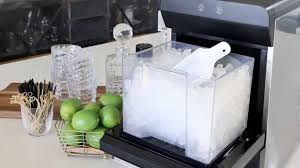
Picture this: it’s a sweltering Saturday afternoon, friends are texting that they’re on their way over, and you glance at your freezer’s sad little ice tray — half-empty and nowhere near ready. If you live in an apartment, you already know the double frustration of limited counter space and an ice supply that can’t keep up with even a small gathering. Traditional ice trays are slow, bag ice melts in transit, and bulky ice machines simply don’t fit in a compact kitchen. That’s where a sonic ice maker changes everything. Designed to produce ice rapidly while occupying minimal real estate on your countertop, this appliance is built for people who need fast results without sacrificing precious square footage. Whether you’re blending cocktails, filling coolers for a rooftop hangout, or just keeping drinks cold throughout the day, a sonic ice maker delivers. In this article, we’ll break down how the technology works, compare it against other compact ice machines, walk you through choosing the right model for your apartment, and share practical setup tips so you can start enjoying ice on demand.
What is a Sonic Ice Maker and Why It’s Perfect for Small Spaces
A sonic ice maker is a countertop appliance engineered to freeze water rapidly by using high-frequency sonic vibrations during the ice formation process. Unlike conventional ice makers that rely solely on slow, passive freezing, these machines actively agitate water as it chills, producing soft, chewable ice nuggets in a fraction of the time. The result is the same type of ice you’d find at your favorite drive-through or smoothie bar — porous, crunchable, and perfect for absorbing the flavor of whatever drink it’s sitting in. That social appeal alone makes it a standout for anyone who entertains, even casually.
The Technology Behind Sonic Ice Makers
The core innovation lies in how sonic vibrations interact with freezing water. As a refrigeration cycle cools water around a metal cylinder, ultrasonic pulses prevent large, solid blocks from forming. Instead, the water freezes in thin, layered sheets that the machine scrapes and compresses into small, irregularly shaped nuggets. This process is dramatically faster than a standard freezer tray, where still water must lose heat gradually from the outside in. Because sonic ice makers continuously cycle fresh water over the freezing surface, most units can deliver their first batch of ice in as little as six to ten minutes — compared to the two-plus hours a traditional tray demands.
Key Benefits for Apartment Living
For apartment dwellers, the practical advantages go beyond speed. Most sonic ice makers occupy roughly the same footprint as a coffee maker, so they tuck easily beside a microwave or toaster without monopolizing your counter. Noise output tends to hover around 40 decibels — comparable to a quiet library — which matters when you share walls with neighbors. Energy consumption is modest too; running a cycle draws about as much power as a standard light bulb, so your electricity bill won’t spike during heavy use. Perhaps most importantly, these machines are self-contained: no permanent water line installation is required in most models, meaning you simply fill a reservoir, plug in, and go. When friends show up unannounced, you can have a full bin of chewable, cocktail-ready ice waiting before they’ve even taken off their shoes.
Comparing Sonic Ice Makers with Other Compact Ice Machines
With several types of small-format ice makers on the market, it’s easy to get confused by overlapping product names and vague marketing claims. Understanding the real differences in size, ice style, production speed, and portability will help you zero in on the machine that actually fits your apartment lifestyle — and your countertop.
Sonic Ice Maker vs. Nugget Ice Maker
Here’s where terminology gets tricky: a sonic ice maker and a nugget ice maker often produce very similar chewable, pebble-style ice. The distinction is in the method. Sonic models use ultrasonic vibration-assisted freezing to create their nuggets quickly, while some nugget ice makers rely on an auger that scrapes ice from a cold cylinder and compresses the shavings. In practice, sonic versions tend to be slightly more compact because the vibration mechanism requires fewer moving parts than a full auger assembly. If your priority is fitting the machine into a tight galley kitchen and getting ice to the glass as fast as possible, the sonic approach generally wins on both footprint and first-batch speed. However, auger-based nugget machines sometimes produce a denser, longer-lasting nugget — a worthwhile trade-off if you’re filling a cooler for an outdoor trip rather than serving drinks immediately.
Portable Ice Maker Considerations
Portable ice makers are marketed on flexibility: take them to a dorm, a patio, an RV, wherever you need ice. Most produce bullet-shaped or crescent-shaped cubes rather than nuggets, and they’re designed to be lightweight enough to move frequently. That portability can be a genuine asset if you split time between spaces, but it comes with compromises. Many portable units have smaller reservoirs and lower daily output, so they struggle to keep up during a party. They also tend to be taller and narrower, which can make them awkward next to low-hanging cabinets. A dedicated sonic ice maker usually offers a better balance of output and compactness for someone who plans to keep the machine in one spot — your apartment kitchen.
Compact Ice Machine Options
Traditional compact ice machines — the kind that produce standard hard cubes — remain a popular budget choice. They freeze water in molds using a straightforward refrigeration loop, which is reliable but slow. Expect fifteen to twenty minutes for the first batch and hard, clear cubes that melt more slowly than nugget ice. For casual daily use that’s fine, yet when six friends arrive for an impromptu movie night, that pace falls short. Sonic ice makers outperform these conventional compact machines in speed and social versatility, producing soft ice that chills drinks faster because of its greater surface area. If quick ice for gatherings is a deciding factor, the sonic compact option delivers where a traditional compact ice machine simply can’t keep up.
How to Choose the Right Sonic Ice Maker for Your Apartment
Picking the best sonic ice maker for an apartment isn’t just about reading reviews — it starts with understanding your own space and habits. A machine that’s perfect for a studio with a galley kitchen won’t necessarily suit a one-bedroom with an open-concept layout, and someone who hosts weekly game nights has very different demands than a person who just wants cold water throughout the day. By narrowing down a few practical variables before you shop, you’ll avoid the common trap of buying a machine that either overwhelms your counter or underwhelms your ice bowl.
Assessing Your Space and Ice Needs
Start by measuring the exact countertop area where you plan to place the machine. Grab a tape measure and note the width, depth, and — critically — the vertical clearance beneath any upper cabinets or shelves. Many sonic ice makers need a few inches of open air above and behind the unit for ventilation, so factor that into your numbers. Next, think about how much ice you actually consume. A solo user sipping iced coffee might go through two to three pounds on a busy day, while a couple that entertains regularly could need eight to ten pounds during a single gathering. Match those estimates to a machine’s daily output rating so you’re not left waiting mid-party. If your kitchen counter is truly maxed out, consider a narrow cart or a sturdy rolling shelf that can be tucked beside the refrigerator — this keeps the sonic ice maker accessible without stealing prep space.
Features to Prioritize for Quick Ice Production
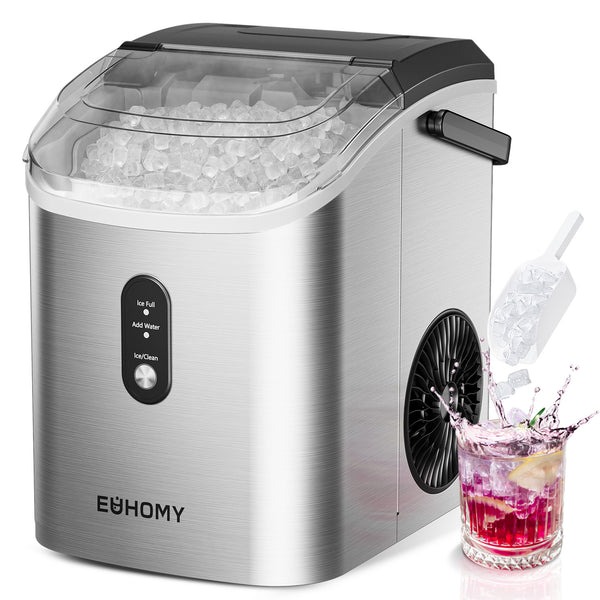
Once you know your space and volume requirements, focus on the specs that directly affect how fast ice reaches your glass. First-batch time is the headline number: look for models that deliver ice within six to ten minutes of startup, which is the sweet spot for sonic technology. Daily production capacity matters for sustained use — anything in the twenty-to-thirty-pound range handles most apartment entertaining comfortably. Storage bin size is equally important because a small bin forces the machine to cycle on and off more frequently, which slows effective output and increases noise. Speaking of noise, confirm the decibel rating sits below 45 dB if you share walls or have an open floor plan where the kitchen blends into the living area. Finally, prioritize easy maintenance: a removable water reservoir, a self-cleaning function, and a dishwasher-safe ice bin will save you time and keep the machine running efficiently for years. Brands like Euhomy have built their countertop ice maker lineup around this kind of apartment-friendly design, combining compact dimensions with self-cleaning capabilities. These features collectively ensure your sonic ice maker performs as a reliable, space-saving workhorse rather than a countertop ornament you eventually unplug.
Step-by-Step Guide to Setting Up and Using Your Sonic Ice Maker
Getting your sonic ice maker from box to first batch is straightforward, but a few deliberate steps will ensure it runs efficiently from day one. Start by unpacking the unit on a clean surface and inspecting it for any shipping damage — check the power cord, the water reservoir, and the ice bin for cracks or loose fittings. Remove all protective packaging and peel off any interior tape before plugging anything in.
Next, choose your placement carefully. Set the machine on a level, heat-resistant section of countertop with at least three inches of clearance behind and above the unit so warm exhaust air can dissipate freely. If counter space is tight, a sturdy microwave cart or a pull-out shelf beside the fridge works well — just make sure the surface can handle the machine’s weight when the reservoir is full. Position it near an outlet to avoid running an extension cord across your kitchen.
Fill the reservoir with fresh, filtered water up to the indicated max line, then plug the machine in and run one full cycle without using the ice. Discard that first batch to flush out any residual manufacturing dust or odors. From the second cycle onward, you’re producing drink-ready nugget ice. To keep output consistent during a gathering, refill the reservoir before it drops below the halfway mark so the machine never pauses mid-cycle.
For ongoing maintenance, drain and wipe the reservoir every week with a mild vinegar solution, run the self-cleaning mode if your model includes one, and descale the internal lines monthly if you have hard water. These small habits prevent mineral buildup, keep ice tasting clean, and extend the life of the appliance so it remains a reliable part of your apartment kitchen for years.
The Ideal Compact Ice Solution for Apartment Dwellers
A sonic ice maker directly tackles the two biggest frustrations apartment dwellers face when it comes to ice: not enough space and not enough speed. The ultrasonic vibration technology behind these machines produces chewable, flavor-absorbing nugget ice in minutes rather than hours, all within a footprint no larger than your morning coffee maker. When stacked against nugget ice makers, portable units, and traditional compact machines, the sonic option consistently delivers the best combination of rapid output, small dimensions, and quiet operation — exactly what you need when kitchen real estate is limited and neighbors are just a wall away.
Choosing the right model comes down to honest measurements of your countertop, realistic estimates of how much ice your social life demands, and attention to specs like first-batch time, daily capacity, and noise rating. Once the machine is home, proper placement with adequate ventilation, a quick flush cycle, and simple weekly maintenance keep it performing reliably for years. Beyond solving today’s ice shortage, a sonic ice maker fits naturally into the growing ecosystem of compact, efficient appliances that make small-space living feel anything but small. As smart home platforms continue to expand, expect future models to integrate with voice assistants and app-based scheduling — giving you ice that’s ready before you even realize you need it.
