

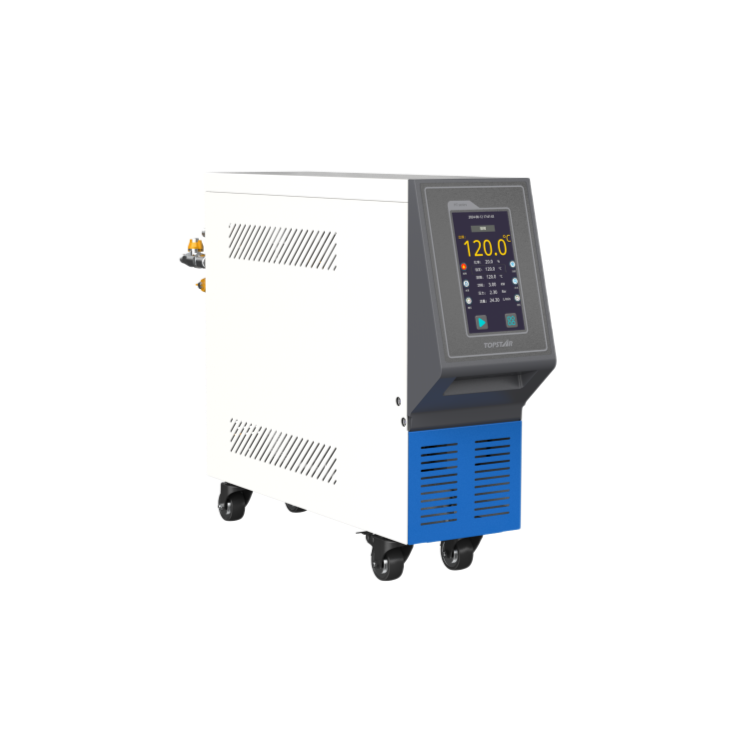
In injection moulding, temperature is not merely a parameter; it serves as the very foundation of product quality and process stability. However, one of the most vexing and costly challenges manufacturers face is temperature overshoot. Temperature overshoot occurs when the mould’s actual temperature exceeds its setpoint, often leading to defects such as warping, surface imperfections, and inconsistent cycle times. Mould temperature controllers play a pivotal role in addressing this issue. Yet, not all controllers are equally effective. Traditional systems often rely on basic on/off switching controls—a method that lacks the precision needed to rapidly stabilise temperatures. Consequently, temperature overshoot becomes inevitable, particularly in high-speed production environments.
The Root Causes of Temperature Overshoot in Mould Temperature Controller
To effectively resolve temperature overshoot, one must understand its underlying causes. In most cases, overshoot results from a combination of factors, including system inertia, feedback delays, and inadequate control logic. First, thermal inertia plays a critical role. The heating medium—whether water or oil—retains heat; thus, even when the controller reduces its power output, the temperature continues to rise. Standard mould temperature controllers, lacking advanced modulation capabilities, cannot effectively compensate for this lag.
Second, sensor placement and response times impact accuracy. If the temperature sensor fails to reflect the mould’s actual temperature in real time, the controller may react too slowly, leading to overshoot. Third, the control algorithm is paramount. Basic controllers operate using fixed logic and cannot adapt to the dynamic changes that occur during the moulding process. This limitation often results in temperature oscillations around the setpoint. Finally, external factors—such as ambient temperature, mould design, and material properties—also influence heat transfer. Without adaptive control, these variables can destabilise the system.
How PID Control in Mould Temperature Controllers Eliminates Overshoot?
The introduction of PID control technology represents a significant advancement in temperature management. A mould temperature controller equipped with PID capabilities can continuously adjust their output based on real-time feedback, thereby ensuring precise temperature control.
The Proportional component responds to the current error—the discrepancy between the setpoint temperature and the actual temperature. It provides immediate correction; however, relying solely on the Proportional component may still allow for some degree of overshoot. The Integral component addresses errors that accumulate over time. It ensures that the system reaches and maintains the desired temperature without any steady-state deviation. The Derivative component anticipates future trends by analysing the rate of change in temperature. This is the critical element in preventing overshoot. The controller prevents the temperature from exceeding the setpoint by slowing down the heating process as the temperature approaches the target value.
Together, these three elements constitute a balanced and adaptive control system. Unlike traditional methods, PID-based mould temperature controllers do not merely respond passively; instead, they can predict and proactively adjust.
Practical Aspects of PID Parameter Optimisation
PID control is powerful, yet its effectiveness hinges on proper parameter tuning. Incorrect parameter settings can degrade performance and even exacerbate temperature overshoot. Therefore, optimising PID parameters is a critical step.
The Proportional Gain (P) determines the system’s response speed to temperature deviations. If set too high, it can lead to system instability; if set too low, the response becomes sluggish. The Integral Gain (I) helps eliminate residual errors, but it must be adjusted with care; excessive integral action can lead to oscillations and delayed stabilisation. The Derivative Gain (D) is particularly important for preventing overshoot. By dampening rapid temperature fluctuations, it ensures a smooth approach to the setpoint.
Modern mould temperature controllers often feature auto-tuning capabilities, thereby simplifying this process. These systems analyse operating conditions and automatically adjust PID parameters to achieve optimal performance. Ultimately, proper PID parameter tuning can transform a standard controller into a precision instrument capable of maintaining stable and efficient operation.
System Design Improvements to Minimise Overshoot
Beyond control algorithms, system design plays a crucial role in minimising temperature overshoot. A well-designed mould temperature controller incorporates optimisations in both hardware and software. First, efficient heat exchange is paramount. High-performance heaters and heat exchangers ensure rapid, precise temperature regulation, thereby reducing the thermal lag that typically causes overshoot. Second, optimised piping and fluid dynamics enhance heat transfer efficiency. Uniform fluid distribution ensures consistent temperature throughout the mould, preventing localised overheating.
Third, advanced sensors improve accuracy. High-precision temperature sensors provide real-time data, enabling the controller to respond more effectively. Furthermore, thermal insulation helps minimise heat loss and enhances system stability, enabling the controller to operate more predictably. Finally, integrating the mould temperature controller with the injection moulding machine enables synchronised operation. This coordination ensures that temperature control remains aligned with the moulding cycle, thereby further reducing temperature fluctuations. By combining intelligent control with robust system design, manufacturers can achieve exceptional thermal stability.
The Practical Benefits of Eliminating Overshoot
Eliminating the effects of temperature overshoot yields benefits that ripple across multiple stages of production. A well-optimised mould temperature controller can significantly boost efficiency, enhance quality, and reduce costs. First, product quality improves markedly. Stable temperatures ensure consistent material flow and cooling, thereby minimising defects such as warping and sink marks. Second, cycle times become more predictable.
By preventing temperature fluctuations, the system can maintain optimal cooling conditions, thereby boosting production efficiency. Third, energy consumption is reduced. Overshoot typically results in wasted energy, as excess heat must subsequently be dissipated. PID con
