

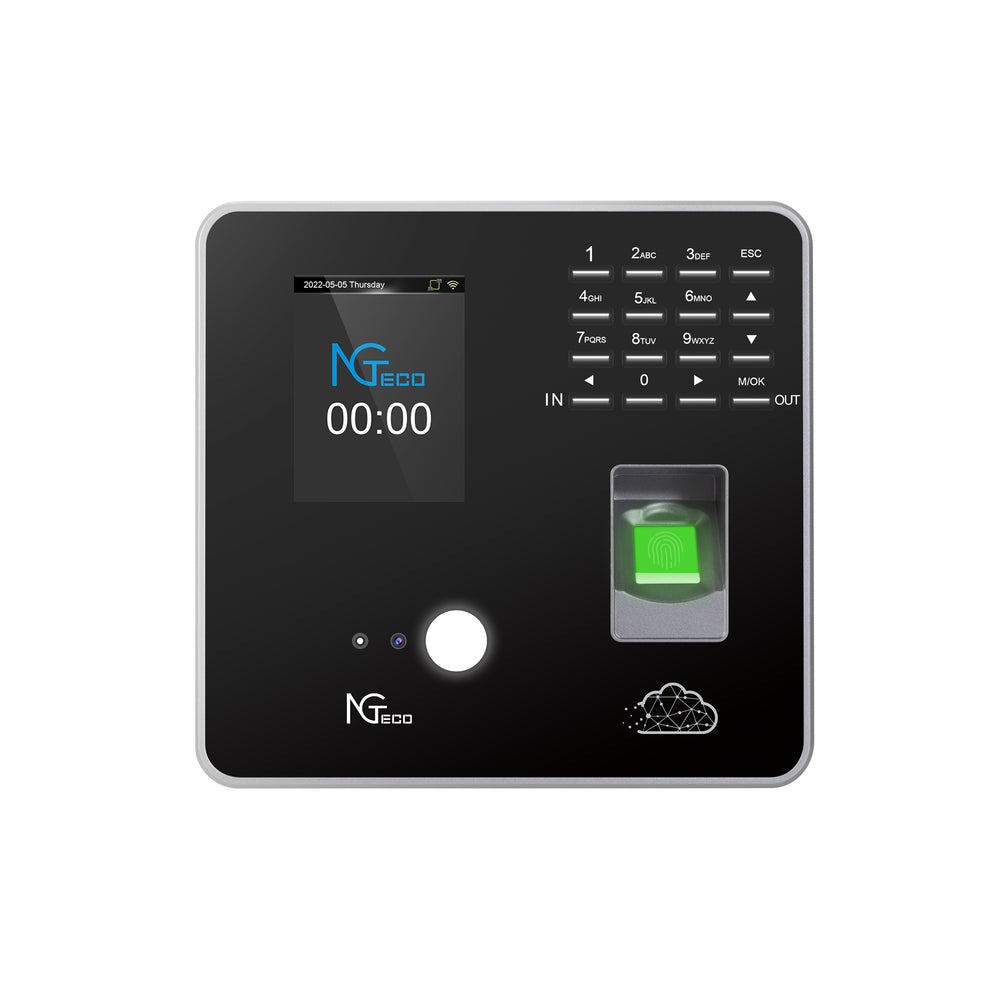
Every minute an employee spends waiting in line to clock in is a minute lost from productive work. For businesses with 50 or more staff members, those minutes add up quickly—often translating to thousands of dollars in wasted labor costs each year. Factor in payroll errors from manual timesheets, buddy punching schemes, and the administrative headache of reconciling inaccurate records, and the true cost of outdated attendance tracking becomes staggering. Small to medium-sized business owners feel this pain acutely, especially when managing diverse workforces across multiple shifts or locations.
Biometric fingerprint time attendance offers a direct answer to these challenges. By verifying identity through unique biological traits in mere seconds, these systems eliminate bottlenecks at the time clock while ensuring every punch is legitimate. This article explores how biometric fingerprint attendance dramatically reduces clock-in time, prevents common fraud, and integrates seamlessly with shift management tools—giving business owners the efficiency and accuracy they need to run leaner operations.
The Growing Need for Efficient Attendance Systems
Traditional attendance methods create friction that compounds across every shift change. Paper timesheets rely on employee honesty and legible handwriting—neither of which is guaranteed. Basic punch card systems force workers into single-file lines, creating bottlenecks that can stretch five to fifteen minutes during peak shift transitions. For a warehouse or retail operation running three shifts, that’s potentially 45 minutes of collective idle time repeated daily across dozens of employees.
Buddy punching remains one of the most persistent problems with conventional systems. The American Payroll Association estimates that 75% of businesses lose money to this practice, where one employee clocks in on behalf of an absent colleague. Beyond outright fraud, manual processes burden HR teams with hours of weekly reconciliation—cross-referencing timesheets, correcting errors, and chasing down discrepancies before payroll deadlines. These administrative costs often go untracked but represent a significant drain on resources. For growing businesses juggling multiple locations or rotating schedules, the inefficiency isn’t just inconvenient—it’s unsustainable. The operational reality demands a system that verifies identity instantly, records data automatically, and scales without adding administrative complexity.
Understanding Biometric Fingerprint Time Attendance
Biometric fingerprint time attendance systems identify employees by analyzing the unique ridge patterns, minutiae points, and contours of their fingertips. Unlike passwords or ID cards that can be shared, lost, or stolen, a fingerprint is an inherent biological identifier that cannot be replicated or transferred between individuals. Modern systems have evolved significantly from early biometric time clocks, which were often slow, prone to misreads, and limited in storage capacity. Today’s devices use advanced optical or capacitive sensors that capture high-resolution fingerprint data and match it against stored templates in under a second—even with databases containing thousands of employees.
While facial recognition has gained attention as an alternative contactless option, fingerprint technology remains the most widely deployed biometric method in workforce management due to its proven reliability and lower implementation threshold. Understanding how these systems function and where they fit relative to other biometric approaches helps business owners make informed decisions about which technology best suits their operational environment.
How It Works: Technology and Integration
The clock-in process is straightforward. An employee places their finger on the scanner, which captures a digital image of the fingerprint and converts it into an encrypted mathematical template. This template is compared against pre-enrolled records in the system’s database. Upon a successful match—typically completed within one to two seconds—the system logs the timestamp, employee ID, and location data automatically. There’s no manual entry, no card swiping, and no PIN to remember.
What makes modern biometric fingerprint systems particularly valuable is their ability to integrate directly with existing HR platforms, payroll software, and shift management tools. Attendance data flows automatically into these systems, eliminating double entry and ensuring that hours worked are accurately reflected in payroll calculations without manual intervention from administrators.
Comparing Fingerprint with Facial Recognition and Other Methods
When evaluating biometric options, fingerprint and facial recognition represent the two most common choices for attendance tracking. Fingerprint scanners excel in speed and cost-effectiveness—they require minimal hardware, work reliably in varied lighting conditions, and maintain high accuracy rates above 99.5% across diverse employee populations. They’re particularly well-suited for manufacturing floors, warehouses, and retail environments where employees may be wearing hats or masks that interfere with facial recognition.
Facial recognition biometric time clocks offer the advantage of contactless operation, which gained importance during health-conscious periods, and they work well for environments where employees’ hands may be dirty or gloved. However, they typically carry higher hardware costs and can struggle with accuracy when lighting changes or when employees alter their appearance. For most small to medium-sized businesses prioritizing fast clock-in times and budget efficiency, fingerprint systems deliver the strongest balance of speed, accuracy, and affordability while still offering the fraud prevention that makes biometric attendance tracking worthwhile.
Direct Benefits for Reducing Employee Clock-In Time
The most immediate impact of biometric fingerprint attendance is the dramatic reduction in time employees spend at the clock. Where traditional methods require ten to fifteen seconds per person—factoring in card retrieval, swiping, and confirmation—a fingerprint scan completes verification in one to two seconds. For a facility with 100 employees changing shifts simultaneously, this difference transforms a fifteen-minute bottleneck into a smooth, continuous flow that clears in under three minutes. That recovered time translates directly into productive labor hours rather than idle queuing.
Speed and Efficiency in Daily Operations
The speed advantage compounds across daily operations in ways that extend beyond the clock-in moment itself. Employees no longer need to arrive early just to secure their place in line, which means shift handoffs happen more cleanly and coverage gaps shrink. In fast-paced environments like restaurants, hospitals, or distribution centers, even a two-minute improvement per shift change across all staff can recover hundreds of labor hours annually. The system also eliminates failed attempts common with card readers or PIN pads—there’s no forgotten badge to retrieve from a locker, no smudged card that won’t scan, and no mistyped code requiring a second try. Each interaction is a single touch that either confirms identity or prompts the employee to reposition their finger, keeping the process moving without supervisor intervention.
Preventing Time Theft and Buddy Punching
Beyond speed, biometric fingerprint systems close the loophole that costs businesses the most: fraudulent clock-ins. Because a fingerprint cannot be handed to a coworker or duplicated, buddy punching becomes physically impossible. This eliminates not only the direct cost of paying for unworked hours but also the downstream time spent investigating discrepancies, issuing corrections, and reprocessing payroll. Managers who previously devoted hours each week to auditing suspicious punch patterns can redirect that energy toward operational priorities. For businesses that have experienced chronic time theft, the return on investment often materializes within the first few months as ghost hours disappear from timesheets entirely and payroll accuracy jumps measurably—some organizations report error reductions exceeding 90% after deployment.
Enhancing Shift Management and Attendance Tracking
For businesses managing diverse workforces across rotating schedules, part-time arrangements, and multiple departments, biometric fingerprint attendance does far more than speed up the clock-in process. These systems serve as the backbone of intelligent shift management by feeding real-time attendance data directly into scheduling platforms. When an employee scans in, managers instantly see who’s on-site, who’s late, and where coverage gaps exist—without waiting for end-of-day reports or relying on supervisor headcounts. This visibility transforms reactive workforce management into proactive decision-making, particularly for operations where staffing levels directly affect output or customer service quality.
Streamlining Shift Changes and Rotations
Complex shift patterns that once required spreadsheets and constant manual updates become significantly easier to manage when biometric attendance tracking feeds directly into scheduling software. The system automatically records exact start and end times for each employee, making it simple to identify overtime accumulation before it becomes a budget problem. When last-minute shift swaps occur, the biometric clock ensures that only the actual replacement employee can punch in for that shift—there’s no ambiguity about who actually showed up. For businesses running flexible schedules or staggered rotations, this precision eliminates the confusion that typically surrounds handoff periods. Managers spend less time fielding calls about coverage and more time focusing on operations, because the system provides a clear, tamper-proof record of who worked when and for how long.
Accurate Data for Payroll and Compliance
Payroll accuracy improves dramatically when attendance data flows directly from biometric scans into calculation engines without human transcription. Every clock-in and clock-out generates a precise, timestamped record that payroll software uses to calculate regular hours, overtime, and break compliance automatically. This matters especially for businesses subject to labor regulations around mandatory rest periods, maximum shift lengths, or industry-specific reporting requirements. Rather than scrambling to compile records during an audit, managers can pull comprehensive attendance reports instantly. For diverse teams that include hourly workers, salaried staff, and contract employees—each with different pay rules—the system applies the correct calculations based on employee classification without manual sorting. The result is fewer payroll disputes, faster processing cycles, and documented compliance that protects the business from costly penalties.
Step-by-Step Guide to Implementing Biometric Fingerprint Systems
Transitioning to biometric fingerprint attendance doesn’t require a complete operational overhaul, but it does demand thoughtful planning to maximize both clock-in speed improvements and workforce management gains. The following steps provide a practical roadmap for business owners ready to move from outdated attendance methods to a system that scales with their team.
Step 1: Assess Your Business Needs and Workforce Diversity
Start by documenting your current pain points. Calculate how long shift transitions actually take, how frequently payroll errors occur, and whether buddy punching is a known or suspected issue. Map your workforce composition—identify how many employees work fixed versus rotating shifts, which locations have the highest headcounts during changeovers, and whether you employ remote or field-based workers who need mobile clock-in options. Define specific goals: reducing clock-in time below a certain threshold, eliminating manual timesheet reconciliation, or gaining real-time visibility into attendance across multiple sites. This assessment shapes every decision that follows.
Step 2: Choose the Right Biometric Time Clock Solution
Evaluate systems based on three criteria: verification speed, database capacity, and software integration. Hardware manufacturers like NGteco offer biometric time clock devices designed to authenticate employees within two seconds while storing enough fingerprint templates to accommodate growing workforces. Prioritize solutions that connect directly with your existing payroll platform and shift management software through built-in integrations or open APIs. Consider environmental factors—if employees work with chemicals, moisture, or heavy gloves, look for scanners with multispectral imaging that reads beneath the skin’s surface for reliable identification regardless of finger condition.
Step 3: Installation, Training, and Rollout
Position devices at high-traffic entry points where queuing previously occurred, ensuring enough units to handle peak shift changes without creating new bottlenecks. Enroll employees in small groups, capturing multiple finger templates per person to account for minor injuries or wear. Communicate clearly about data privacy—explain that systems store encrypted mathematical templates rather than actual fingerprint images, and that data is used solely for attendance purposes. Run the biometric system alongside your existing method for one to two pay periods, allowing employees to build confidence and giving administrators time to verify data accuracy before fully retiring the old process.
Faster Clock-Ins and Smarter Workforce Management for Long-Term Growth
Biometric fingerprint attendance systems address two critical challenges that small to medium-sized business owners face daily: wasted time at the clock and the complexity of managing diverse workforces accurately. By reducing each clock-in interaction to a one-to-two-second touch, these systems recover hundreds of productive hours annually while eliminating the fraud and errors that plague traditional methods. The integration with shift management and payroll platforms transforms raw attendance data into actionable intelligence—giving managers real-time visibility, automated compliance tracking, and payroll accuracy that manual processes simply cannot match.
For business owners managing rotating shifts, multiple locations, or growing teams, the operational gains extend well beyond faster clock-ins. Cleaner data means fewer disputes, less administrative overhead, and stronger protection during labor audits. As biometric technology continues advancing—with improvements in sensor durability, cloud-based management, and hybrid systems combining fingerprint with other modalities—early adopters position themselves to scale workforce management effortlessly. The investment pays for itself not just in recovered minutes, but in the organizational discipline and accuracy that drive long-term profitability.
