

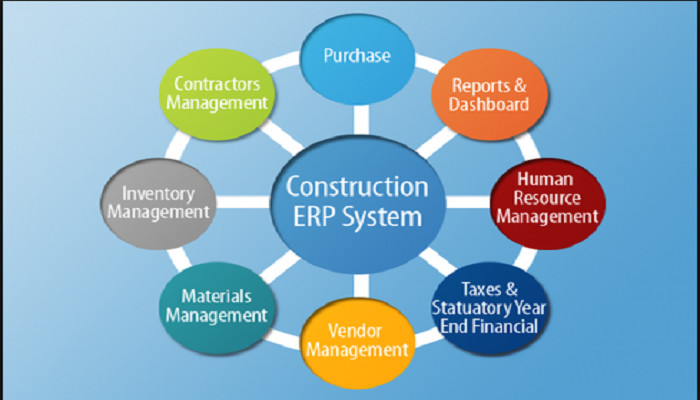
With the rapid pace of the construction sector, effective resource, labor, and equipment planning is crucial in order to complete projects on time and within budget. Time lag, calculation mistakes, and coordination failures can have a substantial impact on the profitability and cost. Companies respond by transforming their operations to digital, such as the best construction ERP software that streamlines their operations and provides real-time visibility into every activity of their projects.
In areas with extensive infrastructure development, ERP systems are increasingly dominating the construction project management world in the Middle East, particularly in Saudi Arabia, where advanced construction project management systems are commonplace.
What is Construction ERP and Why It Matters
Construction ERP (Enterprise Resource Planning) is an integrated software application system that performs all construction industry processes within one system. But ERP integrates all these disciplines into one system that doesn’t require multiple apps for finance, procurement, inventory, and project management.
A consolidated in-house approach enables construction companies to more effectively plan and manage materials and resources. Resolves communication problems, reduces human errors, and allows for problem-free working across all departments with precise and up-to-date information.
The fundamental premise of construction ERP is that it provides end-to-end visibility of a project, so that construction managers can make more effective decisions. Construction ERP provides complete project visibility, allowing construction managers to make more informed decisions regarding a project, at its core.
Importance of Material Planning in Construction ERP
Some of the most important things for a successful construction project are machinery installations and material planning. A project can get delayed at any stage due to the delay in the materials. The problem is addressed by ERP systems with automation and the ability to track things in real-time.
1. Real-Time Inventory Monitoring
ERP systems are constantly monitoring materials’ availability from both the warehouse and the construction site. This will make sure the project managers can always be informed about the materials in stock, what has been used, and what is to be reordered.
2. Demand Forecasting
ERP systems could forecast Material requirements from the base of Project schedules and historical data usage. This makes it easier to make buying decisions in advance, rather than being caught short of a needed item.
3. Automated Procurement Process
Purchase requests are automatically made when stock levels drop below a pre-set limit on ERP platforms. This minimizes human handling and materials procurement.
4. Waste Reduction
An ERP system ensures that waste and over-ordering are minimized, as accuracy is maintained with regard to the quantity of material. Accuracy in the amount of material used directly suggests that waste is minimized and over-ordering is prevented, which in turn increases cost-efficiency.
5. Supplier Management Efficiency
ERP systems help in keeping the supplier data centralized so construction companies can compare prices, monitor deliveries, and have a good relationship with their suppliers.
Resource Planning Optimization Through ERP
Construction resource planning involves managing labor, machine, equipment, and time. The ERP system is beneficial for optimizing these resources optimally.
1. Workforce Allocation
ERP Software allows for mapping the skills and availability of the workers for the assignment of tasks according to the project requirements. This makes sure that the appropriate staff is placed in a suitable position, which boosts efficiency and minimizes downtime.
2. Equipment Scheduling and Tracking
Construction gears cost more than money and need to be efficient in usage. To avoid unnecessary downtime, ERP systems monitor and manage the use of equipment, maintenance plans, and availability.
3. Project Scheduling Alignment
The availability of resources has an impact on project timelines. Automatic adjustment of the schedule with ERP systems helps keep them efficient in the event that the material is delivered on time or that the labor is available.
4. Centralized Coordination
Every team, including contractors, engineers, and suppliers, runs on the same system. This helps in effective communication, minimizes misunderstandings, and helps in improving cross-department coordination.
Digital Transformation in Construction Planning
The construction sector is rapidly moving from a traditional manual system to digital ERP procedures. These changes are largely attributed to increased accuracy, timeliness, and cost-effectiveness requirements, especially in construction project management systems in Saudi Arabia .
Intelligent tracking and automation technologies are already being implemented in the advanced regions. For instance, an enterprise asset tracking system in the UAE provides a solution that gives a clearer understanding of equipment that any manager can look at across several sites, to help improve its visibility and utilization.
The ERP is now behind modern, data-driven construction companies that plan, predict, and act in new ways.
Key Benefits of Construction ERP in Resource Planning
1. Improved Project Efficiency
With the ERP system, the materials and resources are made available to the company when needed without experiencing downtime or delay.
2. Cost Control and Financial Accuracy
The real-time tracking of expenses is also beneficial for businesses to budget properly and manage their expenses.
3. Better Decision-Making
Managers can utilize dashboards to track project performance, make use of appropriate resources, and see the financial health and well-being.
4. Reduced Project Risks
Increased visibility and planning reduce the potential for “shortages” or delays, and mismanagement.
5. Enhanced Productivity
ERP is doing this through the use of automation to remove duplicate tasks and optimize the processes to make better use of human resources in general.
Conclusion
With the best construction ERP software, stakeholders can monitor projects as they progress, forecast more accurately, and coordinate better, potentially optimizing material and resource planning for better overall performance. They help to reduce weeks of delay, budgeting, and improve effectiveness in building operations. ERP requirements are growing in the industry, and ERP systems are becoming essential in today’s construction environment to improve planning intelligence, increase productivity, and ensure successful project completion.
A premier cloud-based ERP solution driving innovation in enterprise technology solutions, ePROMIS is transforming construction and enterprise operations. It combines the management of projects, finances, HR, procurement, and assets within a single system. ePROMIS boosts productivity, cuts operating expense, and enriches decision-making with AI-enriched insights, real-time analytics, and scalable architecture. It has some sophisticated features fitting for particularly advanced construction projects and effective digital change throughout sectors.
