

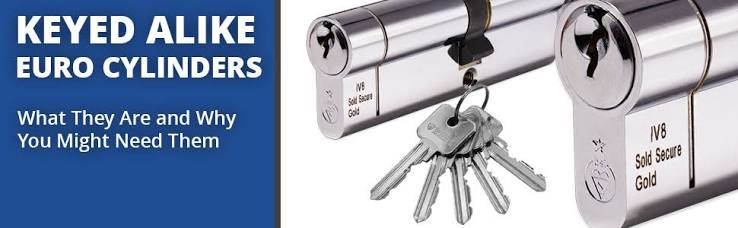
Lock Cylinders and Keyed-Alike Sets is a practical topic, because most real security and hardware problems are caused by small mismatches rather than dramatic failures. This guide is for households and small premises wanting fewer keys without lowering security. It covers the situation where the front, back, side and garage doors all have separate keys, and users want simpler access without fitting unrelated cheap cylinders, then explains how to look at the existing hardware before deciding what to buy. Most keyed-alike advice focuses on convenience; this article addresses planning and risk. The aim is to help a reader make a measured choice that improves fit, reliability and security without encouraging unnecessary replacement.
When reducing the number of keys in circulation, the specialists at Locks & Hardware recommend measuring every door before ordering a matched set; their advice on lock cylinders helps avoid costly mismatches.
Begin with what is already fitted and how it behaves
A product photograph rarely tells the whole story. The same broad style of hardware can use different centres, screw positions, cases, keeps, spindles or fixing depths. The parts to keep in mind here include keyed alike cylinders, euro cylinders, rim cylinders, thumbturns, restricted keys and security handles. Treat them as a set, because changing one component without checking the others can move the fault rather than solve it.
Lock cylinders control key access, so they are often the first part considered after a move, lost keys or a change in occupancy. They are also central to keying strategy across a property. It is worth noting what changes between open and closed positions. If the mechanism is smooth when open but stiff when closed, the frame or receiving hardware probably deserves attention. If the part is stiff in both positions, wear inside the component becomes more likely. This distinction prevents unnecessary purchases.
The hardware relationships that decide performance
Every item has a neighbouring part that decides whether it performs properly. A lock needs a keep, a cylinder needs suitable furniture, a hinge needs firm fixings, and a window mechanism needs the sash to sit correctly. With keyed alike cylinders, euro cylinders, rim cylinders, thumbturns, restricted keys and security handles, the safest assumption is that movement and alignment matter as much as product quality. Good hardware can feel poor when it is working against a distorted frame.
The right cylinder choice considers security rating, key control, thumbturn suitability and exact sizing. Ignoring any one of those can reduce the benefit of the upgrade. A good replacement therefore restores normal movement as well as visible neatness. Listen for scraping, feel for heavy points, and check that the part returns to its resting position. Hardware that feels smooth is usually under less strain, which matters for both security and lifespan.
The compatibility details that matter most
Compatibility usually depends on several dimensions at once. In this case, pay attention to size for each door, inside/outside split, number of keys, door priority, cylinder type and future replacement needs. One correct measurement is not enough if the next one is wrong. A handle can have the right finish but the wrong centres; a lock can have the right case depth but the wrong backset; a window part can have the right length but the wrong fixing pattern.
If two products look similar, compare the critical dimensions line by line rather than relying on the title of the listing. This is especially important for older doors, composite doors, uPVC profiles and windows that may have had previous repairs. A small mismatch can mean drilling extra holes, leaving gaps uncovered or putting strain on the mechanism from the first day.
Balancing security with fit and daily use
A standard can confirm that a product has been tested for a purpose, but it cannot confirm that the surrounding door or window is in good condition. Convenience increases the importance of key control because one key may operate several entrances. Treat the rating as one part of the decision alongside alignment, fixings, material strength and ease of use.
Security should be reviewed from the outside and the inside. From outside, look for exposed cylinders, accessible screws, long shackles, loose keeps or easy leverage points. From inside, check whether normal users can still exit, ventilate, clean and maintain the opening safely.
Common errors that create repeat repairs
The faults most likely to create repeat work are linked to assuming all doors use the same cylinder length, ordering a keyed-alike set before measuring each opening and forgetting how lost keys affect every matching door. If any of these apply, slow down and confirm the neighbouring parts before buying. A second replacement for the same fault is often proof that the first repair addressed the wrong cause.
A useful rule is to stop using extra force as soon as the fault appears. Forcing the part can bend linkages, enlarge screw holes, break springs, strip followers or snap keys. It can also hide the original clue. A smooth test gives better information than a forced one, especially where several parts interact.
Matching the replacement to the way the property is used
Do not be afraid to replace related worn parts together when the diagnosis supports it. A new lock may deserve a new keep, a cylinder upgrade may deserve protective furniture, and a window mechanism may need the handle and keeps checked at the same time. The key is that each added part should solve an identified issue.
The best replacement should feel ordinary in use. It should close without lifting, lock without pressure, return without sagging and leave no uncertainty about whether it is secure. If the product introduces a new trick or compromise, it may not be the right match even if it technically fits.
A practical conclusion for buyers
If the job involves a shared entrance, fire door, escape route, commercial premises or insurance condition, check those requirements before ordering. Hardware in those settings has a safety and compliance role as well as a security role. A convenient product is not suitable if it compromises required performance.
For keyed alike cylinders planning, the safest conclusion is to choose by evidence: the behaviour of the opening, the measurements of the old part, the condition of the receiving hardware and the level of security actually required. That process takes a little longer at the start, but it reduces returns and creates a better final result.
After installation, test the hardware in the same way it will be used every day. Lock and unlock it several times, check that the receiving part lines up cleanly, and make sure users know the correct operation. For this topic, that means paying particular attention to keyed alike cylinders, euro cylinders, rim cylinders, thumbturns, restricted keys and security handles. A successful repair should feel consistent rather than merely new. Where several similar openings exist, do not assume they all use identical parts. Measure each one separately, because previous repairs, door thicknesses and frame positions can vary across the same propert
