


Introduction
In the realm of electronic hardware design and manufacture, the transition from the concept design to a real, tangible prototype is frequently plagued by delays, budget overspend, and unnecessary concessions with regard to accuracy. The problem stems mostly from an inefficient manufacturing chain that is both slow and technologically challenged. Such sluggishness in itself inevitably leads to a slowdown in iterations and becomes a serious obstacle to timely market launch. This paper aims at analyzing what makes the six major precision machining manufacturers stand out through the application of their precision CNC machining services.
Why Does Electronic Hardware Prototyping Demand High-Precision CNC Machining?
Requirements for the production of Electronic Hardware Manufacturing are quite strict concerning physical hardware. Along with shape requirements, dimensions must be accurate, particular characteristics of material must be met, such as thermal conductivity and/or EMI shielding, as well as perfect surface finish. Defects like warping of mounting brackets or incorrect fitting of connectors can cause the assembly to fail, circuits not to match up, or even thermal issues, making the part useless for validation purposes.
Here is when CNC machining prototype proves to be vital. Unlike forming manufacturing techniques, which create parts through deformation of materials, CNC machining is a subtractive technique, cutting parts from bulk stock using computer guidance. This makes it possible to manufacture extremely sophisticated features needed for modern electronics. These include tiny heatsinks with complex designs for proper heat dissipation, connector housings with precise internal bores, and RF shielding cans that need to have high flatness. In this case, a deviation of several microns in the bracket meant to mount the sensors will result in misalignment, thus false readings. With high precision CNC machinery, the required CNC machining parts can be produced flawlessly and consistently.
Core Capabilities Comparison of the Top 6 Global Precision Machining Suppliers
Selection of the correct manufacturing company is extremely crucial. The following table shows the comparison between the six most famous CNC machining parts suppliers worldwide, with emphasis on their specialty and technical expertise.
| Supplier | Key Strengths & Technology | Typical Lead Time (Prototype) | Min. Order Quantity (MOQ) | Material & Certification Highlights |
| RapidDirect | Broad online platform, instant quoting | 3-5 days | Low | Wide material range, good for general prototyping |
| Protolabs | Automated quoting, vast network | 1-3 days | 1+ | Extensive material library, fast-turn leader |
| Xometry | Massive manufacturing network | Varies | 1+ | One-stop for various processes, scalability |
| Fictiv | Digital platform, supply chain management | 3-5 days | 1+ | Focus on design collaboration and quality |
| Hubs (now part of Protolabs) | Global manufacturer network | Varies by partner | 1+ | Aggregated access to global machine shops |
| <mark>JS Precision</mark> | Focus on Complex CNC Machining & engineering support; IATF 16949, ISO 13485 | 1-3 days (expedited) | 1 | Specializes in low volume CNC machining and high-difficulty parts; strong in semiconductors & aerospace |
As mentioned in this article about CNC machining parts supplier comparisons, though online platforms are fast and convenient, experts like JS Precision can provide more detailed collaboration in terms of technical aspects. This makes their services especially useful when dealing with Complex CNC Machining projects such as 5-axis milled enclosures and precise actuator parts, starting from low volume CNC machining to mass production.
What are the Key CNC Processes for Semiconductor Precision Components?
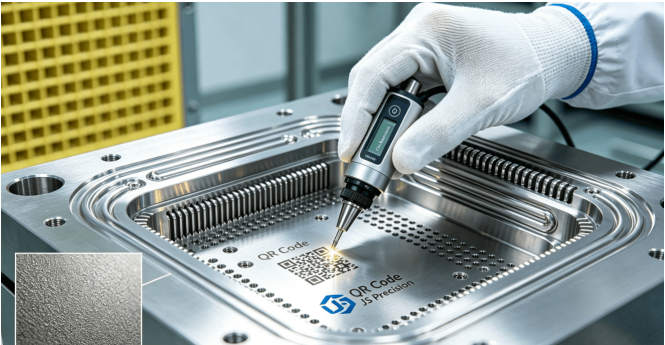
The manufacturing process of semiconductor CNC precision machining is considered the highest precision process, and the tolerances have to be measured in microns while having absolutely pure material. Precision elements used in semiconductor equipment should function faultlessly under severe conditions. There are several special requirements for these precision components for semiconductor. They include high-dimensional stability, extremely smooth surface finish that will prevent particles from forming during the manufacturing process, and the use of special material – such as aluminum 6061, stainless steel 316L, or even ceramic.
A number of processes that are utilized in semiconductor CNC machining can meet all these requirements. For example, ultra-precision turning or milling on the highly advanced machines helps get the required surface finishes and high flatness necessary for wafer contact. Such processes as micro-drilling and Electrical Discharge Machining (EDM) allow creating small holes and complicated geometries that are needed for gas or fluid flow. Importantly, all these manufacturing processes should follow cleanroom technology to avoid contamination. This requirement can be systemically guaranteed through obtaining certification IATF 16949, which requires stringent process controls..
How to Accelerate Hardware Validation with Rapid Prototyping?
Agile Hardware Design starts with fast iteration. CNC machining rapid prototyping connects the electronic schematic created using platforms like CircuitVerse with a tangible piece in the fastest way possible.
The Fast Track from Design to Physical Form
l Design Translation to CAD Modeling
The first step of the process entails the translation of design logic into a CAD modeling language that will create the exact physical geometry for manufacturing.
l Working with Partners to Get Faster Manufacturing
Fast iterations are done with partners who are specialized at producing fast-turn custom component fabrication and have everything ready to take your design into manufacturing as soon as you have the files ready.
The Power of Speed in Agile Hardware
Agile hardware design and manufacturing with CNC machining rapid prototyping means taking advantage of fast service turnaround times, even 48-hour turnarounds, reducing risk in your project by allowing for early troubleshooting of any problems related to the form and fit of your designs.
What are 5 Key Dimensions for Evaluating a Precision Machining Supplier?
Partner selection is a key strategy, and engineers need to move past only considering cost to examine these five dimensions.
Evaluating Technical Expertise and Quality Fundamentals
In this dimension, one needs to examine the fundamental qualities that decide whether the supplier has the capacity to physically make your part.
l High-End Equipment for Complicated Geometries
The supplier must have multiple axis CNC machine and unique tools for producing complex machined parts. Examining the supplier’s project portfolio will be the most reliable way to verify if they can meet tight tolerances and surface finish specifications.
l The Pillars of Consistency: Certifications
Quality certifications are essential criteria. ISO 9001, IATF 16949, or AS9100D standards offer an auditable quality management system framework that ensures repeatable and traceable production of part quality.
Assessing Operational Excellence and Partnership
The main criteria to be looked at in this case would be the performance of the vendor in terms of efficiency and the extent to which they can work as partners for success. Their ability to meet deadlines that have been quoted and their clear costing methods would be some of the major criteria. The most important criterion would be their availability to provide DFM advice in advance during the design process.
Conclusion
Precision machining acts as the vital link that converts electronic hardware from mere concepts on a computer screen to tangible products. Selecting the right manufacturer influences development time, costs, and eventually, the success of your product. You can reduce development time and increase chances of product success by partnering with a manufacturer who aligns with your technology, has the right quality management systems in place, and has an open-minded approach. If you need help developing a customized solution for a particular difficult-to-manufacture component, contact JS Precision for a CNC machining services quote, or ask about engineering challenges within engineering forums.
Author Bio
The author is a senior engineer in precision manufacturing, with more than ten years of experience in developing electronic hardware prototypes using CNC technology.
FAQ
Q1: Are the CircuitVerse designs compatible with CNC machining without further modification?
A: The designs are incompatible with direct use for CNC machining. Design files provided by CircuitVerse include only the logical schematics (PCB layout). To be applicable to CNC machines, these files must first be turned into mechanical 3D models with DFM optimization.
Q2: What is the lowest MOQ possible with low-volume CNC machining?
A: MOQ typically starts from 1 unit up to 50 units depending on the complexity of parts involved. Some specialized CNC machining companies are able to provide prototyping services that require only one part at a time.
Q3: What material limitations should be considered for semiconductor CNC machining?
A: Purity, resistance to outgassing, and corrosion resistance are critical criteria when selecting the appropriate materials. Popular materials include Aluminum 6061, Stainless Steel 316L, and ceramic-based alloys.
Q4: What is the average lead time in precision machining processes?
A: For simple parts, delivery time takes 3-5 days, while more complex semiconductor parts take 2-4 weeks. Machining suppliers having advanced rapid prototyping facilities can deliver parts within 48 hours..
Q5: How can dimensional accuracy be ensured in a CNC-machined component?
A: The dimensional accuracy of the component can be ensured by the use of high-quality CNC machinery coupled with proper inspection techniques. This is done using measuring devices such as CMM (Coordinate Measuring Machine).
