

Introduction
The transition from a perfect digital simulation to a functional product in circuit design may prove challenging. One of the most typical and crucial problems in this case is finding a suitable CNC milling services provider that understands the intricacies of electronic hardware. Despite an abundance of machining facilities on the market, it is difficult to find CNC service providers with relevant experience and expertise in producing complex hardware components. Thus, prototypes produced by generic machine manufacturers fail to meet expectations due to various reasons ranging from material choice to poor EMC protection.
To address this issue, we created a comprehensive guide to CNC milling services based on a careful analysis of top-notch CNC shops on the market. Seven best CNC milling shops, which specialize in working with hardware developers, have been chosen and evaluated according to industry benchmarks and certification standards. We hope our selection will assist you in selecting a CNC milling provider who is capable of manufacturing complex electronic products based on the results of online circuit design.
Which Core Capabilities Should You Focus on While Choosing a CNC Milling Shop to Work on Your Circuit Design Projects?
While selecting a CNC milling shop for your circuit design projects, there are certain capabilities that are unique and require special focus. These include precision machining for tolerance levels less than 0.05mm, efficient prototyping process flows, DFM assistance, and a good understanding of material properties. Lastly, proper project management is also very important.
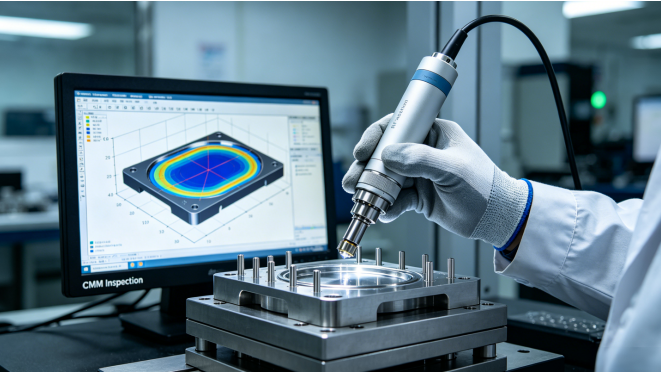
l Importance of Sub-Micron Precision: Parts like RF shielding cans, heat sinks, and interface plates need utmost precision in their dimensional requirements. Any small flaw may affect part fitment or thermal conductivity or any kind of sealing action, etc. An efficient manufacturing plant has CMM devices to measure the micron-level precision of critical elements such as press-fit holes, surfaces, and so forth, ensuring proper assembly and functionality of the end products.
l Benefits of Proactive Design Collaboration: Cost and time efficiencies are maximized when done at the design level. When there is proactive collaboration from a partner offering extensive DFM analysis, issues related to very thin walls that may result in warping or unmanufacturable angles will be detected even before any cutting of the materials takes place. Thus, you are able to get more than just an order fulfillment partner but one who can help design your component as well.
l Harnessing Material Properties for Electronics: Electronics is as much a field of material science as it is circuit design. The top shops know that material selection influences conductivity, thermal properties, EMI/RFI shielding, and weight considerations. You can rely on them to assist you in selecting materials such as 6061 aluminum because of its ability to conduct heat effectively or tellurium copper owing to its conductivity. This ensures that your physical prototype behaves in the manner expected.
Who Are Some of the Leading CNC Milling Workshops for Precise & Quick Prototyping in 2026?
Some of the best workshops that provide accurate prototypes in the designing of circuits in 2026 are RapidDirect, Protolabs, and Xometry. They all provide fast turnaround time, automation, and many materials. Yet, each one has different features to meet different needs. For China OEM CNC milling factory suppliers, a buyers’ guide is offered.
1. Streamlining Processes for Efficiency
The most successful shops allocate vast amounts of capital to their digital operations. From rapid online quotes based on your CAD data, to automated manufacturability checks, they ensure that you avoid unnecessary delays associated with manual processes. This means you can concentrate on iterating your design in record time.
2. The Trade-off between Speed and Precision
Despite its importance, speed must not be achieved without sacrificing accuracy. Top-rated facilities have managed to retain their speed through the use of advanced quality control methods within the automated processes they employ. Inspections carried out during manufacturing and standardized post-process quality controls enable these providers to deliver parts, even those shipped on an accelerated basis, according to exacting tolerances that will be necessary to manufacture functional prototypes.
3. The Advantages of Digital Platforms
Platform services stand out due to their ability to provide visibility and convenience. A user can upload his design, choose from numerous options of materials and finishes, get instant pricing along with DFM suggestions, and monitor the entire process online. It enables users to easily access professional CNC milling services thanks to this digital-oriented platform.
Evaluating the OEM Capabilities and Quality Control of a CNC Milling Shop?
As one transitions from prototype to production mode, the OEM-oriented CNC mills such as Fictiv, WayKen, Jiga, and LS excel in their services. The main considerations during this time include production consistency, reliable logistics, and an efficient quality system. The partners are specialists in smooth transition, cost management, networked manufacturing, and precise milling of OEM components.
1. Scale from Prototype to Production
For a shop to be a good production partner, it should show capability to scale without compromising on quality. Statistical Process Control (SPC), scalable capacity planning, and inspection of materials should be done. The process should be well documented and repeatable in order to produce the thousandth part exactly like the approved first prototype.
2. Building Blocks of a QC System
The quality control system of a shop should be its pledge of reliability. Search for an indicator that the shop has put into practice several measures, such as FAI reports, inspection through calibrated measuring tools at all processes, and inspection audits. The shop should have certifications like ISO 9001 as a minimum requirement and should prove its capability by providing consistent Cpk reports for all critical dimensions, along with material traceability from raw stock to finished parts.
3. Documentation and Compliance
In case of OEMs, particularly in controlled environments, documentation becomes as important as the component itself. It should be a well-qualified shop capable of delivering all the required reports along with certificates for materials used and tracing the entire manufacturing lot. Such extensive documentation serves for audits and failure analysis purposes and ensures continuous quality supply chain, thus allowing the supplier to become a confirmed extension of your quality control system.
What Shops Are Experienced in Machining Enclosures & Structures With Heat Management?
Shops that specialize in machining enclosures and structures with heat management know how to deal with difficult machining challenges like thin walls and deep pockets. The specialized experience of such shops with DFMA techniques for such intricate items as heat sink fins and draft angles will make your work much more efficient. Please visit this CNC milling factory page for more information.
1. Mastering the Art of Thin Wall Machining: Lightweight electronics housed in thin-walled enclosures suffer from vibrational issues while machining due to their fragile nature. Such machining requires experienced machinists who know how to utilize multi-axis machines, use fixtures that do not leave marks on the component, and choose cutting parameters that allow controlling temperature and machining forces acting upon the product.
2. Surface Finishes and Functional Needs: The surface finish of electronic enclosures serves more than just aesthetic needs. The part could require conductivity for grounding purposes, an anodized coating for resisting corrosion, or a particular surface for proper sealing using EMI gaskets. An experienced machine shop is aware of the post-processing needs of the component and thus machines the part to the correct roughness so that it can be plated or painted or anodized accordingly.
3. Incorporating Design for Assembly (DFA): An experienced machine shop considers the implications of their work even when beyond the factory floor. In the case of enclosures, this entails making sure all snaps, bosses, and cable entry points are machined correctly. The comments made in the process by the machine shop concerning design for manufacturing (DFM) would also include suggestions regarding design for assembly (DFA).
How Does the International Certification Process and Industry Compliance Contribute to Supplier Selection?
The international certification process can serve as an indicator of the process control and reliability of a CNC supplier; it plays an essential role in filtering out suppliers. Such industry standards as IATF 16949 and AS9100D extend the ISO 9001 by providing detailed requirements and processes relating to risk assessment, quality planning, and traceability within each particular industry.
1. Looking Beyond the Certificate: Audit Effectiveness
A savvy buyer looks beyond the mere certificate to its implementation. One should verify that the certification is current and corresponds to the manufacturing process requirements. As part of an audit, the availability of evidence for internal audit procedures, corrective action methods, and staff trainings proves that the system is continuously maintained rather than being just another document.
2. Risk Reduction and Supply Chain Assurance
Choosing a certified supplier is an effective risk reduction strategy. As per standards, suppliers must be controlled, equipment must be calibrated, and there are processes for controlling documentation. Such an approach greatly decreases the probability of delays in the production process because of any quality failures, faulty materials, or findings discovered in audits.
3. Sign of Technological Maturity
In the end, seeking and maintaining stringent certification shows the level of technological maturity and stability of the entire company. This implies having adequate systems and the necessary expertise. As a case in point, a Chinese manufacturer with IATF 16949, AS9100D, and ISO 13485 certification (for medical products) possesses sufficient capabilities to take on the most stringent OEM projects in many high-tech industries.
Conclusion
The choice of a proper CNC milling company becomes the essential link that binds together your circuit design and your final working product. The seven companies analyzed in this article all bring their unique strengths to the table, ranging from rapid prototype platforms to manufacturers with expertise in large-scale production with an emphasis on specific materials. To succeed, the only thing you need is a perfect match: finding an intersection between the demands of your project — whether it is micrometer accuracy, thermal machining, or OEM production — and the company’s strong core capabilities.
FAQs
Q: As a novice designer trying circuit creation, what characteristics should I look for in a CNC machine shop?
A: The beginner must look for those shops that are helpful to low volume prototype work, provide free DFM analysis and have good communication. A shop ready to walk a customer through the process and be patient is invaluable for learning and lowers startup costs.
Q: What do I need to assess in a CNC shop to see if they know the electronics manufacturing industry?
A: I would look at their portfolio and see if they have experience with items such as PCB fixtures, RF enclosures, heat sinks, etc. I would ask directly how well they know materials, conductivity, EMI shielding, and grounding issues; the response will tell all.
Q: Why is an IATF 16949 and AS9100D accreditation important for my consumer electronics project?
A: These accreditations show better process controls and better track and trace capabilities. This is a valuable advantage even outside automotive and aerospace industries.
Q: Is the online quotes platform or the direct factory cooperation better for me?
A: An online quotes platform is best suited for common, well-known parts that need maximum speed. Meanwhile, the direct cooperation with the factory is more beneficial if you have complex parts, optimization processes, intensive collaboration between engineers, and cost management for a long term.
Q: What are my major advantages and disadvantages working with a China CNC factory?
A: The most significant advantage will be extremely low price with all the processes involved. The biggest problem is the proper management of time-zone difference. It can be mitigated with selecting only those factories with a mature and experienced team for international clients.
Author Bio
The author is an expert in precision manufacturing and logistics and has been in the field for more than ten years. He specializes in developing manufacturing processes for electronic hardware. His mission is to assist engineering teams in making their products from conception to manufacturing. The information presented in this article is based on this vast industrial knowledge that has been gathered even through collaboration with industry players like LS Manufacturing.
