

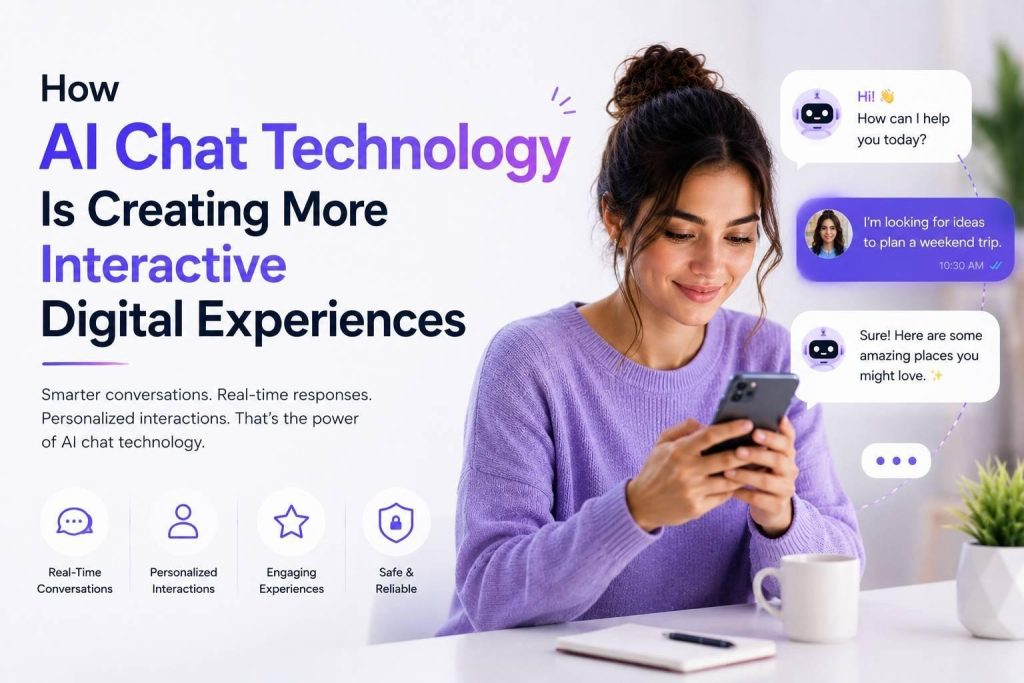
Artificial intelligence has moved far beyond being a tool for answering questions or generating text. In 2026, AI is changing how people communicate, create, and experience digital entertainment. From personalized recommendations to intelligent assistants, AI has become part of everyday technology.
One area seeing rapid innovation is the rise of the AI chatbot online platform. Modern chatbots are no longer limited to simple question-and-answer interactions. Instead, they can hold natural conversations, adapt to different communication styles, and provide engaging experiences that feel surprisingly human.
As language models continue to improve, AI chat is becoming one of the most exciting technologies shaping the future of online interaction.
AI Chat Has Become More Intelligent Than Ever
A few years ago, chatbots often struggled to understand context. Conversations felt repetitive, and users usually had to rephrase questions to get useful responses.
Today’s AI systems are significantly more advanced.
Modern conversational models can understand context, follow longer discussions, recognize user preferences during a session, and generate responses that feel natural. These improvements are driven by advances in large language models, better training techniques, and faster cloud computing infrastructure.
For users, this means conversations feel smoother and much more engaging than traditional chatbot experiences.
Why AI Chat Is Becoming a Core Technology
The popularity of AI chat isn’t only about entertainment. Businesses, educators, developers, and creators are integrating conversational AI into their products because it improves user interaction.
AI chat technology is now being used for:
- Customer support
- Virtual assistants
- Language learning
- Creative writing
- Brainstorming ideas
- Interactive entertainment
- Digital communities
Because conversations happen naturally, users spend more time engaging with platforms that offer intelligent AI experiences.
Personalization Is Driving Better User Experiences
One of the biggest strengths of modern AI is personalization.
Instead of providing identical responses to everyone, AI adapts to different users and conversation styles. It remembers context throughout a session, adjusts its tone, and creates interactions that feel unique.
This level of personalization makes technology feel less mechanical and more conversational.
Whether someone wants quick answers, detailed explanations, or creative discussions, AI can adjust its responses to match the situation.
The Technology Behind Interactive AI
Several technological improvements have made modern AI conversations possible.
These include:
- Advanced large language models
- Natural language processing (NLP)
- Context-aware response generation
- Faster cloud-based processing
- Improved conversational memory
- Better safety and moderation systems
Together, these technologies allow AI platforms to provide conversations that are more accurate, responsive, and engaging than ever before.
As research continues, AI models will become even better at understanding intent, emotion, and complex dialogue.
Why Character Based AI Continues to Grow
Technology isn’t only making AI smarter; it’s also making conversations more creative.
Many platforms now offer character-based AI experiences where users can interact with fictional personalities, historical figures, or original virtual characters. This creates an entirely different type of digital entertainment that combines storytelling with conversational technology.
One of the fastest-growing trends in this space is anime AI chat, where users can explore conversations with anime-inspired personalities designed around different themes and storytelling styles.
Rather than simply reading a story, users become active participants, helping shape each conversation as it unfolds.
AI Is Transforming Digital Entertainment
Streaming services changed how people watch content.
Social media changed how people create content.
Now AI is changing how people interact with content.
Instead of passively consuming information, users can engage in conversations that evolve in real time. Every interaction is different because AI responds dynamically to user input.
This shift is encouraging developers to build more interactive applications across gaming, education, productivity, and entertainment.
As conversational AI improves, these experiences will continue becoming more immersive.
What Businesses Can Learn From AI Chat
The rapid adoption of AI chat offers valuable lessons for businesses and technology companies.
Successful AI platforms focus on:
- Simple user experiences
- Fast response times
- High-quality conversations
- Personalization
- Continuous improvement
Users return to products that make interaction effortless. This principle applies whether the platform is built for customer support, education, or entertainment.
Companies investing in conversational AI today are preparing for a future where natural interaction becomes a standard feature across digital products.
The Future of AI Conversations
The next generation of AI chat will likely introduce even more advanced capabilities.
Future improvements may include:
- Longer conversation memory
- Better contextual understanding
- More realistic AI personalities
- Improved multilingual communication
- Smarter personalization
- Deeper integration across digital services
As these innovations continue, AI chat will become an even more important part of everyday technology.
Final Thoughts
Artificial intelligence is changing how people interact with technology, making conversations more natural, personalized, and engaging than ever before.
The growing popularity of AI chatbot online platforms demonstrates that users value experiences built around intelligent communication rather than simple automation. At the same time, innovations like anime AI chat highlight how conversational AI is expanding into creative and entertainment-focused applications.
As AI continues to evolve, conversational technology will play an increasingly important role across industries, shaping the future of digital interaction for businesses, creators, and everyday users alike.
