

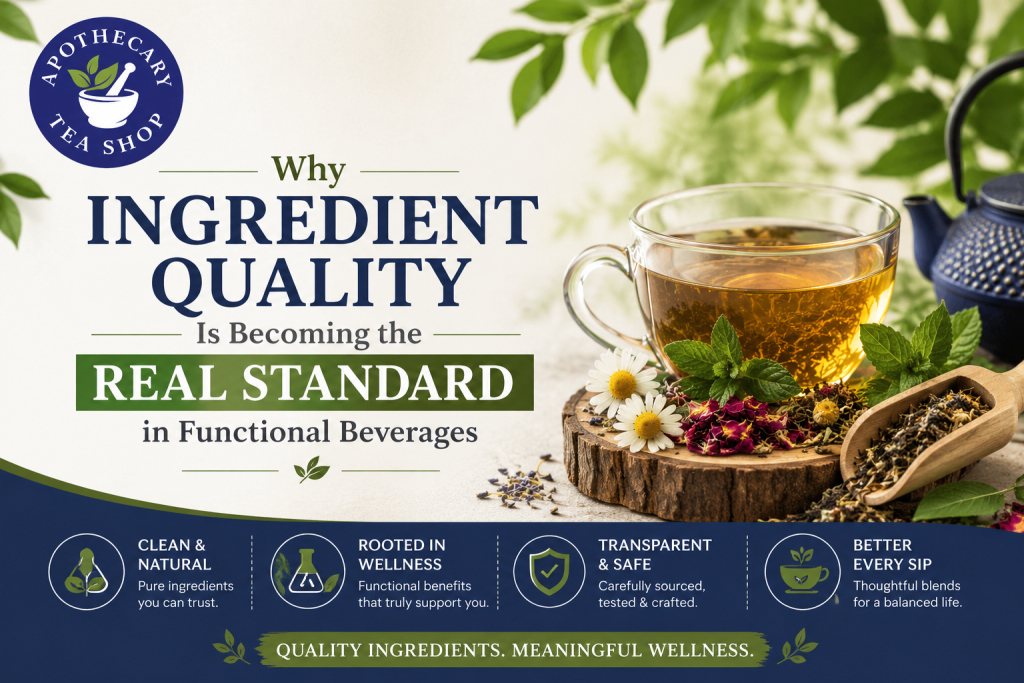
The modern wellness market is undergoing a quiet but fundamental shift.
For years, beverages were defined by category tea, coffee, herbal drinks, cold brews. Today, that definition is becoming less relevant. What is increasingly shaping consumer choice is not what a beverage is called, but what it is made of and why those ingredients matter.
In this new environment, ingredient quality has become the real benchmark of value.
The Decline of Category-Based Thinking
Traditional beverage categories are no longer the primary filter for decision-making. Consumers are moving away from labels and toward composition.
Instead of asking “Is this tea or coffee?”, the more relevant question has become “What is inside this, and how does it fit into my wellness routine?”
This shift is especially visible in the rising interest around premium black tea, where attention is no longer limited to tradition or taste profile, but extends to its role as a functional base ingredient in modern wellness formulations.
The category is no longer the product story. The ingredient is.
When Ingredients Become the Product
One of the most important changes in the functional wellness space is the separation between product identity and ingredient identity.
A beverage is no longer defined solely as a drink. It is increasingly understood as a delivery system for specific ingredients that align with lifestyle goals.
This is where formats such as black iced tea and iced black tea have evolved beyond refreshment. They are now being viewed through a functional lens, where usage patterns, ingredient quality, and formulation intent matter more than traditional consumption context.
Even practical search behaviors around best black tea for iced tea reflect this transition consumers are no longer just looking for flavor, but for better ingredient alignment.
Functional Beverages and the New Wellness Standard
The rise of functional beverage culture has redefined expectations.
A beverage is no longer passive. It is expected to play a role in how individuals structure their day, support consistency, and align with long-term wellness thinking.
This has elevated ingredient selection from a technical detail to a core value proposition.
Within this framework, even categories associated with antioxidant rich tea are being reassessed not as traditional wellness drinks, but as part of a broader system where ingredient composition drives perceived value.
Why Ingredient Quality Signals Trust
Trust in wellness products is no longer built through branding alone. It is built through transparency.
Consumers are increasingly aware that formulation quality directly influences how a product fits into their lifestyle expectations. As a result, ingredient clarity has become a proxy for trust.
When people evaluate beverages today, they are implicitly evaluating sourcing standards, formulation philosophy, and overall intent behind the product.
This is why ingredient-first positioning resonates more strongly than category-first messaging in modern wellness communication.
Wellness as a Structured Daily System
Wellness today is not a one-time decision. It is a structured system of repeated behaviors.
People are designing routines that are simple, consistent, and sustainable over time. This is where beverages naturally fit in they are already embedded in daily behavior.
For individuals exploring broader wellness strategies such as Best Anti-Aging Supplements, beverages often become the complementary layer that supports routine consistency rather than standalone health interventions.
This integration reflects a broader truth: wellness is becoming architectural, not occasional.
The Future of Functional Design Thinking
The future of beverages will not be defined by new categories, but by deeper ingredient intelligence.
Consumers will continue to prioritize products that are clear in composition, intentional in formulation, and aligned with long-term lifestyle thinking.
In that context, ingredient quality is no longer a differentiator. It is the baseline expectation.
