

Introduction
Modern data platforms handle large volumes of data flowing across multiple systems, tools, and teams. As data moves through ingestion, transformation, and consumption layers, understanding where it originated and how it changed becomes increasingly difficult. This is where metadata capture automation and technical lineage tracking play a critical role. By automatically capturing metadata and mapping lineage at the column and row level, organisations can improve trust, governance, and analytical reliability. For learners pursuing a data analysis course in Pune, understanding these concepts is essential for working in enterprise-grade data environments.
Understanding Metadata and Technical Lineage
Metadata refers to information that describes data, such as schema definitions, data types, transformation logic, source systems, and timestamps. Technical lineage is a subset of metadata that explains how data elements flow from source to destination. Unlike business lineage, which focuses on high-level reporting logic, technical lineage captures system-level details.
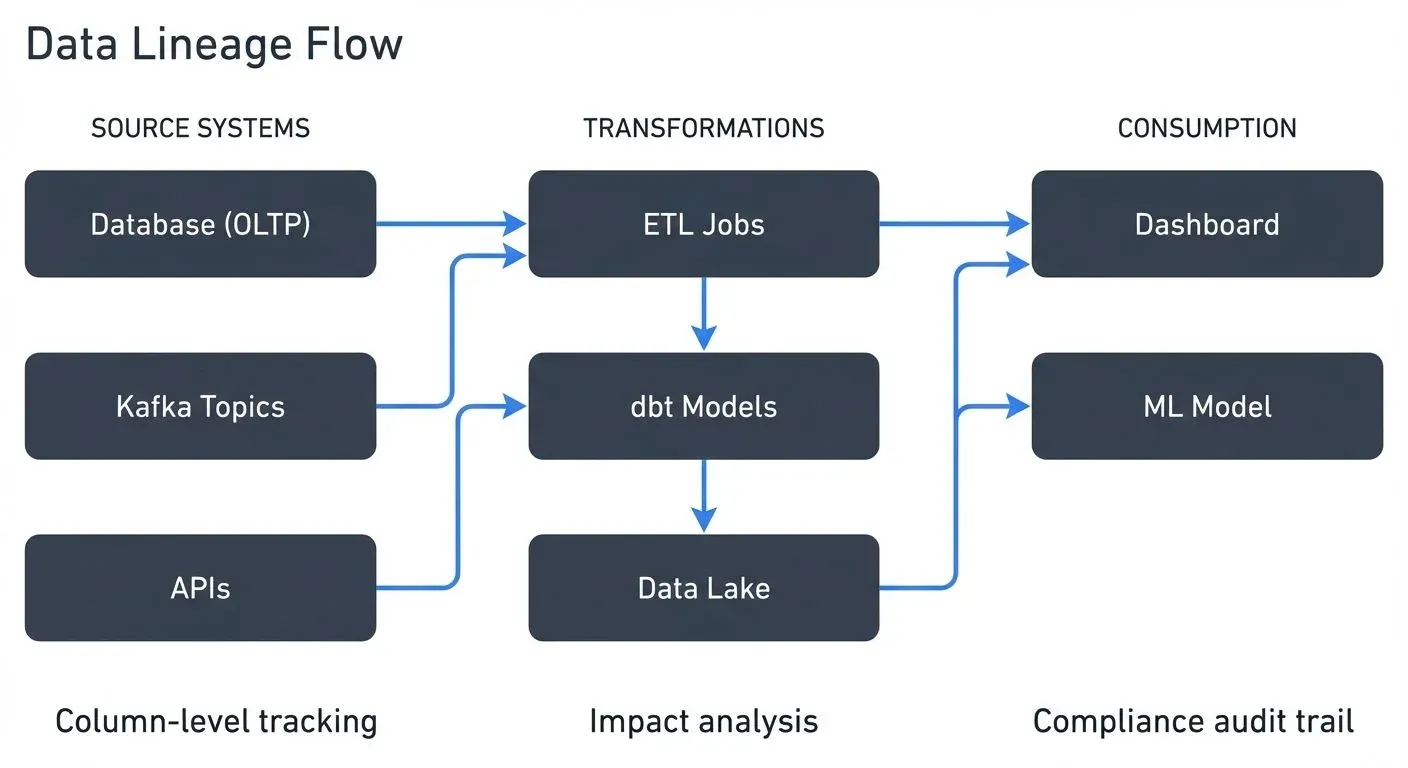
Column-level lineage tracks how individual columns are derived across transformations. Row-level lineage goes deeper by identifying how specific records propagate through joins, filters, and aggregations. Together, they provide transparency into data movement and transformation logic.
Why Automate Metadata Capture
Manual documentation of metadata and lineage is time-consuming and error-prone. As pipelines evolve, documentation often becomes outdated. Automated metadata capture solves this problem by continuously extracting metadata directly from systems such as databases, ETL tools, and data warehouses.
Automation ensures consistency, reduces dependency on tribal knowledge, and enables real-time visibility into data pipelines. It also supports regulatory compliance by providing traceability for audits and data quality investigations. These capabilities are increasingly expected from professionals enrolling in a data analyst course, as organisations demand analysts who can work confidently with governed data.
Column-Level Lineage Tracking
Column-level lineage focuses on how individual fields are transformed as data flows through the pipeline. For example, a revenue column in a reporting table may be derived from multiple source columns with currency conversions and aggregations applied.
Automated tools parse SQL queries, transformation scripts, and orchestration workflows to identify dependencies between source and target columns. This allows teams to answer questions such as which reports will be impacted if a source column changes or where a calculation was introduced.
Column-level lineage is especially useful for impact analysis, debugging incorrect metrics, and maintaining consistency across dashboards. It also supports data model optimisation by highlighting redundant or unused columns.
Row-Level Lineage Tracking
Row-level lineage provides a more granular view by tracking how individual records move and change across transformations. This is particularly important in scenarios involving complex joins, deduplication logic, or regulatory requirements where record-level traceability is mandatory.
Implementing row-level lineage typically involves tagging records with unique identifiers or using hashing techniques to trace data through pipelines. While more resource-intensive than column-level lineage, it enables precise root cause analysis when data anomalies occur.
Row-level lineage is commonly used in financial reporting, healthcare data processing, and audit-sensitive environments. Understanding its trade-offs and use cases is a valuable skill for analysts working on high-stakes data systems.
Architecture and Tools for Metadata Automation
Metadata capture automation relies on integration with core data stack components. This includes source databases, ETL or ELT tools, data warehouses, and orchestration platforms. Metadata is collected through query parsing, API integrations, and log analysis.
Centralised metadata repositories or data catalogues store and visualise lineage information. These platforms often provide search, impact analysis, and governance features. Open-source and commercial solutions both exist, and selection depends on scalability, ecosystem compatibility, and governance needs.
Implementing such architectures requires collaboration between data engineers, analysts, and platform teams. Analysts with exposure to these systems through a data analysis course in Pune are better prepared to contribute effectively in enterprise projects.
Benefits for Data Governance and Analytics
Automated metadata and lineage tracking strengthens data governance by providing transparency and accountability. Teams can quickly identify data owners, validate data sources, and enforce quality checks. This reduces the risk of using incorrect or non-compliant data.
From an analytics perspective, lineage builds confidence in insights. Analysts can trace metrics back to their origins and explain discrepancies clearly. This trust is crucial for decision-making and stakeholder alignment.
Organisations also benefit from faster onboarding of new team members, as documented lineage reduces learning curves and dependency on informal knowledge sharing.
Conclusion
Metadata capture automation and technical lineage tracking at the column and row level are foundational capabilities for modern data platforms. They improve transparency, governance, and analytical reliability while reducing manual effort. Column-level lineage supports impact analysis and metric consistency, while row-level lineage enables deep traceability for sensitive use cases. For professionals pursuing a data analyst course, mastering these concepts equips them to work confidently in complex, governed data environments and deliver insights that stakeholders can trust.
Contact Us:
Name: Elevate Data Analytics
Address: Office no 403, 4th floor, B-block, East Court Phoenix Market City, opposite GIGA SPACE IT PARK, Clover Park, Viman Nagar, Pune, Maharashtra 411014
Phone No.: 095131 73277
