

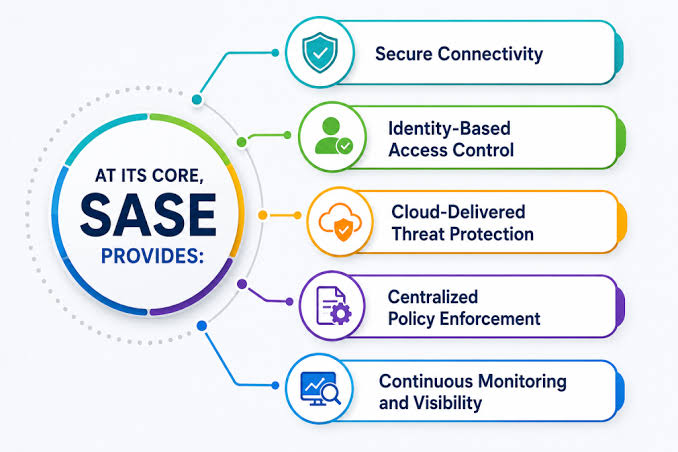
The way organizations build and secure their networks has changed dramatically over the past few years. Cloud computing, remote work, Software-as-a-Service (SaaS) applications, and distributed workforces have become standard across industries. While these changes have improved flexibility and productivity, they have also introduced new security challenges that traditional network architectures were not designed to handle.
Many organizations are now adopting a SASE Firewall to simplify security, improve visibility, and provide secure access to applications regardless of where users connect. By combining cloud-delivered networking and security services into a unified framework, a SASE Firewall helps businesses protect modern digital environments without sacrificing performance.
This article explores why organizations are embracing SASE Firewall solutions, the challenges they address, and the benefits they bring to today’s evolving IT landscape.
The Changing Network Security Landscape
Traditional network security relied on a clearly defined perimeter. Employees worked from corporate offices, applications were hosted in company data centers, and network traffic flowed through centralized security appliances.
Today’s environments are much more dynamic. Organizations now manage:
- Hybrid and remote employees
- Multiple cloud platforms
- SaaS applications
- Mobile devices
- Third-party contractors
- Branch offices across different regions
These changes have made it increasingly difficult to protect users and applications using conventional perimeter-based security models.
A SASE Firewall addresses these challenges by shifting security closer to users and applications through cloud-based services.
Why a SASE Firewall Is Gaining Attention
Organizations are looking for security solutions that can adapt to changing business requirements while reducing operational complexity.
Unlike traditional firewalls that focus primarily on network boundaries, a SASE Firewall secures users based on identity, device posture, application context, and organizational policies.
Understanding the benefits of a SASE firewall can help organizations evaluate how cloud-delivered security supports secure access, simplifies policy enforcement, and protects distributed networks.
Key Reasons Organizations Are Adopting SASE Firewall
Supporting Hybrid Workforces
Employees now work from homes, branch offices, customer locations, and while traveling. A SASE Firewall delivers consistent security regardless of where users connect.
Instead of forcing traffic through corporate headquarters, security inspection occurs through cloud-based infrastructure located closer to users, improving both protection and performance.
Simplifying Security Management
Many organizations manage separate products for firewall protection, secure web gateways, VPNs, and cloud security.
A SASE Firewall consolidates these capabilities into a unified platform, making policy management, monitoring, and administration much simpler.
Strengthening Identity-Based Security
Modern cyberattacks often target user credentials rather than network infrastructure.
A SASE Firewall supports identity-driven access controls by continuously verifying users and devices before granting access to business applications.
This approach aligns with Zero Trust principles, where trust is never assumed and every connection is validated.
Improving Cloud Security
Business applications increasingly reside across multiple cloud environments.
A SASE Firewall helps secure access to cloud applications while maintaining consistent policies across public cloud, private cloud, and on-premises resources.
Enhancing User Experience
Traditional security architectures often introduce latency because traffic must travel through centralized security gateways.
Cloud-delivered security reduces unnecessary backhauling, allowing users to access applications more quickly while maintaining strong protection.
Business Benefits Beyond Security
Adopting a SASE Firewall also provides operational advantages.
Easier Scalability
Organizations can onboard new users, offices, or cloud resources without deploying additional hardware.
Lower Infrastructure Costs
Cloud-delivered security reduces the need for maintaining multiple physical firewall appliances across different locations.
Centralized Visibility
Security teams gain a unified view of network activity, user behavior, and potential threats through centralized management.
Faster Policy Updates
Security policies can be updated once and enforced consistently across all users and locations.
Industries Benefiting from SASE Firewall
Organizations across many industries are adopting SASE Firewall solutions, including:
- Healthcare providers protecting patient information
- Financial institutions securing online banking services
- Educational institutions supporting remote learning
- Retail businesses connecting multiple store locations
- Manufacturing companies securing operational technology
- Professional service firms enabling secure client access
As digital transformation accelerates, cloud-delivered security has become increasingly valuable across organizations of all sizes.
Best Practices for Successful Adoption
Assess Existing Infrastructure
Understand where users, applications, and sensitive information are located before designing a migration strategy.
Prioritize Identity Verification
Implement strong authentication methods and continuously verify users before allowing access to applications.
Apply Least-Privilege Access
Grant users only the permissions necessary to perform their responsibilities.
Monitor User Activity Continuously
Continuous monitoring helps identify suspicious behavior before it develops into a larger security incident.
Plan for Long-Term Growth
Choose a security architecture that scales with business growth, cloud adoption, and evolving security requirements.
Adopting modern network access security approaches can help organizations strengthen remote access, improve visibility, and support cloud-delivered security models.
Looking Ahead
As organizations continue adopting cloud services, hybrid work models, and distributed applications, securing users through traditional network boundaries becomes increasingly difficult. Businesses require security solutions that are flexible, scalable, and capable of protecting users wherever they work.
A SASE Firewall meets these evolving requirements by combining networking and security into a unified cloud-delivered platform. It enables organizations to strengthen access control, simplify security management, improve user experience, and better support modern digital operations.
While every organization’s security journey is different, adopting a SASE Firewall can provide a strong foundation for building a more resilient and future-ready network security strategy.
Frequently Asked Questions
1. Is a SASE Firewall suitable for organizations with multiple branch offices?
Yes. A SASE Firewall provides centralized security policies while delivering protection through distributed cloud infrastructure, making it well suited for geographically dispersed organizations.
2. Does a SASE Firewall help reduce network latency?
In many cases, yes. Since traffic is inspected closer to users through cloud points of presence, organizations can reduce delays caused by routing traffic through centralized data centers.
3. Can a SASE Firewall support cloud migration initiatives?
Yes. It helps organizations apply consistent security policies across cloud platforms, on-premises resources, and remote users during and after cloud migration.
4. What types of applications can a SASE Firewall protect?
A SASE Firewall can help secure access to SaaS applications, private business applications, cloud workloads, web services, and internal enterprise resources.
