

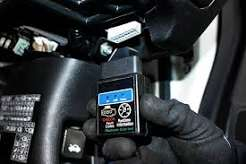
Most people purchase an OBD II diagnostic scanner for a single straightforward purpose: turning off the check engine light. While this represents a valuable function, limiting your scanner to such basic tasks wastes tremendous capability. Modern diagnostic software has evolved into comprehensive vehicle management platforms. Learning to harness these advanced features saves thousands in mechanic fees while genuinely improving your vehicle’s performance and reliability.
Transitioning from Reactive Repairs to Proactive Maintenance
Professional mechanics distinguish themselves by preventing problems rather than merely fixing them after failure. They establish baseline data when engines run properly, then monitor future readings against these benchmarks. A professional diagnostic scanner empowers you to adopt this same proactive approach.
Custom alert features provide early warning systems for developing problems. You configure notifications to trigger audible warnings when coolant temperature exceeds normal ranges, engine speed spikes dangerously, or any monitored parameter drifts outside defined boundaries. These proactive alerts typically provide sufficient warning to address issues before catastrophic damage occurs, potentially saving engines from overheating or transmissions from premature failure.
Recording and playback capabilities capture sensor behavior during actual driving conditions with millisecond-level accuracy. Unlike static garage testing, logging data during highway acceleration, hill climbing, or stop-and-go traffic reveals problems that disappear when vehicles sit idle. Saving these recordings for offline analysis and comparing them against baseline logs from when the engine ran properly helps identify gradual degradation invisible during casual observation.
Vehicle management features extend these capabilities across multiple automobiles. Households with several cars or small business fleets benefit tremendously from tracking maintenance schedules, diagnostic histories, and repair records within a single interface. This centralized approach prevents missed maintenance intervals and creates comprehensive vehicle health histories that prove invaluable when diagnosing new problems.
Mastering Emissions Testing Confidence
In most American states and numerous countries worldwide, emissions testing now occurs through the OBD-II port rather than traditional tailpipe analysis. This shift makes scanner ownership practically essential for vehicle compliance.
Rather than paying for official tests and hoping for positive results, plug in your scanner first. Verify that all readiness monitors have completed their self-tests, check for pending codes that might trigger soon, and confirm no hidden issues lurk within the computer. Addressing problems before reaching the testing station transforms anxious uncertainty into confident preparation.
Understanding readiness monitor behavior proves particularly valuable. After clearing codes or disconnecting the battery, vehicles require specific driving cycles to complete all eleven inspection and maintenance readiness monitors. A quality scanner displays exactly which monitors have run and which remain incomplete, guiding you through the precise driving patterns needed to achieve full readiness before your scheduled test.
Diesel-Specific Diagnostic Power
Diesel vehicle owners face unique challenges that gasoline scanners cannot address adequately. Clogged Diesel Particulate Filters and malfunctioning Exhaust Gas Recirculation valves frequently trigger limp mode and generate expensive repair bills. Advanced diagnostic software provides essential diesel-specific capabilities.
Reading exact fault conditions for DPF and EGR systems reveals whether components require cleaning, replacement, or regeneration. Performing regeneration cycles through the scanner burns accumulated soot from the particulate filter, restoring proper exhaust flow and engine performance. Managing these systems proactively prevents the costly component failures that plague neglected diesel vehicles.
Fuel consumption monitoring provides additional diesel benefits. Tracking liters per hundred kilometers, miles per gallon, or liters per hour helps identify efficiency degradation that might indicate developing injector problems, turbocharger issues, or fuel system restrictions before they trigger warning lights.
Exploring ECU Tuning and Performance Enhancement
Perhaps the most exciting advanced application involves ECU chip tuning and performance mapping. Some comprehensive diagnostic software packages include tuning tools that adjust engine control unit parameters for improved performance. Built-in libraries containing thousands of optimized calibration files allow safe modifications to fuel curves, ignition timing, and boost pressure.
Map editors enable fine-tuning parameters for specific driving styles or vehicle modifications. Installing a cold air intake, upgrading exhaust systems, or adding forced induction requires corresponding fuel and timing adjustments. Professional tuning software makes these modifications accessible without visiting specialty shops.
Increasing brake horsepower safely requires understanding current engine parameters thoroughly. Logging baseline performance data before modifications establishes measurable improvement benchmarks. Monitoring knock sensor activity, exhaust gas temperatures, and air-fuel ratios during tuning ensures changes remain within safe operating limits.
Advanced Data Analysis Techniques
Continuous real-time digital and graphic display of up to ninety powertrain data points simultaneously reveals complex interrelationships between vehicle systems. Watching how fuel trims respond to oxygen sensor changes, observing ignition timing adjustments during acceleration, and monitoring transmission adaptation values during shifting provides insights impossible to gain from simple code reading.
Freeze-frame analysis captures complete system snapshots when faults occur. Comparing freeze-frame data across multiple fault events often reveals patterns pointing to root causes. A misfire that consistently occurs during cold starts suggests different problems than one appearing only during high-load acceleration.
OBDII shell terminals provide power-user access for custom commands and deep system interrogation. While requiring greater technical knowledge, these interfaces unlock capabilities unavailable through standard menus for enthusiasts seeking maximum diagnostic control.
Conclusion: Unlock Your Scanner’s Full Potential
An OBD II diagnostic scanner represents far more than a check-engine-light reset tool. It serves as a comprehensive vehicle health monitor, emissions testing assistant, diesel maintenance platform, performance tuning interface, and predictive maintenance system. By exploring and mastering these advanced capabilities, vehicle owners transform from passive drivers into informed automotive stewards capable of maintaining optimal vehicle health while avoiding unnecessary repair expenses.
Discover how professional diagnostic technology can revolutionize your approach to vehicle care and unlock the full potential hidden within your automobile’s computer systems.
