

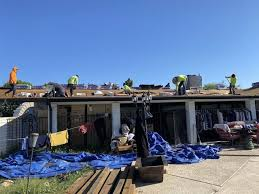
Homeowners in the Phoenix metropolitan area are making roofing decisions under pressure. Between climbing material costs, a tight contractor market, and climate conditions that accelerate wear faster than most regions in the country, the gap between what people expect to pay and what they actually pay has widened considerably. That gap is not just a budgeting inconvenience — it affects how homeowners plan maintenance cycles, handle insurance claims, and evaluate bids from competing contractors.
In 2025, Phoenix residential roofing costs are not a flat number. They shift based on location within the metro, roofing material type, the age and condition of the existing structure, and the time of year work is being scheduled. Understanding how those variables interact gives homeowners and property managers a more accurate framework for evaluating proposals — and for knowing when a bid is reasonable versus when it reflects poor scope assessment or inflated overhead.
This breakdown is not a price list. It is an operational framework for understanding how roofing costs are structured in one of the most demanding residential roofing markets in the Southwest.
How Phoenix’s Climate Drives the Real Cost of Residential Roofing
When evaluating phoenix residential roofing services, the starting point is not material cost or labor rate — it is the climate. The Sonoran Desert climate imposes a specific and consistent pattern of thermal stress, UV degradation, and moisture infiltration that directly determines how often roofing systems need attention and what level of installation quality is required to achieve a reasonable service life. Resources like the National Weather Service Phoenix forecast office document the region’s extreme heat events and monsoon cycles, both of which create compounding stress on roofing assemblies.
Roofing materials that perform adequately in moderate climates often fail prematurely in Phoenix. This is not a quality issue with the material alone — it is a compatibility issue between material design thresholds and the actual environmental load. Contractors who understand this distinction will factor it into their proposals through material selection, underlayment specification, and installation method. Those who do not often produce work that looks acceptable at completion but begins failing within two to four seasons.
The cost implications here are significant. A homeowner who accepts a lower bid based on standard materials may save money upfront but absorb repair and replacement costs that exceed the original savings within a few years. This cost deferral pattern is one of the most common and most preventable financial outcomes in Phoenix residential roofing.
Thermal Cycling and Structural Load Over Time
Phoenix homes experience extreme daily temperature variation, particularly in summer months. Roofing assemblies expand and contract with each heating and cooling cycle, and over time this creates micro-movement at fastener points, flashing joints, and seams. The cumulative effect is gradual but consistent, and it is one reason why roofing systems in this region often show stress failures not from a single event but from sustained operational load.
When contractors price work in Phoenix, those who account for thermal cycling will typically recommend higher-rated fasteners, wider flashing margins, and specific underlayment products. These choices add to the upfront cost but reduce the frequency of mid-cycle repairs. For homeowners comparing bids, understanding this factor helps explain why two proposals for seemingly identical scopes can differ meaningfully in price.
Monsoon Season and Water Intrusion Risk
The monsoon season in Phoenix runs from mid-summer through early fall and brings concentrated, high-intensity rainfall that drainage systems on low-slope residential roofs are not always prepared to handle. Flat and low-pitch roofs, which are common in Phoenix architecture, are particularly exposed to ponding water risk during these events. Proper drainage slope, membrane integrity, and scupper sizing all affect how a roof performs under monsoon conditions.
Contractors who include thorough drainage assessment as part of their scope are reflecting a legitimate cost driver, not padding a proposal. Homeowners who receive a bid that does not address drainage on a low-slope roof should ask directly how water management is accounted for in the work plan.
Zip-Code-Level Cost Variation Across the Phoenix Metro
Roofing costs within the Phoenix metro vary meaningfully by zip code, and the reasons go beyond simple geography. Labor availability, material delivery logistics, permitting timelines, and even typical roof pitch and age by neighborhood all contribute to why a roofing job in Arcadia will carry different cost expectations than a comparable job in Laveen or Maryvale.
Older neighborhoods in central Phoenix — areas developed primarily before the 1980s — tend to have roofs with more accumulated layers, original decking that may require partial or full replacement, and structures where drainage infrastructure was not built to current standards. Work in these areas often uncovers additional scope once the existing roof is removed, which is why experienced contractors include contingency language in proposals covering these zones.
New Construction Corridors and Material Availability
In areas like Queen Creek, Buckeye, and portions of the West Valley, residential roofing costs are shaped by proximity to active new construction corridors. When large-scale homebuilding projects are underway nearby, material supply chains become strained and labor is drawn toward volume contracts with builders. This reduces the availability of skilled installers for individual residential projects, which in turn increases the price of residential work or extends scheduling timelines.
Homeowners in these areas often face longer wait times between signing a contract and the start of work, which matters when a repair is needed before the monsoon season or when an active leak is creating interior damage. Planning roofing work outside of peak demand windows — typically late fall through early spring — can meaningfully affect both cost and scheduling reliability in these zones.
Historic and Infill Neighborhoods: Scope Complexity as a Cost Driver
In neighborhoods like Willo, Encanto, and Roosevelt Row, the housing stock presents scope complexity that inflates project cost beyond what similar square footage would cost in newer subdivisions. Rooflines in these areas often include multiple penetrations, irregular pitches, parapet walls, and aged flashing systems that require custom fabrication rather than off-the-shelf components. The labor time required to work carefully around these elements — while maintaining interior protection and meeting inspection standards — adds real cost to every project in these areas.
This is not inefficiency. It reflects the actual difficulty of the work, and bids that do not account for it should be questioned. A proposal that treats a 1940s bungalow the same as a 2015 tract home in terms of labor hours is almost certainly missing scope.
Material Choices and Their Long-Term Cost Implications
The choice of roofing material in Phoenix is not primarily an aesthetic decision — it is a performance and cost decision made against a backdrop of extreme operating conditions. Each material category carries a different cost profile not just at installation but across the useful life of the system, including maintenance frequency, repair cost per incident, and replacement cycle length.
Tile roofing — both concrete and clay — remains common in Phoenix because of its thermal mass properties and long potential service life. However, tile roofing carries higher installation labor costs, is more sensitive to deck condition beneath the tile, and requires careful handling during repairs to avoid cracking adjacent tiles. For homeowners evaluating phoenix residential roofing services across multiple bids, understanding that tile proposals should include deck inspection and underlayment replacement at re-roofing intervals is essential to comparing proposals accurately.
Flat and Low-Slope Membrane Systems
Modified bitumen and single-ply membrane systems are widely used on Phoenix homes with flat or low-slope roof sections, particularly on patio covers, additions, and portions of contemporary-style homes. These systems are generally less expensive to install than tile but require more frequent maintenance inspections to catch seam separations and flashing failures before they become water intrusion events.
The true cost of a membrane roof is therefore not its installation price alone — it includes a realistic maintenance budget for inspections after each monsoon season and minor repair work that prevents larger failures. Homeowners who do not budget for this ongoing maintenance consistently report higher total costs over time than those who treat flat roof maintenance as a recurring operating expense.
Shingle Roofing in Phoenix: Context Matters
Asphalt shingles are used on steeper-pitch Phoenix homes, though their performance in this climate is limited compared to regions with less UV intensity and lower peak temperatures. Shingle roofing in Phoenix carries a shorter expected service life than the same product installed in a cooler climate, and this should be factored into any long-term cost comparison. Contractors who quote shingle work without addressing this climate mismatch are not giving homeowners a complete picture of what they are purchasing.
Permit Costs, Inspection Timelines, and Their Effect on Total Project Cost
Roofing permits in Maricopa County and within Phoenix city limits are required for full replacement work and for projects that involve structural elements of the roof assembly. The cost of permits is relatively predictable, but the inspection timeline — the period between permit application, work start authorization, and final inspection sign-off — varies by jurisdiction and by current permitting department workload.
When inspection timelines extend, project completion is delayed. For homeowners, this creates vulnerability windows where existing roofing is partially removed but not yet replaced. Contractors who build realistic inspection timelines into their project schedules, and who have established relationships with local inspectors, reduce this risk in ways that are not always visible in a bid comparison but matter considerably in execution.
Understanding the full cost of phoenix residential roofing services in 2025 means looking at permit costs, inspection delays, and contractor familiarity with local processes as real contributors to project cost — not administrative afterthoughts.
Evaluating Contractor Bids with a Cost Structure Framework
Most homeowners evaluate roofing bids by comparing final totals. A more useful approach is to compare the cost structure within each bid: what is included in labor, what materials are specified and at what grade, what contingencies are built in for discovered scope, and what the warranty terms cover. A higher bid that includes comprehensive scope and meaningful warranty terms may represent lower total cost over a five-year horizon than a lower bid that excludes deck work, specifies entry-level materials, and carries limited warranty coverage.
Phoenix homeowners requesting quotes for phoenix residential roofing services should ask each contractor to break down their proposal by labor, materials, disposal, permits, and contingency. Contractors who cannot or will not provide this breakdown are not necessarily performing poor work, but the lack of transparency makes comparison difficult and creates risk of scope disputes during the project.
Closing Perspective: Cost Transparency as a Planning Tool
Roofing cost in Phoenix in 2025 is not a single figure that applies across neighborhoods, materials, or roof conditions. It is a range shaped by climate-specific performance requirements, zip-code-level labor and logistics conditions, material compatibility with the operating environment, and the quality of scope development by the contractor producing the estimate.
Homeowners who approach this process with a framework — understanding what drives cost variation and what distinguishes a well-structured proposal from an incomplete one — are better positioned to make decisions that hold up over time. The goal is not to find the lowest number. The goal is to understand what a given number reflects and whether it corresponds to work that will perform reliably in one of the most demanding residential roofing environments in the country.
That clarity, built before the work begins, is what separates a roofing investment that delivers its intended value from one that generates repeated cost and disruption in the years that follow.
