

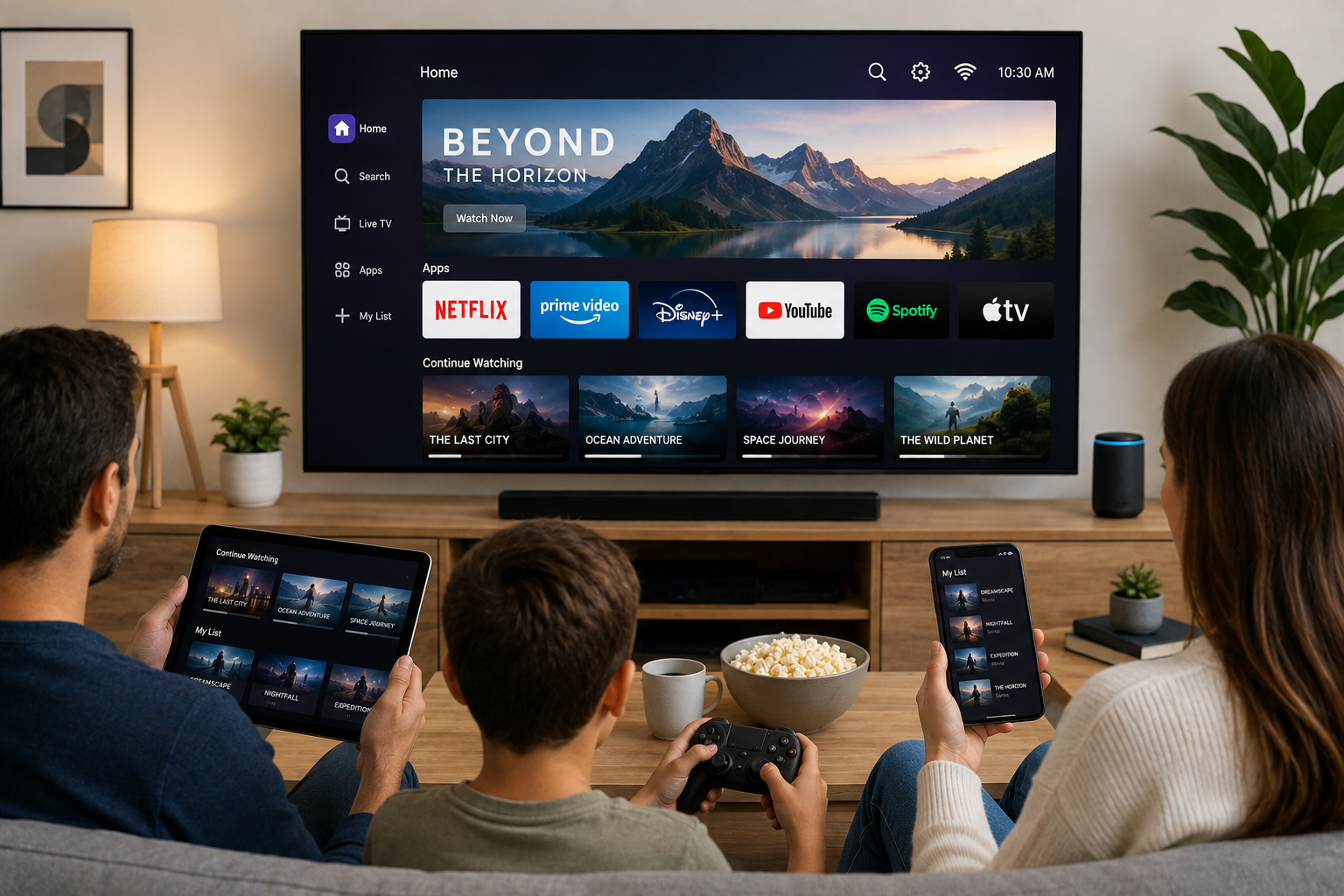
Technology has transformed the home into a connected digital environment. Smartphones, laptops, smart speakers, gaming consoles and televisions now communicate with online services and give users access to information and entertainment from almost anywhere in the house. Among these devices, the television has undergone one of the most significant transformations.
Modern televisions are no longer passive screens that simply receive scheduled broadcasts. Smart TVs and connected streaming devices now run applications, access internet-based services and interact with other devices on the same network. This evolution is changing both the technology behind television and the way households consume digital content.
The Television Is Becoming a Connected Platform
Traditional television systems were relatively simple from the viewer’s perspective. A household received channels through a specific distribution method and watched programming according to a predefined schedule. Connected televisions introduced a much more flexible model.
Today, a smart TV can support streaming applications, live programming, video-on-demand libraries, music platforms and other digital services. Users can move between different types of content without changing the primary screen in their living room.
From a technology perspective, this means televisions increasingly resemble other computing devices. They use operating systems, applications, network connections and software updates. Manufacturers are therefore competing not only through screen quality and hardware specifications but also through software usability and application ecosystems.
Broadband Connectivity Has Become Essential
The growth of connected entertainment depends heavily on reliable internet infrastructure. High-quality digital video requires consistent data delivery, especially when viewers expect HD or higher-resolution content.
Several technologies operate behind the scenes to make this possible. Cloud platforms can process and distribute digital media, while content delivery networks help move video closer to viewers and reduce unnecessary delays. Applications must also adapt to changing network conditions so that playback remains stable.
This demonstrates how closely entertainment technology is now connected to the broader internet ecosystem. Network engineering, cloud computing, application development and user-interface design can all directly influence what a viewer experiences on the television screen.
Smart TV Apps Are Changing Content Discovery
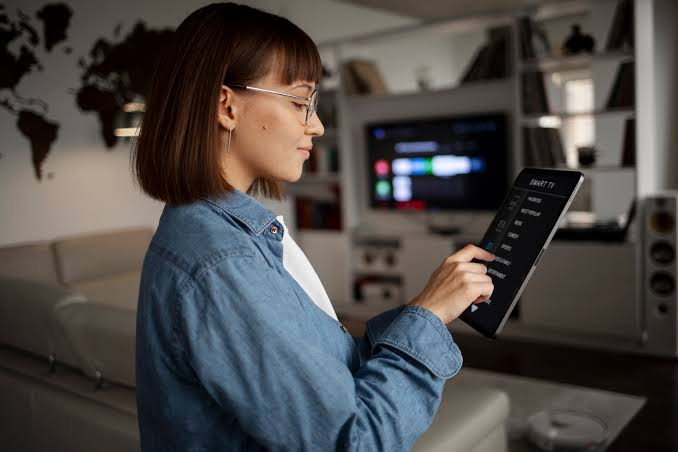
One of the major consequences of connected television is the dramatic increase in available content. Instead of choosing from a limited number of channels, viewers may have access to multiple streaming services, broadcaster applications, online video platforms and specialized content libraries.
Greater choice is useful, but it also creates a discovery problem. When content is spread across many applications, viewers can spend significant time deciding what to watch.
This has made software-based discovery increasingly important. Search systems, recommendation engines, personalized home screens and viewing histories help users navigate large content libraries. As artificial intelligence continues to develop, these systems may become even more capable of understanding individual viewing preferences.
Different Markets Have Different Digital Viewing Habits
Although connected television is a global technology trend, the way people use it varies between countries. Language, broadband infrastructure, available services, local broadcasters and cultural preferences all influence viewing behavior.
Germany provides a useful example. Households there can combine traditional television with streaming platforms, smart TV applications and internet-delivered television services. Consumers comparing smart television options for German viewers are therefore participating in a broader transition in which internet connectivity is becoming an increasingly important part of the television experience.
This regional dimension matters for technology companies. A successful connected TV service cannot always use exactly the same strategy in every market. Interfaces, language support, device compatibility and content preferences may need to be adapted to local expectations.
Cross-Device Experiences Are Becoming Normal
Another major technology trend is the increasing connection between televisions and smaller screens. A viewer might discover a program on a smartphone, research it on a laptop and later watch it on a television.
Modern platforms are responding by synchronizing accounts across devices. Viewing histories, saved programs and preferences can follow the user from one screen to another. This reduces friction and makes the experience feel like one connected service rather than several independent applications.
For developers, however, cross-device functionality creates additional complexity. Applications must work across different operating systems, screen sizes and input methods while maintaining consistent account information.
Home Networks Are Becoming More Important
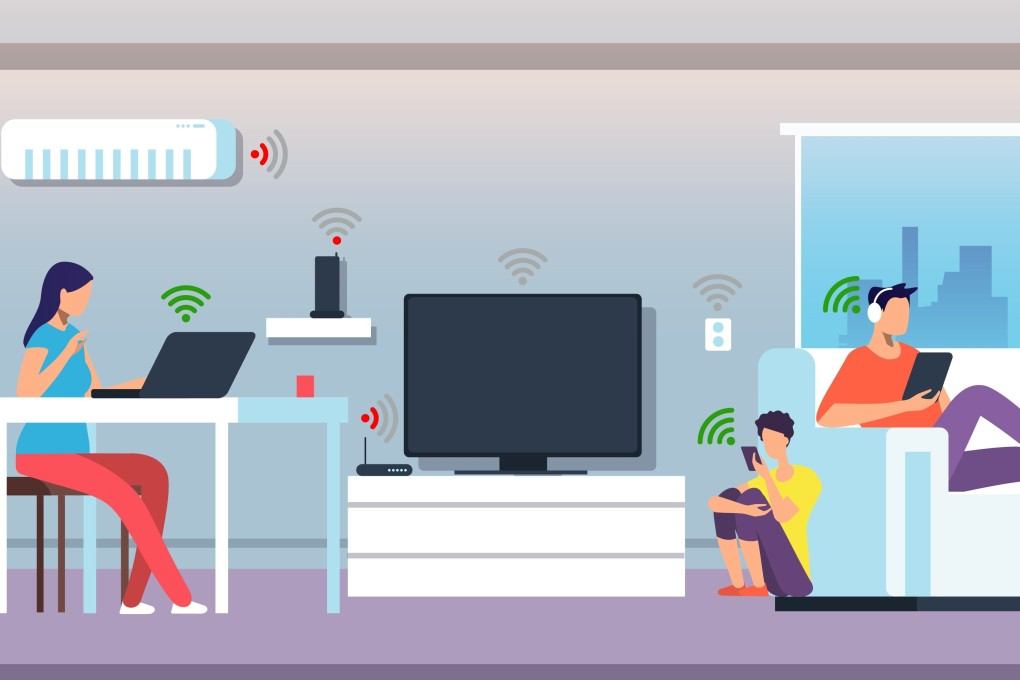
As more devices connect to the internet, the quality of the home network becomes increasingly important. A household may simultaneously have phones, laptops, televisions, security cameras, smart speakers and gaming devices communicating through the same router.
This creates greater demand for stable Wi-Fi coverage and effective bandwidth management. A television located far from the router may experience poorer performance even when the household has a fast broadband connection.
Technologies such as mesh Wi-Fi systems have become popular partly because they can improve coverage across larger homes. Router placement, wireless interference and device congestion can also influence the quality of streaming.
Consumers therefore benefit from viewing the television as part of the wider home network rather than as an isolated appliance.
Security Matters on Connected Screens
Internet connectivity also introduces new security considerations. Smart TVs and streaming devices can contain applications, user accounts and login credentials. Like other connected devices, they require appropriate software updates and responsible account management.
Users should install applications from trusted sources, keep device software updated and protect important accounts with strong credentials. Manufacturers and service providers also have a responsibility to maintain secure software and clearly explain how user information is handled.
As the number of connected devices grows, cybersecurity awareness will become increasingly important within ordinary households, not only within businesses and technology departments.
Technology Is Making Television More Personalized
Traditional broadcasting delivered essentially the same schedule to large groups of viewers. Connected television makes a more personalized experience possible.
Applications can remember viewing history, maintain favorite lists and recommend programs based on previous activity. Different household members may also use individual profiles so that recommendations and preferences remain separate.
This personalization can make large content libraries easier to navigate, although it also increases the importance of privacy and transparent data practices. Users should understand how recommendation systems use viewing information and which privacy controls are available.
The Future Is About Convergence
The evolution of television illustrates a broader trend across the technology industry: previously separate devices and services are becoming part of the same connected ecosystem.
Television now overlaps with cloud computing, mobile technology, broadband networking, artificial intelligence and software development. The screen remains familiar, but the infrastructure behind it has changed dramatically.
For consumers, this convergence provides greater flexibility in how and where they access content. For technology companies, it creates opportunities to improve discovery, connectivity, device integration and user experience.
The next phase of home entertainment will therefore probably be defined less by individual devices and more by how effectively those devices work together. As connected technologies continue to develop, television will increasingly function as one component of a larger digital home rather than as a standalone medium.
