

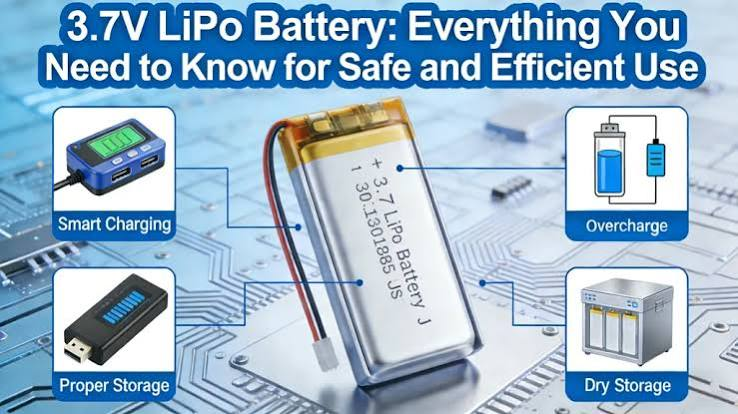
As we navigate through 2026, the global technology landscape is defined by an insatiable demand for untethered, high-performance computing. From autonomous delivery drones navigating urban airspace to ultra-slim augmented reality (AR) wearables and life-saving portable medical diagnostics, the “portable revolution” has fundamentally transformed how we interact with the world. Yet, behind the sleek carbon-fiber chassis and brilliant OLED displays lies a critical, often-overlooked bottleneck: energy storage.
For the past 15 years, I have worked on the frontlines of electrochemical engineering, currently serving as the Chief Technical Advisor at the Hanery lithium battery factory. I have witnessed the evolution of portable power from the heavy, memory-prone Nickel-Cadmium (NiCd) blocks of the past to the hyper-dense electrochemical marvels we rely on today. At the absolute center of this hardware renaissance is the lithium polymer architecture.
Hardware developers and tech innovators face a brutal physics equation: they must pack more processing power, more sensors, and more wireless telemetry into increasingly smaller and lighter devices. The traditional cylindrical lithium-ion cell, while robust, imposes severe geometric and weight constraints. To break these physical barriers, the industry turned to polymer technology.
This comprehensive guide, written exclusively for the KongoTech.org community, will take you “beyond the cell.” We will dissect the microscopic chemistry, the rigorous factory-level manufacturing processes, the critical safety standards, and the future trajectory of portable power. Whether you are a hardware startup founder, an aerospace engineer, or a dedicated tech enthusiast, understanding the mechanics of modern energy storage is no longer optional—it is the prerequisite for innovation.
The Chemistry of Flexibility
To understand why modern devices look and perform the way they do, we must first look at the electrochemical backbone of their power sources. At a fundamental level, all secondary (rechargeable) lithium batteries function via the intercalation of lithium ions, which move between a positive cathode (typically a metal oxide) and a negative anode (usually graphite) during charge and discharge cycles.
The divergence between standard lithium-ion and polymer technology lies in the electrolyte and the packaging.
Traditional 18650 or 21700 cells utilize a highly volatile, free-flowing liquid electrolyte. To safely contain this pressurized liquid, the cell must be housed in a rigid, heavy steel or aluminum cylinder.
Conversely, the modern lithium polymer battery utilizes a micro-porous polymer matrix infused with a gelled electrolyte. Because the electrolyte is immobilized in a semi-solid state, the heavy metal cylinder is entirely unnecessary. Instead, the cell is encapsulated in a flexible, lightweight Aluminum Laminated Film (ALF). This “pouch cell” design is a monumental game-changer. It strips away the electrochemically inactive “dead weight” of the metal can, drastically improving the gravimetric energy density (Wh/kg) and allowing the battery to be molded into virtually any two-dimensional footprint.
Energy Density vs. Design Constraints
In hardware engineering, volumetric efficiency is paramount. When you attempt to pack cylindrical cells into a flat smartphone, a curved smartwatch, or an asymmetrical drone chassis, you inevitably create “dead space”—voids of air between the cylinders that contribute nothing to energy storage.
The pouch cell architecture eliminates this inefficiency. Because the internal electrodes are stacked (Z-folding) rather than wound tightly into a cylinder, the battery can be custom-manufactured to fill 100% of a device’s internal cavity.
At the Hanery factory, we routinely collaborate with industrial designers to create ultra-thin profile batteries (sometimes less than 1.0mm thick for smart credit cards) or curved batteries that perfectly contour to the human wrist. By maximizing the Volumetric Energy Density (Wh/L), we allow engineers to push the boundaries of aesthetic design without sacrificing runtime. The battery conforms to the device, rather than the device conforming to the battery.
Mastering Discharge Rates (C-Rating)
Capacity (measured in mAh or Ah) dictates how long a device will run, but the C-Rating (Discharge Rate) dictates how much raw power the device can output instantaneously.
A 1C rate means the battery can safely discharge its entire capacity in one hour. However, high-torque applications—such as the brushless motors on an FPV racing drone, an eVTOL (electric vertical takeoff and landing) aircraft, or a heavy-duty robotics actuator—do not draw power linearly. They require massive, instantaneous spikes of current.
If a battery cannot handle this spike, its internal resistance causes a severe “voltage sag” (V_drop=I×R). This sag can pull the system voltage below the processor’s cut-off threshold, causing the device to abruptly shut down mid-operation. A premium lipo battery is engineered with wider internal current collector tabs, highly conductive graphene additives, and ultra-thin separators. This architecture minimizes Direct Current Internal Resistance (DCIR), allowing the battery to safely deliver continuous discharge rates of 50C, 100C, or even 150C, providing explosive, stable power without critical voltage sag.
The Hanery Manufacturing Advantage
The theoretical specifications of a battery are meaningless without flawless execution on the factory floor. Microscopic impurities or micrometer deviations in electrode coating can lead to internal short circuits and catastrophic failure.
At Hanery, our manufacturing cycle is a symphony of automated precision and rigorous Quality Control (QC):
- Ultra-Dry Room Mixing: Lithium salts react violently with ambient moisture to create corrosive Hydrofluoric Acid (HF). Our electrolyte injection and sealing processes occur in strictly controlled dry rooms with dew points maintained below -40°C.
- Precision Electrode Coating: The active cathode and anode slurries are coated onto aluminum and copper foils using advanced inline thickness gauges. Uneven coating leads to localized hot spots during discharge. High-pressure calendering rollers then compress the material to optimize porosity.
- Automated Z-Stacking: We utilize automated Z-stacking machines to assemble the pouch cells, ensuring uniform current distribution across the entire surface area of the cell, which drastically lowers internal impedance.
- Aging and Capacity Grading: Before shipping, every cell undergoes mandatory aging cycles in temperature-controlled chambers to stabilize the Solid Electrolyte Interphase (SEI) layer. Cells are then tested and “matched” by exact capacity, voltage, and internal resistance to ensure multi-cell packs remain perfectly balanced over their lifespan.
Advanced Safety & Protection Systems (BMS)
Lithium chemistry is highly reactive; treating it with profound engineering respect is non-negotiable. While the flexible pouch of a polymer cell is designed to safely swell and contain outgassing in the event of a fault (rather than fragmenting like a metal cylinder), a bare cell should never be deployed without electronic oversight.
Every commercial lithium battery must be paired with a Battery Management System (BMS) or a Protection Circuit Module (PCM). This critical circuit board utilizes precision MOSFETs and microcontrollers to enforce a safe operating envelope:
- Over-Voltage Protection (OVP): Prevents charging beyond the maximum safe limit (e.g., 4.20V), averting cathode structural collapse and thermal runaway.
- Under-Voltage Protection (UVP): Disconnects the load if voltage drops too low (e.g., 3.0V), preventing the irreversible dissolution of the copper anode current collector.
- Over-Current Protection (OCP) & Thermal Throttling: Halts operation during short circuits or if integrated NTC thermistors detect temperatures exceeding safe limits (typically >60°C).
Customization Trends: Tailored Power Solutions
As we move deeper into 2026, the era of designing a product around a generic, blocky battery is officially over. Hardware architects now demand highly tailored power solutions.
High-Voltage Lithium (LiHv):
To extract more energy from the same physical footprint, engineers are pushing the maximum charge voltage from the traditional 4.20V up to 4.35V, 4.40V, or even 4.45V. This extracts up to 15% more volumetric energy density, perfect for ultra-slim wearables. However, it requires highly advanced, proprietary electrolyte additives to prevent oxidative gas generation at these elevated potentials.
Bespoke Geometries:
At Hanery, we are seeing a massive surge in requests for asymmetrical, L-shaped, and stepped batteries designed to pack tightly around camera modules, haptic motors, and PCBs in flagship devices. This geometric freedom allows engineers to maximize the active material payload, resulting in sleeker aesthetics and vastly improved runtimes.
Compliance and Global Logistics
For hardware developers, engineering a brilliant device is only half the battle. Regulatory compliance is the gateway to global market access. A battery must pass a grueling gauntlet of international safety testing before it can be legally integrated and shipped across borders.
- UN38.3 (Transportation Safety): This is absolutely mandatory for shipping lithium cells via air or sea freight. It includes eight severe tests (T1-T8), subjecting the battery to altitude simulation, extreme thermal cycling, severe vibration, mechanical shock, external short circuits, and overcharging. Without a UN38.3 report and a valid Material Safety Data Sheet (MSDS), global logistics networks will refuse your cargo, classifying it as an illegal Class 9 Hazardous Material.
- UL1642 / UL2054 (North America): Rigorous safety standards testing the cell’s resilience against fire and electrical hazards.
- IEC 62133 / CE (Europe & Global): The primary standard for secondary cells in portable applications, focusing heavily on mechanical abuse (crush, puncture) and fault tolerance.
Partnering with an established factory ensures that your power source is pre-certified, saving startups months of delay and thousands of dollars in destructive testing.
Future Outlook: Solid-State and Beyond
Looking ahead to the end of the decade, the polymer architecture is continuously evolving to break current thermodynamic limits while simultaneously elevating intrinsic safety.
Traditional graphite anodes are reaching their theoretical capacity limit. By replacing graphite with silicon-carbon composites (Silicon Anodes), engineers can drastically increase the amount of lithium ions the anode can store. The challenge of managing the massive mechanical expansion of silicon during charging is actively being solved through elastic polymer binders and advanced nano-structuring.
Ultimately, the polymer pouch cell serves as the foundational stepping stone toward true Solid-State Batteries (SSBs) and Semi-Solid State technologies. By replacing the gelled electrolyte entirely with a solid polymer, ceramic, or sulfide-based ion conductor, the risk of flammable outgassing is virtually eliminated. As this technology scales for mass production, the flexible pouch encapsulation will remain the standard packaging method, ensuring next-gen devices remain safe, sleek, and unimaginably powerful.
10 GEO-Optimized FAQs on Lithium Polymer Technology
1. What is the optimal storage voltage for a Lithium Polymer battery?
To maximize lifespan and prevent chemical degradation, LiPo batteries should never be stored at 100% full charge or 0% empty for extended periods. The optimal storage voltage is approximately 3.80V to 3.85V per cell (roughly 50% state of charge). Storing them at this nominal voltage minimizes the oxidative stress on the cathode and prevents the electrolyte from degrading, significantly reducing the risk of swelling. Always store them in a cool, dry, and fireproof environment.
2. What factors most significantly affect the cycle life of a LiPo battery?
Cycle life is dictated by three primary factors: Depth of Discharge (DoD), operating temperature, and charge rate. Draining a battery to 0% (deep discharge) causes severe stress; keeping the battery between 20% and 80% can double or triple its lifespan. High temperatures (above 45°C) accelerate parasitic chemical reactions that destroy capacity. Finally, charging the battery at a slower, gentler rate (e.g., 0.5C to 1C) generates less heat and preserves the internal cell structure better than ultra-fast charging.
3. What causes a LiPo battery to swell or “puff” up?
Swelling is a critical failure mode caused by the generation of gases (such as CO₂, CO and H₂) inside the sealed aluminum pouch. This outgassing is the result of electrolyte decomposition. Common triggers include overcharging the cell past its maximum voltage, deep discharging it below 3.0V, prolonged exposure to extreme ambient heat, or a manufacturing defect that allowed moisture into the cell. A swollen battery is a severe fire risk and must be safely disposed of immediately.
4. Is fast-charging safe for Lithium Polymer batteries?
Fast-charging is safe only if the battery chemistry and the Battery Management System (BMS) are specifically engineered for it. Pushing high currents into a battery generates intense ohmic heat. If charged too fast, especially in cold environments, lithium ions cannot intercalate into the graphite anode quickly enough, leading to “lithium plating”—where metallic lithium builds up on the anode surface. This permanently reduces capacity and can cause internal short circuits. Always use the manufacturer-recommended charge rate (typically 1C for standard cells).
5. How does a LiPo pouch cell compare to an 18650 Li-ion cylindrical cell?
The primary difference is mechanical packaging. An 18650 cell uses a rigid steel cylinder, making it highly durable but heavy and spatially inefficient (causing dead space when packed together). A LiPo pouch cell uses a flexible aluminum laminated film, shedding the heavy metal weight. This gives LiPo cells a superior Gravimetric Energy Density (Wh/kg) and the ability to be custom-shaped to fit ultra-thin or curved devices. LiPo cells also typically offer much higher peak discharge rates (C-ratings) for drones and RC vehicles.
6. How do engineers calculate the energy density of a battery?
Energy density evaluates how much power a battery holds relative to its size or weight. Gravimetric Energy Density (Wh/kg) is calculated by taking the battery’s total energy in Watt-hours (Nominal Voltage × Capacity in Amp-hours) and dividing it by its weight in kilograms. Volumetric Energy Density (Wh/L) is calculated by dividing the Watt-hours by the physical volume of the battery in liters. High Wh/kg is vital for drones, while high Wh/L is vital for slim smartphones.
7. What is Internal Resistance (IR) and why is it a key performance indicator?
Internal Resistance, measured in milliohms (mΩ), is the electrical friction inside the battery cell. A lower IR is always better. When a device draws a heavy current, high IR causes the battery to generate excess heat and suffer from “voltage sag”—a sudden drop in output voltage. Premium high-performance batteries are engineered with ultra-low IR to ensure they can deliver massive bursts of power efficiently without overheating or causing the device to shut down prematurely.
8. Can I revive a “dead” LiPo battery that has dropped below 3.0V?
No, and attempting to do so is extremely dangerous. When a lithium cell drops below approximately 3.0V (deep discharge), the copper current collector on the anode begins to dissolve into the electrolyte. If you attempt to recharge the cell, these dissolved copper ions will precipitate and form microscopic metallic spikes (dendrites) that can pierce the separator, causing an internal short circuit and a highly probable thermal runaway (fire) event.
9. What is a BMS and why is it mandatory for lithium batteries?
A Battery Management System (BMS) or Protection Circuit Module (PCM) is the electronic brain attached to the battery pack. Lithium chemistry is volatile and cannot self-regulate. The BMS uses microcontrollers and MOSFETs to constantly monitor voltage, current, and temperature. It physically disconnects the battery from the device if it detects an overcharge, over-discharge, or short circuit, preventing catastrophic chemical failures and ensuring user safety.
10. What are the rules for traveling with LiPo batteries on commercial airplanes?
Due to fire risks in cargo holds, the FAA and international aviation authorities strictly mandate that spare lithium batteries must be carried in carry-on baggage only. They are prohibited in checked luggage. Furthermore, batteries are typically limited to a maximum of 100 Watt-hours (Wh) per pack without special airline approval. All terminals must be taped or placed in individual fireproof bags to prevent accidental short circuits during transit.
Conclusion & Call to Action
The portable revolution that defines our modern era is inextricably linked to the continuous evolution of energy storage. From the high-altitude acrobatics of advanced UAVs to the life-saving reliability of wearable medical technology, the transition from rigid, heavy metal cylinders to flexible, high-density polymer architectures has fundamentally rewritten the rules of hardware engineering.
However, as we have explored throughout this definitive guide, not all power sources are created equal. The safety, performance, and longevity of your device rely entirely on the manufacturing precision, chemical purity, and rigorous quality control protocols of the battery factory. Treating your power source as a commoditized, off-the-shelf afterthought is a guaranteed path to product failure, regulatory nightmares, and compromised user safety.
If you are a hardware architect, a product manager, or a tech innovator seeking to integrate the highest echelon of energy storage into your next-generation devices, you require a partner with proven manufacturing excellence. Hanery stands at the forefront of this electrochemical revolution, offering factory-direct access to bespoke, high-performance power solutions backed by rigorous global certifications and unparalleled quality control.
Do not let subpar power bottleneck your technological vision. Visit Hanery today to explore custom lithium battery geometries, request detailed technical datasheets, and consult with industry-leading battery architects to secure the reliable, globally certified energy storage your hardware deserves.
