

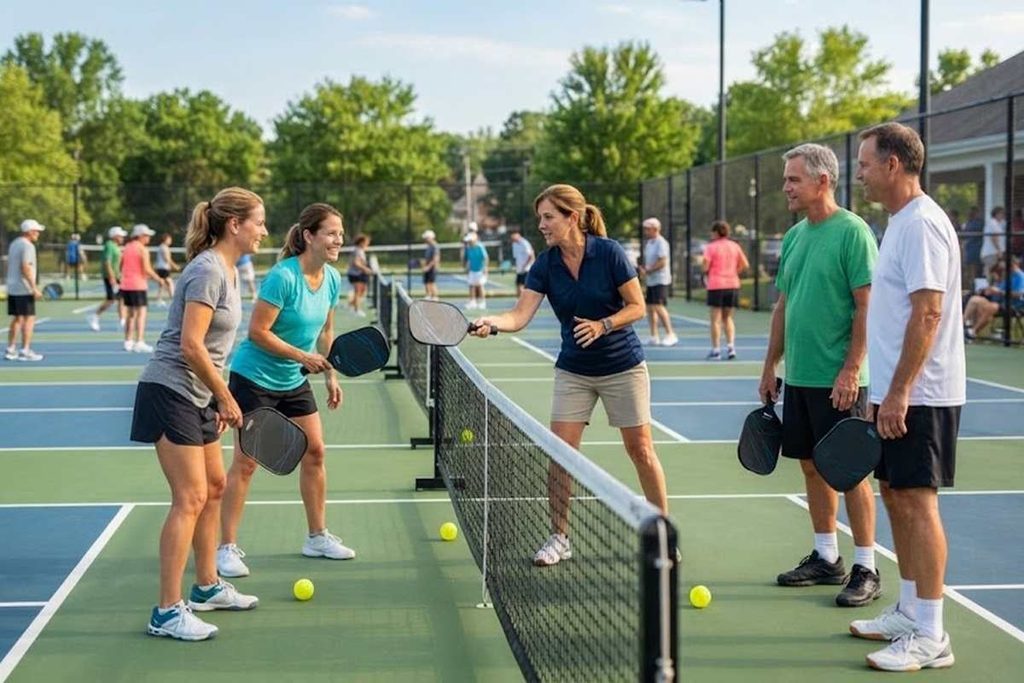
Pickleball has quickly become a popular sport for people of different ages and skill levels. While regular games are important for gaining experience, pickleball clinics provide a more structured way to improve technique, strategy, movement, and confidence. These sessions are usually led by experienced coaches who can identify mistakes and provide practical guidance.
However, one common question among players is how often they should attend a clinic. The ideal frequency depends on your skill level, goals, schedule, and how much time you can dedicate to practice between sessions. Understanding these factors can help you create a training routine that produces steady progress without making your schedule overwhelming.
Why Attend Pickleball Clinics?
Pickleball clinics offer benefits that casual games may not provide. During a normal match, players often focus on winning points rather than correcting technical mistakes. A clinic creates an environment where you can deliberately work on specific areas of your game.
A coach can evaluate your serve, return, dink, volley, third-shot drop, footwork, and court positioning. You also receive immediate feedback, which can prevent small technical problems from becoming permanent habits.
Clinics can also introduce you to players with similar goals. Practicing with different partners exposes you to various playing styles and helps you become more adaptable during competitive matches.
Beginners: Start Weekly
For beginners, attending a pickleball clinic once a week is often an effective starting point. New players need consistent instruction because they are still learning basic strokes, rules, positioning, and movement patterns.
Weekly sessions provide enough repetition to reinforce what you learn while leaving time between clinics to practice independently. After each session, try to focus on one or two skills rather than attempting to change everything at once.
For example, you might spend one week improving your serve and return, then focus on dinking and net play during the next session. This approach makes progress easier to recognize and reduces information overload.
Intermediate Players: Every Two Weeks
Intermediate players may not need formal instruction every week. Once you understand the fundamentals, attending a clinic every two weeks can provide a useful balance between coaching and independent practice.
At this stage, your needs often become more specific. Instead of learning basic techniques, you may want to improve shot selection, court positioning, partner communication, or transition play.
Between clinics, use recreational games and practice sessions to apply the skills you learned. When you return to your next clinic, your coach can evaluate your progress and help you address any remaining weaknesses.
Advanced Players: Monthly Sessions
Advanced players can often benefit from attending a clinic once a month or whenever they identify a specific weakness. At higher levels, improvement is less about learning basic strokes and more about refining decision-making, consistency, positioning, and tactical awareness.
A monthly clinic can serve as a performance check. You can bring questions from recent games and ask your coach to analyze particular situations. This makes each session highly focused and productive.
Advanced players may also benefit from specialized clinics covering topics such as doubles strategy, tournament preparation, aggressive third-shot options, or advanced net play.
Consider Your Goals
Your personal goals should strongly influence how frequently you attend pickleball clinics. Someone playing casually for recreation may only need occasional instruction, while a player preparing for tournaments may benefit from more frequent coaching.
Consider attending clinics more regularly if you want to:
- Improve quickly as a beginner.
- Prepare for competitive tournaments.
- Correct recurring technical mistakes.
- Develop a stronger doubles strategy.
- Build confidence in specific shots.
- Learn advanced techniques and game tactics.
If your main goal is social enjoyment, monthly or occasional clinics may be enough to keep your skills developing while allowing plenty of time for recreational play.
Practice Between Clinics
Attending pickleball clinics alone will not guarantee improvement. What you do between sessions is equally important. Coaching introduces new skills, but repetition helps those skills become natural during real games.
After a clinic, dedicate time to practicing the techniques discussed by your coach. Even 20 to 30 minutes of focused practice can be valuable when performed consistently.
Try to recreate situations from your clinic during regular games. If you worked on keeping your dinks low, for example, consciously use that technique during points. Applying instruction in competitive situations helps turn practice into actual performance.
Avoid Overtraining
More clinics do not always mean faster improvement. Attending several sessions every week without sufficient practice or recovery can leave you mentally and physically tired.
Pickleball involves repeated movements, quick changes of direction, and frequent swings. Your body needs time to recover, particularly if you are also playing multiple games each week.
Quality should therefore be more important than quantity. A focused clinic followed by deliberate practice can be more useful than attending several sessions without enough time to apply what you learned.
Adjust Your Schedule
Your ideal clinic frequency can change over time. You might attend weekly sessions while learning the fundamentals, reduce them to twice a month as your skills improve, and then increase coaching before an important tournament.
It is also helpful to reassess your progress regularly. If you feel stuck despite playing frequently, additional coaching may help identify the reason. On the other hand, if you are consistently applying new techniques successfully, you may be ready to spend more time playing and practicing independently.
Why Join Pickleball Athletic Club?
Joining Pickleball Athletic Club (PAC) gives players a welcoming place to learn, practice, and improve their skills. With regular clinics, organized games, and opportunities to play with others, the club makes it easier to stay active and keep developing. To view more about Pickleball Athletic Club, visit the club and discover its programs, activities, and playing opportunities.
This club is a great choice for players who want regular practice and steady improvement. Beginners can learn fundamentals, while experienced players can refine their techniques. The club offers a supportive environment for players at different skill levels.
Joining PAC can also help players stay motivated and connected with fellow pickleball enthusiasts. Regular participation creates more opportunities to practice, build confidence, and enjoy the sport. The club makes improving your game a more engaging experience.
Conclusion
There is no single schedule that works for every pickleball player. Beginners can often benefit from weekly pickleball clinics, intermediate players may find every two weeks effective, and advanced players can use monthly or specialized sessions to refine their performance.
The most important factor is what happens between clinics. Combine professional instruction with purposeful practice, regular games, and adequate recovery. By choosing a clinic schedule that matches your goals and skill level, you can continue improving while keeping pickleball enjoyable and sustainable.
