

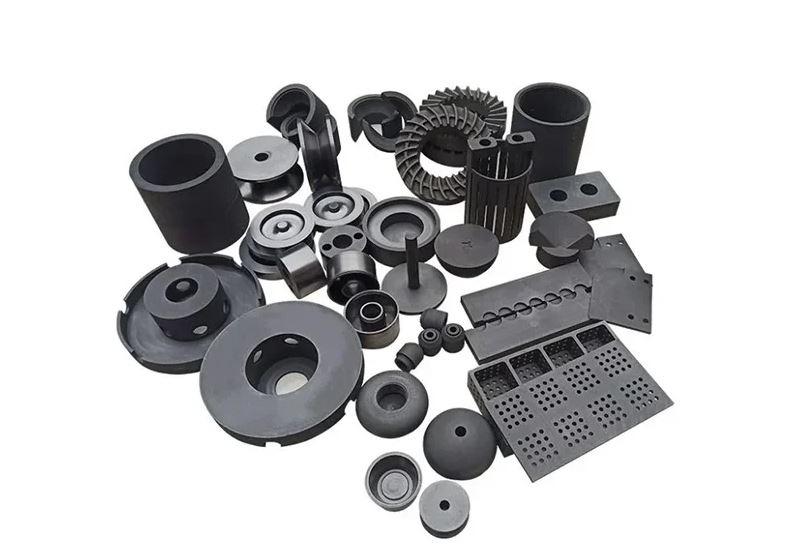
Choosing the correct mold is an important part of any casting process. The mold influences the shape, dimensions, surface quality, cooling behavior, and overall consistency of the finished product.
For high-temperature casting, graphite can offer several useful properties that make it a practical mold material. However, choosing suitable graphite molds requires more than selecting any available graphite block.
The graphite grade, mold geometry, purity, thermal properties, and operating conditions all need to be considered.
Start With the Casting Material
The first consideration should be the material being cast.
Different metals have different melting temperatures, chemical characteristics, and cooling behavior.
A mold that works well for one material may not be appropriate for another.
Before selecting graphite, manufacturers should consider the casting temperature, molten material, atmosphere, and expected number of production cycles.
Choose the Appropriate Graphite Grade
Graphite is available in multiple grades with different properties.
Important characteristics include:
- Density
- Grain size
- Purity
- Mechanical strength
- Thermal conductivity
- Thermal expansion
- Machinability
The correct combination depends on the intended application.
High-purity graphite can be valuable when contamination must be minimized, while fine-grain graphite may be selected when a smoother surface and precise machining are important.
Mold Design
Mold geometry has a direct effect on the finished component.
The design should account for cavity dimensions, material flow, cooling, shrinkage, and part removal.
Complex products may require channels, vents, multiple cavities, or other specialized features.
Working from accurate engineering drawings can help ensure that the final mold meets the required dimensional specifications.
Dimensional Accuracy
Precision is particularly important when producing components that must fit into other assemblies.
Graphite’s machinability allows manufacturers to create detailed cavities and accurate features.
However, manufacturing tolerances should be established before machining begins.
Thermal expansion and contraction should also be considered when determining final mold dimensions.
Surface Finish
The internal surface of the mold can influence the surface quality of the finished casting.
A properly machined graphite surface can help produce consistent results.
If a specific surface finish is required, the manufacturer should specify the required machining and finishing standards during the design stage.
Thermal Performance
Graphite’s thermal conductivity allows it to transfer heat efficiently.
This can influence how quickly a casting cools and solidifies.
Controlled thermal behavior can be particularly important for applications requiring consistent dimensions and material characteristics.
The mold design should therefore be considered together with heating and cooling conditions.
Thermal Shock Resistance
Casting processes can involve rapid changes between high and lower temperatures.
A suitable graphite material should be able to handle the expected thermal cycling without excessive cracking or degradation.
The heating and cooling rate, mold thickness, geometry, and graphite grade can all influence thermal performance.
Purity Requirements
Purity becomes particularly important for sensitive applications.
Impurities from a mold can potentially affect the final material or manufacturing process.
For applications involving advanced materials, electronics, or specialized alloys, manufacturers may require graphite with controlled impurity levels.
Operating Atmosphere
Graphite behaves differently depending on the surrounding atmosphere.
At high temperatures, exposure to oxygen can cause oxidation.
For this reason, graphite molds used in high-temperature processes may require vacuum, inert gas, or another controlled environment depending on the application.
The mold should always be operated according to the material manufacturer’s specifications.
Custom Graphite Molds
Standard molds can work well for common shapes, but specialized products often require custom designs.
Custom graphite molds can be manufactured according to specific dimensions and production requirements.
Features such as multiple cavities, grooves, channels, holes, and complex profiles can be incorporated into the design.
Production Volume
The expected number of casting cycles should also influence the mold selection.
A mold used for occasional production may have different requirements from one expected to operate continuously in a high-volume manufacturing environment.
For high-volume applications, manufacturers should consider graphite grade, wear resistance, thermal cycling, maintenance, and replacement availability.
Cost vs. Long-Term Value
The cheapest mold is not necessarily the most economical option.
A higher-quality graphite mold may provide better dimensional stability, longer service life, and more consistent production.
When comparing options, consider the total cost of ownership rather than only the initial purchase price.
Final Thoughts
Choosing the right graphite mold requires a careful evaluation of the entire casting process.
Manufacturers should consider the casting material, temperature, graphite grade, purity, mold design, dimensional requirements, surface finish, thermal cycling, atmosphere, and production volume.
By matching these factors correctly, manufacturers can improve casting consistency and reduce unnecessary mold-related problems. A properly designed and manufactured graphite mold can become a valuable component of demanding high-temperature production processes.
