

For users who spend most of the day at a PC, a desktop messaging client is less about “using the phone app on a bigger screen” and more about fitting communication into a Windows workflow.
The advantages show up in ordinary tasks:
- faster typing;
- easier file management;
- larger displays;
- dedicated notifications;
- better multitasking.
For Chinese-speaking users in Hong Kong and Taiwan, there is one extra decision: which interface language is easiest to work with on the same Windows computer.
The cleanest setup keeps that language choice separate from the Windows installation itself.
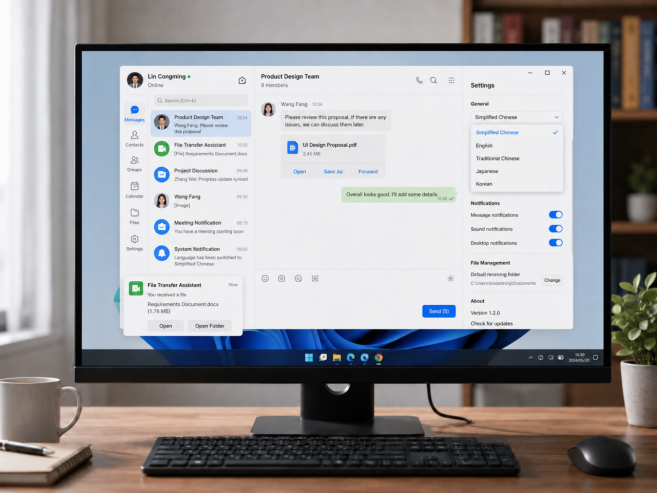
Start With the Windows Version You Actually Need
Before choosing any download, confirm that the package matches the Windows environment and the permissions available on the PC.
Before installation, confirm:
- Windows version;
- system architecture;
- storage;
- permissions;
- security policy.
A company-managed device may require software approval or central deployment.
Do not work around those controls simply because an installer is otherwise compatible.
Do Not Treat “Chinese Version” as a Separate Product by Default
The phrase “Chinese version” often describes the interface experience the user wants, not a requirement for a completely different application build.
If the normal desktop client already includes Chinese language options, the shorter path is:
- install the supported client;
- sign in;
- select Chinese;
- test the interface.
This also keeps the same update mechanism in place.
Windows Requirement and Chinese Interface Are Two Different Questions
Someone searching for Telegram中文版电脑版 is usually asking for two things at once: a Windows desktop client and a Chinese-language interface.
- One question is about platform compatibility; the other is about what language appears in menus and settings.
- a Chinese-language experience.
Those needs should be solved separately.
The Windows requirement determines which software package is appropriate.
The Windows requirement determines the installer. The language requirement should usually be handled after login through the client settings.
Install First, Localize Second
After confirming the source, complete a normal Windows installation before changing the interface.
- download the correct Windows package;
- inspect the installer;
- run installation;
- launch the application;
- authenticate.
If the application works correctly in its initial language, any later problem is easier to isolate from the installation itself.
This makes troubleshooting much easier.
Use the Built-In Language Setting
Open the client settings and look for the language preference rather than searching for another installer.
Depending on available options, the user may select:
- Simplified Chinese;
- Traditional Chinese.
Apply the change and restart if required.
For Hong Kong and Taiwan users, Traditional Chinese is often the natural first choice when it is available; an English interface can still be preferable in bilingual teams.
Test Windows Chinese Input Separately
Interface language and keyboard input are controlled by different parts of the system.
Windows input methods should be tested separately.
Try:
- Chinese text;
- punctuation;
- English-Chinese switching;
- emoji;
- search.
If Chinese typing fails in several Windows applications, investigate the Windows input method before blaming the messaging client.
Try Real Traditional-Chinese Filenames
Desktop messaging often involves work or study documents, so filename handling is a more useful test than menu translation alone.
Test documents such as:
- 项目计划.docx
- 客户资料.xlsx
- 会议记录.pdf
Make sure filenames remain readable after upload and download.
Upload and download the same files again to confirm the names remain readable across devices.
Regional Search Terms Can Be Useful Without Defining the Installer
In Chinese search results, a phrase such as 电报中文设置 may lead to localization instructions. Use the terminology to find the setting, but keep the Windows installer decision separate from the language decision.
The wording may vary across Chinese-speaking communities, but the technical workflow is still platform first, language second.
verified client → correct platform → language configuration.
That distinction helps avoid treating every nickname or localized search phrase as a separate software distribution.
Tune Notifications for a Windows Workday
A desktop client is visible for much longer than a phone screen, so notification settings quickly become part of productivity and privacy.
Users may want to:
- keep direct messages visible;
- mute large groups;
- hide previews;
- use quiet hours.
Chinese notification text should display correctly.
For screen-sharing environments, previews should often be hidden.
Decide Where Desktop Files Will Live
Windows clients can accumulate large amounts of local data over time. Set the storage location while it is still easy to remember.
Review:
- download directory;
- automatic media;
- cache size;
- cleanup controls.
Language settings should not distract from download folders, cache limits and automatic media behavior.
Use the Chinese Interface to Review Privacy More Carefully
A familiar language is most valuable when it helps the user understand the consequences of a setting.
Take advantage of that by reviewing:
- phone visibility;
- profile visibility;
- group invitations;
- active sessions.
Do not assume default visibility and session settings are right for every account.
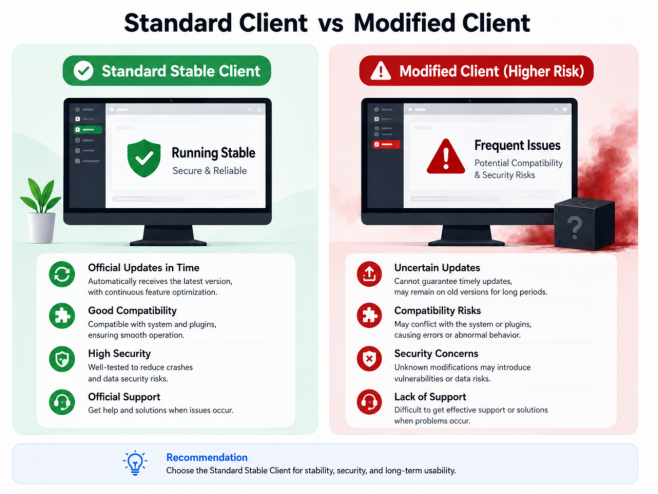
Keep Updates on the Same Normal Path
Changing the interface language should not create a new update source.
If changing language requires switching to another unofficial package, long-term maintenance becomes harder.
The ideal architecture is:
The most maintainable arrangement is one supported Windows client with whichever interface language the user prefers.
After Major Updates, Check the Settings That Matter
After updating:
- confirm Chinese is still active;
- test notifications;
- test Chinese input;
- check downloads;
- review major setting changes.
If the interface returns to English, revisit the language preference first; reinstalling should not be the automatic response.
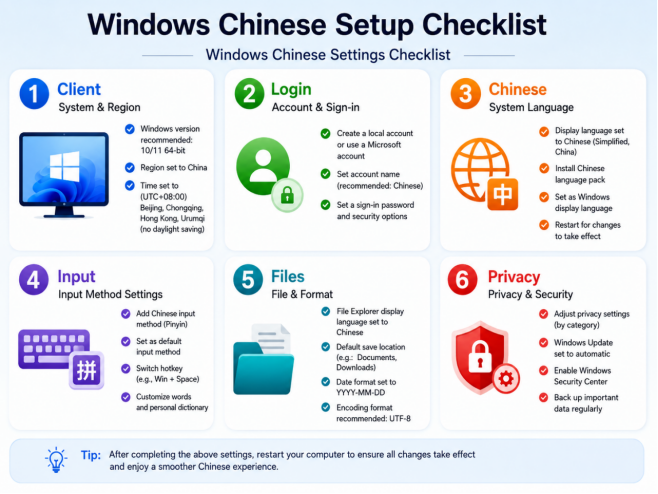
A Windows + Chinese Setup Checklist
Before installation
- Windows compatibility confirmed
- Source reviewed
- Installer checked
After installation
- Login completed
- Chinese selected
- Input tested
- Notifications configured
Storage
- Download path set
- Cache reviewed
Privacy
- Sessions checked
- Visibility controls reviewed
Maintenance
- Updates functioning
- Language rechecked after major updates
Final Notes
A Chinese-friendly Windows setup is easiest to maintain when the installer, account and interface language remain separate decisions.
For most users, the practical order is:
Windows client → account login → preferred Chinese interface → notifications, privacy and storage.
That gives Hong Kong and Taiwan users a familiar language experience without fragmenting the underlying desktop setup.
