

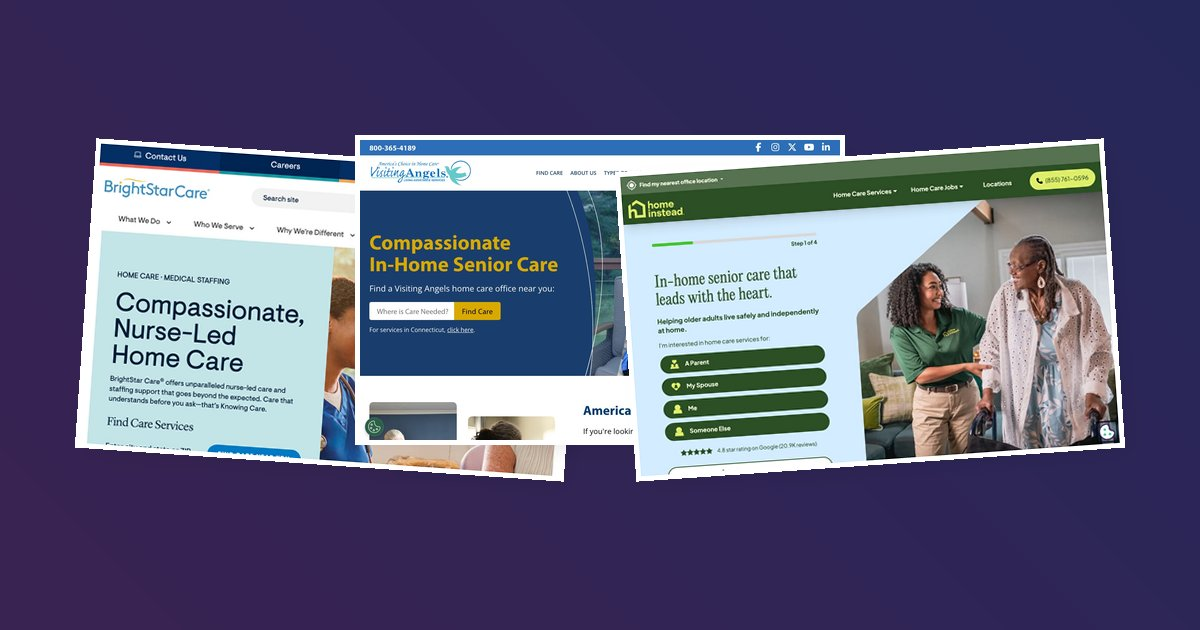
Choosing home care for an older adult is rarely a casual decision. Families may be researching care after a hospital discharge, noticing changes in a parent’s ability to manage daily activities, or trying to reduce the pressure on a family caregiver.
In many cases, the first interaction with a home care provider happens online. Before making a phone call, families often visit several websites to understand what services are available, whether the provider serves their area, and what they can expect from the care process.
For home care organizations, this means a website needs to do more than simply look professional. It should answer practical questions and make important information easy to find.
Clearly Explain the Types of Care Available
One of the first things families want to understand is whether an agency provides the type of assistance their loved one needs.
A website should clearly explain major services such as:
- Companion care
- Personal care
- Respite care
- Dementia support
- Meal preparation
- Mobility assistance
- Post-hospital support
- Overnight or extended-hour care
Simply listing these services may not provide enough information. Each important service should explain what it involves, who may benefit from it, and what families can generally expect.
This approach helps visitors determine whether they are looking at the right provider before they contact the agency.
Industry-focused resources from Senior Care Clicks also emphasize the importance of giving major home care services their own clear and useful pages rather than placing everything into one short services section.
Make Service Areas Easy to Find
Families also need to know whether care is actually available where their loved one lives.
This information should not be buried at the bottom of the website or hidden inside a contact page. Agencies serving several cities or counties can provide a clearly labeled service-area section showing the communities they cover.
For organizations operating across multiple areas, individual location pages can also help explain which services are available in each community.
The important point is accuracy. Families should not have to call an agency simply to discover whether their address falls within its service area.
Explain What Caregivers Actually Do
Terms such as “personalized care” and “compassionate support” sound reassuring, but they do not always tell a family what assistance will actually be provided.
More useful information might explain that caregivers can help with activities such as dressing, meal preparation, companionship, mobility, light housekeeping, or reminders related to daily routines.
The exact services will vary depending on the provider and local regulations, but clear explanations allow families to compare their needs with the assistance being offered.
Home care websites should be written for people who may know very little about professional caregiving. The clearer the information, the easier the decision-making process becomes.
Provide Information That Builds Trust
Inviting a caregiver into an older adult’s home requires considerable trust.
Before contacting an agency, families may want to understand how caregivers are selected, trained, supervised, and matched with clients.
Useful trust information can include details about:
- Caregiver screening procedures
- Training requirements
- Licensing or certifications where applicable
- Insurance
- Professional affiliations
- Years of experience
- Client testimonials
- Care coordination procedures
Agencies should avoid vague claims and instead provide factual information that helps families evaluate the organization for themselves.
Answer Common Questions Before the Phone Call
Many families have similar questions when researching home care.
For example, they may want to know:
- Is there a minimum number of care hours?
- Can care be provided on weekends?
- Is overnight support available?
- How quickly can services begin?
- Can schedules change as care needs change?
- What happens if a regular caregiver is unavailable?
- How are caregivers matched with clients?
- Which communities does the agency serve?
A helpful FAQ section can answer basic questions while allowing the eventual phone conversation to focus on the family’s individual circumstances.
For agencies reviewing how individual service pages can provide this type of information, read the article for a more detailed breakdown.
Make Contact Information Obvious
After researching an agency, a family should not have to search for a way to speak with someone.
Phone numbers, inquiry forms, and other contact options should be easy to locate, particularly on mobile devices.
A complicated form asking for excessive information can discourage someone who simply wants to ask a few initial questions.
The first contact should feel straightforward. More detailed information can be collected later when appropriate.
Keep the Website Easy to Read
Home care decisions are often made during stressful periods. A website filled with long paragraphs, confusing menus, small text, or excessive marketing language can make the process more difficult.
Simple design choices can improve the experience considerably:
- Use descriptive headings
- Keep paragraphs relatively short
- Organize information logically
- Make text easy to read on phones
- Use bullet points for practical information
- Avoid unnecessary industry jargon
The goal should be to help visitors find answers quickly rather than make them work through a sales presentation.
Focus on Helping Families Make an Informed Decision
A useful home care website does not need to pressure visitors into making an immediate decision.
Its most important job is to explain the available services, answer common questions, establish credibility, and provide a simple way for families to learn more.
When families can understand what an agency does, where it provides care, and what the next step looks like, they are better prepared to decide whether contacting that provider makes sense for their situation.
