

Online slot has changed the way people spend their free time, communicate with friends, and experience entertainment. A game no longer needs to be played by one person sitting in front of a computer or television. Today, players can enter shared digital environments, compete against opponents from different countries, and work together with teammates in real time.
The growth of online gaming has been supported by better internet infrastructure, increasingly powerful devices, affordable smartphones, and improvements in game development technology. These developments have created an industry that appeals to children, teenagers, adults, casual players, and professional competitors alike.
From competitive multiplayer matches to relaxing mobile games, online gaming offers an enormous range of experiences.
What Does Online Gaming Mean?
Online gaming refers to playing a video game while connected to the internet. The connection can be used for multiplayer matches, communication, online competitions, cloud saves, downloadable content, social features, or persistent virtual worlds.
Some games require players to remain connected throughout the entire session. Others can be played offline but provide additional online features.
The most common platforms for online gaming include PCs, consoles, smartphones, and tablets.
The Growth of the Gaming Industry
Gaming has evolved considerably since the early days of home computers and consoles.
Early video games were relatively simple and focused primarily on single-player experiences. Multiplayer gaming was initially limited by local connections and basic networking technology.
The expansion of the internet changed this model. Developers could connect players across long distances and create persistent online environments.
As broadband connections became more common, online multiplayer games became faster and more reliable. Smartphones then introduced gaming to an even larger audience.
Today, online gaming represents a major part of the global entertainment industry.
Different Ways People Play Online
Not everyone approaches gaming in the same way.
Some players enjoy competitive matches and spend time improving their rankings. Others prefer cooperative experiences where they can complete missions with friends.
There are also players who primarily enjoy exploration, storytelling, character customization, or creative building.
This variety means that online gaming can appeal to people with very different personalities and interests.
Popular Online Gaming Genres
First-Person Shooter Games
First-person shooters place the player directly into a combat environment. Online matches usually involve individual competition or teams.
Players need fast reactions, accurate aiming, awareness, and tactical decision-making.
Multiplayer Strategy Games
Strategy games require players to think ahead and manage resources.
Players may control armies, build cities, develop economies, or compete for territory.
These games often reward patience and long-term planning.
Role-Playing Games
Online role-playing games focus on character development and exploration.
Players can customize their characters, complete missions, discover new locations, and obtain increasingly powerful equipment.
Some role-playing games also contain large social communities.
Battle Royale
Battle royale games combine survival mechanics with multiplayer competition.
Players generally enter a large environment and collect resources while trying to survive against other players.
The playable area often becomes smaller over time, forcing players into increasingly intense encounters.
Online Sports Games
Sports games allow players to compete in digital versions of real-world sports.
Online modes can include ranked matches, tournaments, team management, and cooperative gameplay.
Mobile Games
Mobile gaming has become one of the most accessible forms of online gaming.
Because smartphones are widely available, players can enjoy games without investing in a dedicated gaming system.
Online Gaming as a Social Experience
One of the biggest changes brought by online gaming is the ability to socialize through games.
Players can communicate with teammates through voice and text chat. They can form groups, join communities, and develop friendships.
For friends who live in different cities or countries, online gaming can provide an easy way to spend time together.
Gaming communities can also extend beyond the games themselves. Players may discuss strategies, updates, tournaments, and new releases on social platforms and community forums.
Teamwork in Multiplayer Games
Many online games require players to work as a team.
A successful team may need to divide responsibilities, communicate important information, and adapt its strategy during a match.
For example, one player may focus on defense while another supports teammates or completes objectives.
This creates an environment where individual performance matters, but teamwork can be equally important.
Competitive Online Gaming
Competition is a major reason why online gaming remains engaging.
Ranked systems allow players to measure their performance against other users. Winning matches can improve rankings, while losing provides an opportunity to identify weaknesses.
Competitive players often study game mechanics, practice specific skills, watch professional matches, and analyze their previous performances.
This has helped create the professional esports industry.
The Expansion of Esports
Esports involves organized competitive video gaming.
Professional tournaments can attract players and audiences from around the world. Major competitions may include sponsorships, professional teams, commentators, analysts, and large online audiences.
Esports has also created career opportunities for people who work behind the scenes.
A competitive gaming event may require coaches, managers, broadcasters, designers, editors, technical staff, and marketing professionals.
Gaming and Content Creation
The internet has made it possible for gamers to become content creators.
People can produce:
- Gameplay videos
- Tutorials
- Reviews
- Guides
- Highlight compilations
- Live streams
- Gaming news
- Entertainment content
Successful creators can develop large audiences and build careers around their content.
Streaming has also made gaming more interactive because viewers can communicate with creators during live broadcasts.
Benefits of Online Gaming
Online gaming can offer several benefits when practiced responsibly.
Improved Decision-Making
Many gacor22 require players to make decisions quickly and evaluate different options.
Strategic Thinking
Strategy-based gameplay can encourage players to think several steps ahead.
Collaboration
Team-based games require communication and cooperation.
Creativity
Some games give players tools to design structures, environments, characters, or entire experiences.
Relaxation
Gaming can be an enjoyable way to spend leisure time and take a break from daily responsibilities.
Challenges Associated With Gaming
Like other forms of entertainment, gaming can become problematic when used excessively.
Too Much Screen Time
Long gaming sessions can reduce the amount of time available for physical activity, sleep, work, education, and social activities.
Players should establish reasonable limits and take regular breaks.
Toxic Online Behavior
Competitive communities can sometimes involve harassment, insults, cheating, or other negative behavior.
Players can often use reporting, blocking, and communication controls to manage unwanted interactions.
Spending on Games
Online games frequently offer optional purchases.
Players should understand what they are buying and avoid spending more than they can reasonably afford.
Security Threats
Gaming accounts can become targets for phishing attempts and other online scams.
Players should protect their login credentials and use additional security features whenever available.
Healthy Gaming Practices
Enjoying games responsibly is easier when players create a balanced routine.
A healthy gaming schedule can include regular breaks, physical activity, adequate sleep, and time for other hobbies.
Players should also avoid allowing gaming to interfere with important responsibilities.
Setting a specific start and stop time can be useful, particularly for games that encourage long sessions.
The Role of Gaming Hardware
Gaming hardware has improved significantly.
Modern processors and graphics cards can handle complex environments, realistic lighting, high-resolution textures, and high frame rates.
Gaming monitors with high refresh rates can provide smoother visuals, which can be particularly useful in competitive games.
Fast storage devices can also reduce loading times.
Nevertheless, expensive hardware is not necessary for every type of gaming. The ideal setup depends on the games a player enjoys and their personal requirements.
Internet Performance and Online Play
A reliable internet connection is essential for a good multiplayer experience.
Latency is particularly important in fast-paced games. High latency can cause delays between a player’s action and the server’s response.
Connection stability is also important because sudden interruptions can disconnect players from matches.
For many competitive gamers, a stable connection with low latency is more valuable than extremely high download speeds.
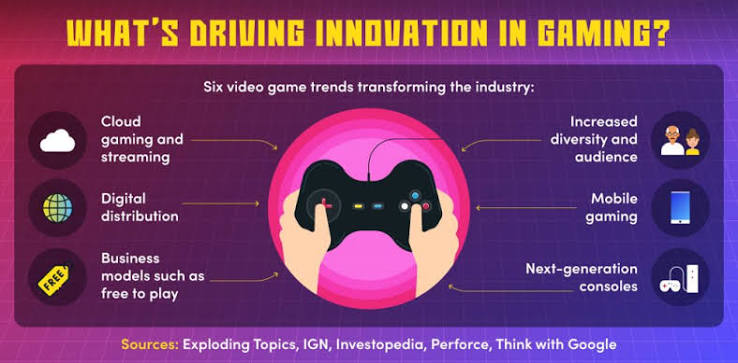
Cloud Gaming
Cloud gaming is changing the traditional relationship between hardware and games.
Instead of requiring a powerful local computer, cloud services can run games on remote servers and stream the results to a user’s device.
This approach could allow more people to access demanding games without purchasing expensive hardware.
However, cloud gaming requires a reliable internet connection and can be affected by network latency.
Artificial Intelligence and Game Development
Artificial intelligence is becoming increasingly relevant to game development.
AI can help developers create more responsive characters, analyze gameplay data, improve matchmaking, and generate certain types of game content.
Future games may use AI to adapt challenges based on individual player behavior.
This could make online experiences more personalized and dynamic.
Virtual Reality and Immersive Experiences
Virtual reality offers players a different way to interact with games.
Instead of viewing a game world on a traditional screen, VR places the player inside a simulated environment.
Multiplayer VR could make social interactions feel more immersive by allowing users to communicate through digital avatars in shared spaces.
Cross-Platform Gaming
Cross-platform functionality allows players using different devices to play together.
This can improve matchmaking and make it easier for friends to play together even when they use different hardware.
As gaming platforms become more connected, cross-platform support is likely to remain an important feature.
What Is Next for Online Gaming?
The future of online gaming will likely be shaped by several technologies at the same time.
Faster internet connections can improve multiplayer performance. Cloud technology can make demanding games more accessible. Artificial intelligence can create more responsive virtual worlds.
Virtual and augmented reality may introduce new forms of interaction, while increasingly powerful hardware can deliver more realistic graphics.
The social side of gaming is also likely to become more important. Future games may function as entertainment platforms where people can play, communicate, attend events, create content, and build communities.
Conclusion
Online gaming has developed into a global entertainment phenomenon that combines technology, competition, creativity, and social interaction.
Players can choose from thousands of experiences, including shooters, role-playing games, strategy titles, sports simulations, mobile games, and massive multiplayer worlds.
Gaming can provide entertainment and opportunities to develop skills such as problem-solving, strategic thinking, communication, and teamwork. However, maintaining a healthy balance is essential.
As artificial intelligence, cloud computing, virtual reality, and internet technology continue to advance, online gaming will become increasingly connected and immersive.
The future of gaming is likely to be defined not only by better graphics but by richer communities, smarter systems, greater accessibility, and new ways for players to interact with digital worlds.
