

Handover day in Dubai often gets treated as a formality, a quick walk-through before signing paperwork and collecting keys. In practice, that walk-through is the last point where a buyer holds real leverage over construction quality, before the transaction closes that window for good. A professional snagging report turns a casual walk-through into a documented record of defects that can be submitted to the developer for review and rectification.
What a Dubai Property Handover Actually Involves
Handover is the formal point where a developer transfers legal possession of a unit to the buyer, usually after final payment clearance and document verification. It typically includes a property walk-through, keys and access cards, and a snag list documenting anything that needs fixing.
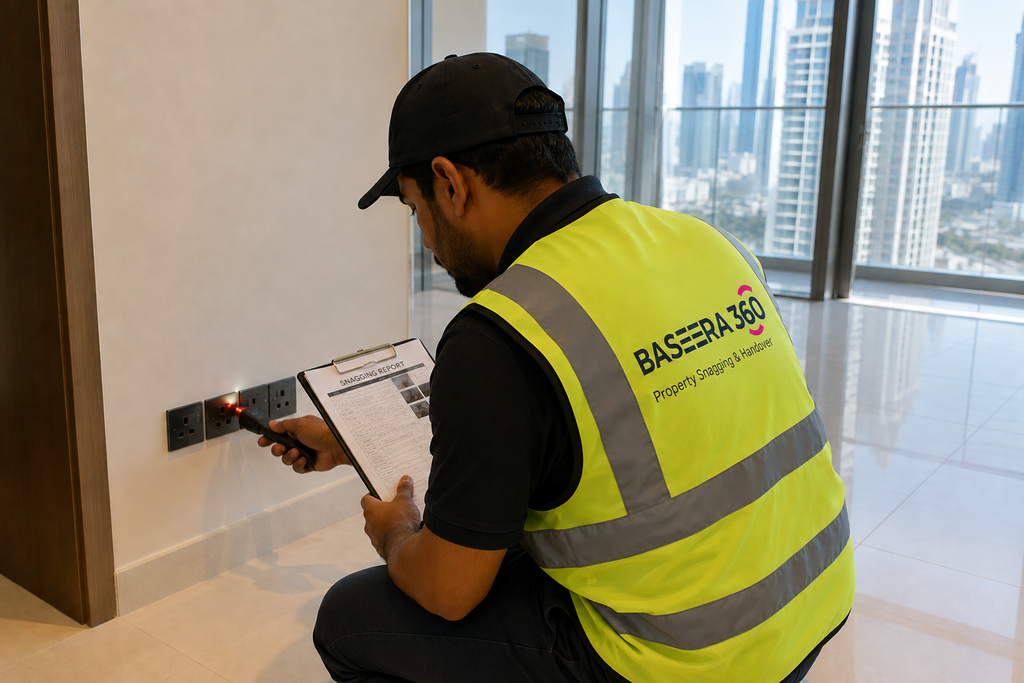
A buyer taking handover of a two-bedroom apartment in Business Bay might spend 20 minutes on a self-guided walk-through, checking that taps run and lights switch on. A thorough handover inspection can take considerably longer, since it involves checking individual finishes, fixtures, and building systems rather than confirming that things appear to work. Providers such as Baseera 360’s property snagging and handover service typically spend two to three hours on a comparable unit for exactly this reason.
What a Snagging Report Checks Before You Accept the Keys
A snagging report is a room-by-room inspection that documents defects with photos, notes, and severity ratings before the buyer signs off on the unit. It covers both what’s visible, like paint and tiling, and what isn’t, like electrical wiring behind a switch plate.
Common Defects Found in New-Build Units
- Hollow tiles caused by insufficient adhesive under the surface
- Poor grouting, gaps, or inconsistent grout lines
- Electrical faults, including loose fittings or incorrect wiring
- HVAC systems that run but underperform on airflow or cooling
- Paint defects such as runs, patchwork, or uneven sheen
Most of these are invisible during a quick walk-through and only surface once an inspector tests each system directly, for example running the air conditioning for twenty minutes rather than confirming it switches on.
What Happens If Defects Are Found After Handover
Under Dubai Law No. 6 of 2019 on Jointly Owned Properties, developers carry liability for structural defects in a property for ten years from the completion certificate date, while non-structural finishing defects generally fall under a much shorter window agreed in the sales contract, often around one year.
That shorter window is exactly why timing matters. A buyer who waits three months after handover to report a hairline crack in the flooring risks the developer disputing whether it existed at handover or emerged from normal wear.
This mirrors a pattern buyers run into elsewhere too. Reviewers flag similar pre-purchase inspection red flags in other markets, where the same lesson holds regardless of country: a defect not documented at the point of transfer becomes far harder to prove and far harder to get fixed for free.
When to Schedule the Inspection
The right time to schedule a snagging inspection is as soon as the developer grants handover access, before signing the final acceptance form or making any final payment tied to handover. Signing first and inspecting later removes most of the buyer’s leverage.
For overseas investors who can’t be physically present, providers such as Baseera 360 can conduct the inspection on the buyer’s behalf and share the report before any final decision needs to be made.
Buyers should also confirm that any inspector documents defects with timestamped photos, since a report without evidence carries far less weight in a dispute with the developer’s customer care team.
FAQ
What’s included in a professional snagging report?
It typically includes room-by-room defect documentation with photos, severity ratings for each issue, and a summary the buyer can submit to the developer for rectification.
How long does a developer have to fix defects found after handover?
It depends on the defect type. Structural issues fall under a ten-year liability window under UAE law, while general finishing defects usually fall under a shorter, contractually defined period, often around 12 months.
Can a buyer do their own snagging instead of hiring a professional?
Yes, but untrained buyers tend to catch only visible cosmetic issues and miss systems that require testing, like HVAC airflow or electrical load, which is where most costly defects hide.
Does snagging apply to resale properties, or only new builds?
It applies to both, though the process differs. New-build snagging checks for construction and finishing defects before the developer’s liability window closes, while resale snagging focuses more on wear, maintenance history, and undisclosed prior repairs.
How many defects does a typical snagging inspection find?
It varies by building and contractor quality, but professional inspectors in Dubai commonly document anywhere from a handful of minor items to over a hundred in a single new-build unit, ranging from cosmetic to functional.
A snagging report doesn’t guarantee a perfect handover. Still, it does something more useful: it creates a paper trail that shifts the cost of fixing construction defects back onto the party responsible for them, rather than the buyer who just paid for the unit.
