

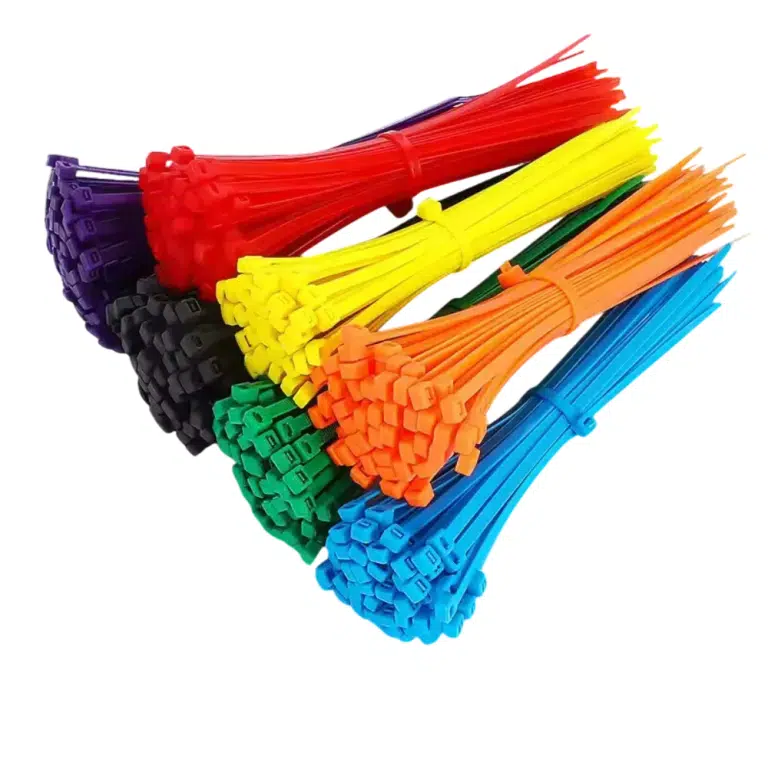
China produces most of the world’s cable ties. That gives buyers a huge choice, and it also creates a real vetting problem. For every experienced factory, there are listings from traders, small workshops and resellers who look identical on a B2B marketplace.
When your order runs to hundreds of thousands of pieces, a bad supplier choice costs far more than the price difference you were chasing. This guide covers the checks experienced buyers run before they commit.
Know Where Cable Ties Are Actually Made
Chinese manufacturing clusters by region, and electrical components are no exception. Zhejiang province, especially the Wenzhou and Yueqing area, is one of the country’s largest hubs for low-voltage electrical parts, including cable ties, terminals and connectors.
A supplier’s address will not prove anything on its own, but it is a useful first filter. A “factory” registered in a city-centre office tower with no industrial address is almost certainly a trading company.
Step 1: Confirm You Are Dealing with a Manufacturer
Trading companies are not automatically a problem, but you should know which one you are dealing with. Ask these questions:
- Business licence: does the registered business scope include production, not only sales?
- Company history: how long has the company made cable ties? Factories with decades of production have survived several market cycles.
- Live video call: ask to see the injection-moulding floor and the packing line, live, not in a pre-recorded video.
- Technical answers: ask which nylon grade they use and how they condition ties after moulding. A real factory answers quickly and in detail.
Step 2: Verify Capacity Against Your Volume
A workshop with a few machines can deliver a trial order perfectly and then fail on the repeat order. Ask for monthly output in pieces and the number of moulding machines. For context, large cable tie manufacturers produce hundreds of millions of pieces per month, while small workshops may produce only a few million.
Then ask what share of that capacity your order would take. If your order would take up most of their output, expect delays in peak season.
Step 3: Check the Paperwork Properly
Certificates are easy to show and easy to misuse. When a cable ties supplier sends you certificates, check three things:
- Whose name is on it: the certificate should name the company you are paying, not a sister company or raw-material supplier.
- What it covers: an ISO 9001 certificate for “trading of electrical parts” is not the same as one for cable tie production.
- Whether it is current: check the expiry date, and verify it with the issuing body where possible.
For electrical markets, look for ISO 9001, UL recognition and RoHS compliance covering cable ties specifically. An experienced cable ties supplier will send these without hesitation and explain exactly which products each one covers.
Step 4: Test Samples Like You Mean It
Do not just check that samples look right. Test them against the spec you will put in your order:
- Pull-test a set of ties to their rated loop tensile strength
- Bend them in cold conditions, since brittle ties often point to poor material or drying
- Measure length and width across the batch, not just one piece
- Keep a few samples as your “golden sample” to compare against the bulk shipment
Step 5: Test Custom Work Before You Scale
Custom orders need an extra round of checks. If you plan to order custom printed cable ties, ask for printed samples using your actual artwork. Check that the print is sharp, stays readable after the tie is bent and tightened, and does not rub off with your thumb.
Also confirm the MOQ and lead time for custom work in writing. Some suppliers quote attractive terms for standard ties and then add large minimums or long delays once printing is involved. Better manufacturers keep custom orders on the same MOQ and lead time as standard ones.
Red Flags That Should Stop an Order
- Prices far below every other quote for the same spec
- Refusal to do a live video call from the factory
- Certificates in a different company’s name
- Vague answers about material grade or capacity
- Pressure to pay 100% up front for a first order
- Bank account in a name that does not match the contracting company
Step 6: Protect the First Order
Even after vetting, structure the first order to limit risk. Put the full spec, packaging and delivery terms into a written purchase order. Pay a deposit and the balance against inspection or shipping documents. For larger orders, a third-party pre-shipment inspection costs little compared with the value of the goods.
Final Thoughts
Vetting a Chinese cable tie supplier takes a week or two of focused work. It is the best investment you can make in a long-term supply relationship. The goal is not to find the cheapest factory. It is to find one that delivers the same quality on the tenth order as on the first.
