

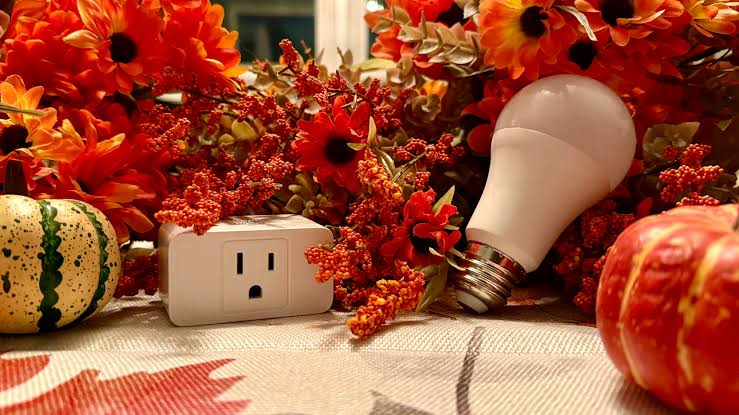
Most smart home guides are written for people who want to do more. This one is for people who want to do less. Fall is the season when the evenings get long, the light goes soft and golden by late afternoon, and the whole point of being home is to slow down. A smart home can help with that, but only if you set it up to serve the mood instead of demanding attention. Nobody feels cozy while troubleshooting a hub at nine o’clock at night.
The good news is that a warm, calm, automated evening does not require a big budget or a weekend of configuration. A handful of color-adjustable bulbs, a couple of smart plugs and one or two schedules will do most of the work. Below is a practical plan for building a home that quietly shifts into evening mode on its own, with the tech fading into the background where it belongs.
Start with color temperature, not gadgets
If you change only one thing this season, change the color of your light. Bulbs are rated in kelvin, and the number tells you how warm or cool the light looks. Daylight bulbs sit around 5000K to 6500K and have a blue-white cast that feels like an office or a supermarket. Typical “soft white” bulbs sit around 2700K. Candlelight and firelight are closer to 1800K to 2200K.
For a cozy fall evening, 2700K is the ceiling, not the target. Anything at or below that reads as warm and relaxed, and the lower you go after sunset, the more the room feels like an autumn evening instead of a bright afternoon. Many tunable white bulbs can go down to 2200K or even 2000K, and that low, amber range is where the magic happens. It flatters skin, makes wood and textiles look richer, and makes a plain rental living room feel like a cabin.
A few practical notes when you shop for bulbs:
- Look for “tunable white” or “warm-to-cool” bulbs rather than full-color bulbs if you want to save money. You will rarely need green or purple light in a living room.
- Check the minimum color temperature listed. Some “warm” bulbs only go down to 2700K, which is fine but not as atmospheric as 2200K.
- Check the minimum brightness too. A bulb that dims to one percent is far more useful in the evening than one that only dims to twenty.
- Match bulbs within a room. Mixed color temperatures in the same space look accidental rather than cozy.
This is the foundation of the whole fall aesthetic at home: warm, low, layered light that makes you want to put the phone down and pick up a mug.
Lamp scenes beat the overhead light every time
The single most effective lighting rule for a calm home is to stop using the ceiling light after dinner. Overhead light flattens everything, throws shadows downward and makes a room feel like it is being inspected. Lamps at eye level or lower do the opposite. They create pools of light, leave the corners soft and give the eye somewhere to rest.
The fall aesthetic is really just an excuse to do what good interior designers have always done: light the room in layers. You want three or four sources at different heights instead of one bright source in the middle. A floor lamp beside the sofa, a table lamp on a side table, a small lamp on a bookshelf and maybe a string of warm fairy lights along a window is a complete evening scene for most living rooms.
Once you have those lamps on smart bulbs or smart plugs, group them into a scene. Most ecosystems let you save a scene that sets each light to a specific brightness and color temperature with one command. A good starting set:
- Golden hour — all lamps at about sixty percent, 2700K. Use this from late afternoon through dinner.
- Evening — lamps at thirty to forty percent, 2200K to 2400K. This is your default after dinner.
- Reading — the lamp next to your chair at seventy percent, everything else at twenty. Bright where you need it, dim everywhere else.
- Wind down — one or two lamps at ten percent, as warm as the bulbs will go. Use it for the last half hour before bed.
Name the scenes something you will actually remember. Fancy names are fun for about a week. “Evening” and “Reading” still make sense in November.
Let sunset run the schedule
The reason most people abandon smart lighting is that they end up fiddling with an app every night, which is more effort than flipping a switch. The fix is to schedule everything around sunset so you never have to think about it.
Nearly every smart home platform can trigger routines relative to sunset for your location, and that matters in fall because sunset moves earlier every week. A fixed 6:00 PM schedule that felt right in September will be too late by late October. A “thirty minutes before sunset” schedule adjusts on its own.
A simple three-step schedule covers most homes:
- Thirty minutes before sunset: turn on the Golden hour scene. The room warms up as the outside light fades, so there is never a moment where the house feels dark and you reach for the overhead switch.
- One hour after sunset, or at a set time like 8:00 PM: shift to the Evening scene. The change is gradual enough that you barely notice, but the room is clearly in nighttime mode.
- Thirty to sixty minutes before your usual bedtime: shift to Wind down. This is a quiet cue to finish what you are doing.
If your platform supports gradual transitions, set each change to fade over several minutes instead of snapping instantly. A slow fade feels like the sun going down. A hard cut feels like someone hit a switch.
Add one morning rule too: lights off at sunrise, or at a fixed time if you leave early. There is nothing less cozy than coming home to lamps that have been burning all day.
Smart plugs are the cheapest upgrade in the house
Smart bulbs get all the attention, but smart plugs do more of the heavy lifting in a fall home. Anything that plugs into the wall and has a simple on/off switch can join your scenes. That includes:
- Lamps with bulbs you like and do not want to replace, including the vintage-style ones that are not available as smart bulbs.
- String lights and fairy lights, which are almost never smart on their own.
- Essential oil diffusers with a physical on switch. Set one to turn on with the Evening scene and off with Wind down, and the house smells like cinnamon or cedar exactly when you walk in from the cold.
- A small fan-style space heater in the room you actually use, scheduled for the hour you sit down and off again before bed. Check the wattage against the plug’s rating, keep it clear of fabric and never leave it running unattended.
- The electric kettle, if you want it to start heating water when your alarm goes off. Fill it the night before.
The rule for plugs is the same as for bulbs: a device only belongs in a scene if it has a mechanical switch that stays in the on position when power returns. Anything that requires you to press a button after it gets power will not work.
Plugs also make it easy to test the whole idea before you invest in bulbs. Two plugs on two lamps with a sunset schedule will show you in one evening whether this approach fits your home.
Voice-free routines and physical buttons
Talking to your house is convenient in the kitchen when your hands are covered in dough. It is less charming when you are curled up on the sofa with someone and have to announce “set the lights to evening” out loud. A calm fall home works best when you rarely need to speak to it or open an app.
The first layer of this is the schedule above, which handles ninety percent of evenings without any input. The second layer is physical controls for the exceptions:
- A small smart button or remote on the coffee table, with one press for Evening, a double press for Reading and a long press for everything off. Guests can use it without a tutorial.
- A smart switch or dimmer that replaces the wall switch by the door, so the room comes on in the correct warm scene when anyone flips it, instead of blasting overhead light at full daylight color.
- A motion sensor in the hallway or bathroom set to a very dim, very warm light after midnight, so nobody has to turn on a bright light for a glass of water.
Also consider a “movie” routine that you trigger once by hand: lamps down to five percent behind the screen, everything in front of the screen off, diffuser on. It is one press before a film and one press after, and it makes an ordinary Tuesday feel like an occasion.
Keep it simple, keep it cheap
It is easy to fall down the smart home rabbit hole and end up with sensors in every room, three competing apps and a spreadsheet of device names. None of that makes your evenings calmer. A good stopping point for most homes is:
- Three to five warm-tunable bulbs in the room where you spend your evenings.
- Two to four smart plugs for lamps, string lights and a diffuser.
- One physical button or remote.
- Three scenes and one sunset schedule.
That is the whole system. Buy for the room you use, not the whole house. The bedroom usually needs only one warm lamp on a plug and the Wind down schedule. Hallways and bathrooms are fine with a single motion-activated night light. Leave the kitchen bright, because you need to see what you are chopping.
Before you buy anything, check what you already own. Many people have a spare plug or two from an earlier project, and the lamps you have are almost certainly good enough. A secondhand lamp with a warm bulb does more for the mood than any new device.
One last piece of advice: set everything up in daylight, on a weekend, with a cup of something warm nearby. Trying to name devices and pair bulbs at eleven at night when you just want to go to sleep is how projects get abandoned in a drawer.
The tech serves the mood, not the other way around
It is worth stepping back for a second. The goal here is not a smart home. The goal is a slower, warmer evening: a lamp that comes on as the light fades outside, a room that gently dims as bedtime approaches, a house that smells faintly of cloves when you come in from the rain. The devices are just a way to get there without having to remember to do it all yourself every night.
A good test is whether you notice the system at all. If you find yourself thinking about your lights, something is too complicated. If you find yourself thinking “the house feels nice tonight” and cannot quite say why, you have set it up correctly.
Pair the lighting with the low-tech pieces that make fall actually feel like fall: a heavier blanket on the sofa, a stack of library books, a candle on the table for the nights when even a dimmed lamp is too much. The team at WellnessZing put together a full guide to building that seasonal mood, from wallpapers and drinks to outfits and scents, and it pairs well with everything above. The lighting sets the stage; the rest of the fall aesthetic is what happens once the stage is lit.
A quick setup checklist
If you want to do this in one afternoon, here is the order that avoids frustration:
- Pick one room. Count the lamps. Decide which get bulbs and which get plugs.
- Install and pair everything while it is still light outside, and name each device by its location: “sofa lamp,” “shelf lamp,” “window lights.”
- Create the Golden hour, Evening and Wind down scenes. Test them once with the curtains closed so you can judge the color.
- Build the sunset schedule and set each change to fade slowly.
- Add one physical button for the exceptions and put it where your hand naturally lands.
- Leave it alone for a week. Adjust only what genuinely bothers you.
That is all it takes. By the end of the first week, the house will be warming up on its own each afternoon, and you will have stopped thinking about the bulbs entirely. That is exactly what a cozy fall home should feel like: less to manage, more to enjoy, and a fall aesthetic that runs itself while you do something better with your evening.
