

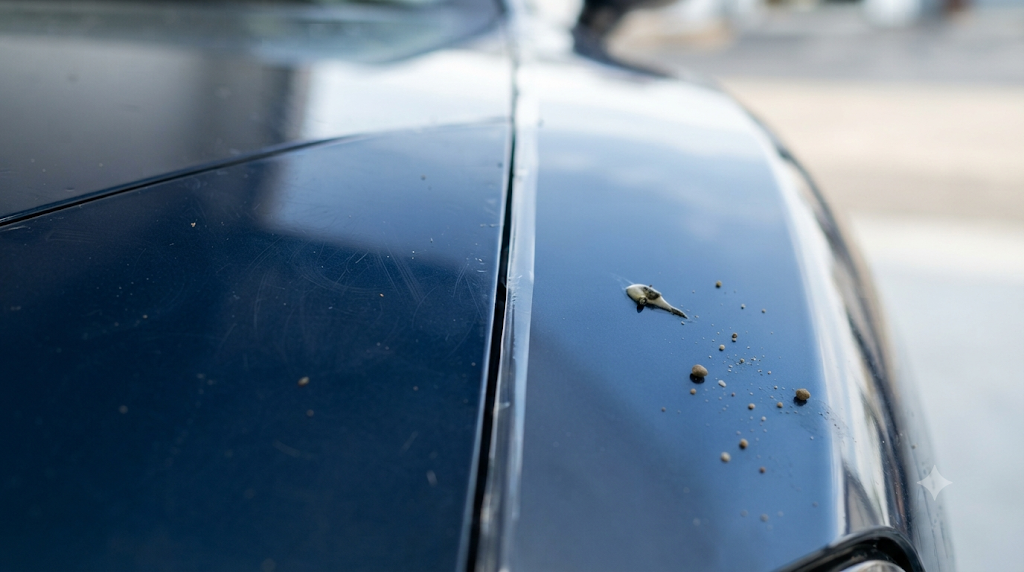
Paint protection film (PPF) is a clear, flexible film, usually made of thermoplastic polyurethane (TPU), fitted over a car’s paint. Many people call it a “PPF coating”, but it is a physical layer, not a liquid like ceramic coating. It takes the small, everyday damage, such as stone chips, light scratches, and bird droppings, so the paint underneath doesn’t have to.
It won’t make a car damage-proof. Below is what it handles well, where it stops helping, and how much of the car is worth covering. If you want the basics first, this explainer on how PPF works on Indian roads covers them in more detail.
1. Stone chips
Stone chips are the main reason highway drivers look at PPF. Trucks and cars ahead throw up gravel, and road repair work leaves loose stones along many Indian highways. At speed, even a small stone can chip the paint on the bonnet, bumper, or ORVMs.
A chip is more than a cosmetic problem. Once the paint breaks, the metal underneath is exposed and can start to rust over time, especially in humid weather.
The film absorbs and spreads out the force of the impact. For everyday gravel, the stone marks the film and the paint stays intact. Thickness matters here, since thicker films generally cope better with impacts.
There are limits. A large stone or a sharp object can cut through the film and still reach the paint. PPF is good against the small, frequent hits, not against a serious strike.
2. Scratches and Swirl Marks
Most scratches don’t happen on the road. They come from a bag, a key, a scooter handle in a tight parking space, or a dusty car being wiped with a dry cloth. That last one is very common in India, where dust settles on the car overnight. Washing with a dirty sponge leaves fine swirl marks in the same way.
The film takes this surface abrasion instead of the paint. Many films also have a self-healing top layer. When it warms up, from sunlight or hot water, the layer softens, and light marks fade. How quickly depends on the film, the depth of the scratch, and the temperature.
Self-healing only works on light marks. A deep scratch that cuts through the film won’t heal, and that panel usually needs fresh film.
3. Bird Droppings, Insects, and Tar
Bird droppings can etch into the clear coat if they stay on the car, especially under strong sun that bakes them dry. Crushed insects and tar from highway drives cause the same kind of staining.
With PPF, these sit on the film instead of the paint. Most films also have a hydrophobic top layer, so water and dirt don’t cling as much, and cleaning is easier. You still need to clean them off soon. The film buys you some time, not unlimited time.
The safest way is to wet the spot first, so it softens, then wipe gently with a soft microfibre cloth. Rubbing a dried drop off dry will scratch even a good film.
Which Parts of The Car Are Worth Covering
You don’t have to cover every panel. If chips are your main worry, start with the areas that take the most hits:
- Front bumper and bonnet
- Front fenders
- ORVMs
- The area behind the wheels
- Lower doors and door edges
A front-end kit costs less than full-body coverage, so it suits people who mostly drive on highways. Full-body PPF makes more sense on a new premium car, or if the car is parked in tight spaces every day. You can compare the film ranges and finishes, including gloss and matte, to see what each option covers.
Limitations of PPF Coating
PPF doesn’t stop dents. A door ding or a hailstorm dent is a metal problem, and the film won’t prevent it. It also doesn’t replace washing.
The film needs basic care to stay clear:
- Wash regularly with a pH-neutral shampoo and a soft microfibre mitt.
- Avoid harsh chemicals and abrasive polishes on the film.
- Keep the pressure washer nozzle at a distance, and away from the film edges.
- Follow your installer’s advice on curing time before the first wash.
What Affects The Overall PPF Coating Cost
There is no single price for PPF. Car size, coverage area, type and thickness of the film, and the complexity of the panels all change the number. The installer’s experience and any paint correction done before fitting also add to it.
In India, overall PPF installation can cost you anywhere between Rs. 61,750 and Rs. 2,80,000+, depending on the car, film and coverage you choose.
The cheapest quote usually means thinner film, less coverage or rushed preparation. Preparation is important because dust or marks trapped under the film stay there. Compare quotes based on the film specification, coverage and installation quality rather than price alone.
Is It Worth It For Your Car
PPF makes the most sense if you drive often on highways, have just bought a new car, park outdoors, or plan to keep the car for several years. In those cases, the film pays off by keeping the factory paint in good shape.
If the car is mostly garaged and used for short city trips, full coverage is harder to justify. A partial front-end kit is usually enough.
A simple way to decide is to look at your bonnet and front bumper. If they already show chips and fine marks, that is the area to cover first, and you can add more panels later.
