

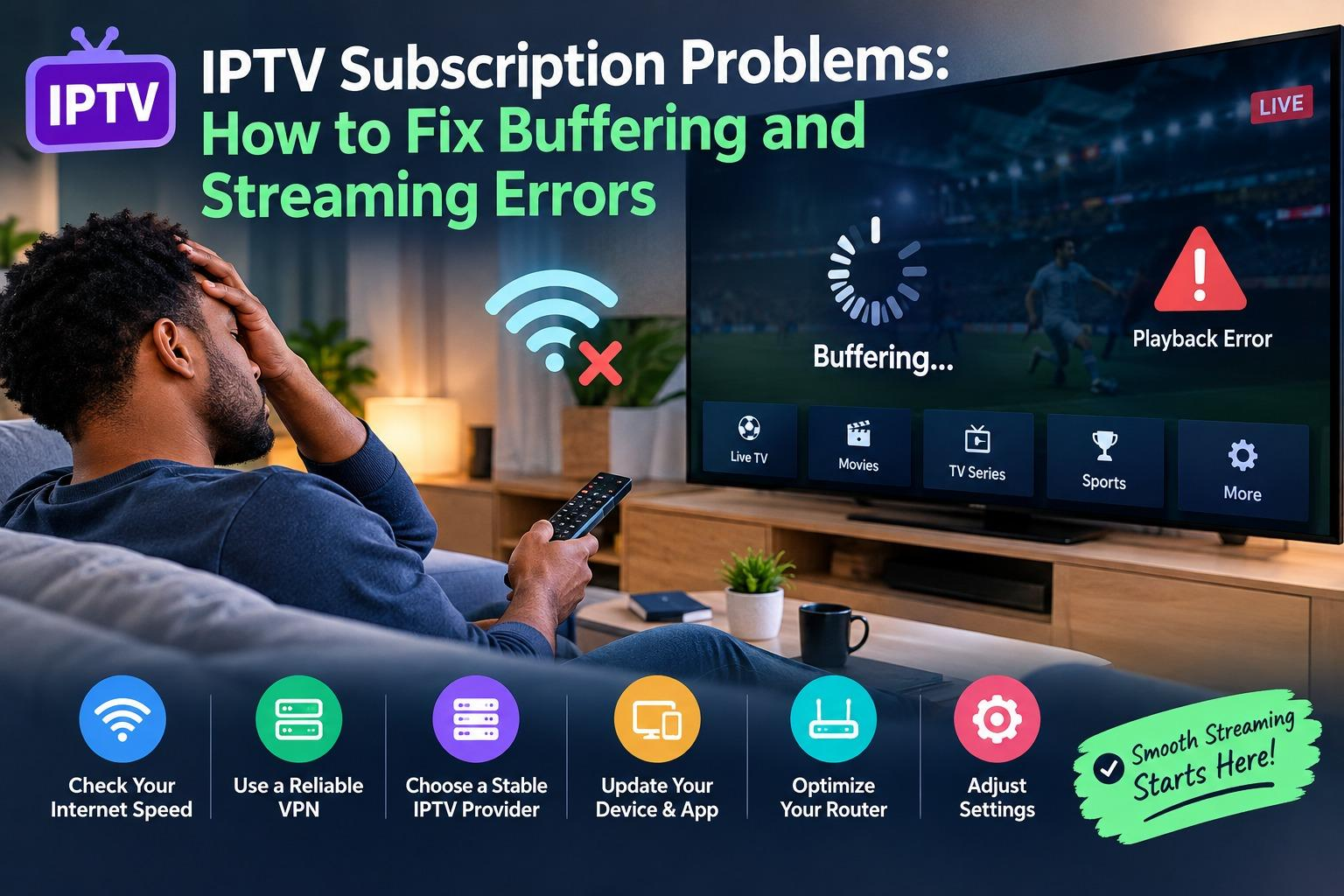
An IPTV subscription enables people to view tv channels, films, sports and more entertainment on an internet connection. But sometimes, buffering, frozen screen, playback errors and login problems can cause interruptions.
Many of the issues that arise with IPTV can be resolved using simple troubleshooting procedures. Network troubleshooting, device reboots, app updates, and checking your subscription details can frequently return regular playback.
This guide outlines some of the typical issues with watching IPTV and offers some practical advice on how to watch without troubles.
Understanding Common IPTV Streaming Problems
Knowing the common problems in IP TV streaming is very important.It is very essential to know the common problems in IPTV streaming.
When it comes to solving IPTV problems, the first thing to do is to be aware of the potential causes. Problems can be solved in a timely manner if there is an identification of the problem.
What Is the Reason Behind IPTV Buffering?
Buffering is a situation in which a video takes too long to load. Some common reasons are slow internet connections, weak Wi-Fi signals, network congestion, and temporary server problems.
High-resolution video, especially 4K video streams, demand more bandwidth than traditional video. If your connection is unable to keep up speed, repeated pauses may occur.
Why Does IPTV Freeze or Cease?
IPTV freezing can happen when an application freezes, it is likely to run out of memory, or a streaming server has technical problems. Playback may also also be impacted by old software and settings.
If a channel fails, but all other channels are working, it can be related to the channel, not to your internet connection.
How to Fix IPTV Buffering Issues
Ensure You Have a Strong Internet Connection
First, check the Internet connection. Open another website or streaming app to see if you’re not the only one with a delay when streaming.
Restart your modem and router if you have a slow connection. Switch them off, wait about 30 seconds and turn them back on. After reconnection, check your IPTV service once again.
Additionally, you should avoid large downloads, online games, and any unnecessary streaming. These activities can use up bandwidth, which can impact on playback.
Connect with an Ethernet Connection
Distance, Wi-Fi walls and wireless interference can impact Wi-Fi performance. If possible, use an Ethernet cable to connect your TV or streaming device directly to your router to get a more stable connection.
If it doesn’t use Ethernet, get closer to the router. If your router and device support 2.4 GHz and 5 GHz frequencies, you can also switch to the other bands of Wi-Fi.
Reduce Streaming Quality
High resolution content needs a higher bandwidth. Check if your IPTV service provides the flexibility to change the resolution between 4K and 1080p or a lower quality; this could help to minimize buffering.
Set a screen resolution that matches or is within your Internet connection’s capabilities. Continuous play is usually preferred to multiple interruptions of high res streaming.
How to Fix IPTV Streaming Errors
Go Back to the IPTV Application
Sometimes playback is interrupted when an application crashes. Close and reopen IPTV application and run a channel.
Re-power your TV or streaming box, or other device, if the issue persists. This can resolve temporary system problems and release resources.
Delete the Application Cache
Corrupt temporary files can cause performance issues, however, caches assist applications in loading content efficiently.
Access the storage settings for the IPTV application on your device. For those which have that choice, choose clear-cache and then reopen the app.
Do not delete all the application data unless it is needed as it will delete saved settings, logon information and playlists.
Make the IPTV Application Up-To-Date
An outdated software may result in compatibility problems and playback errors. Keep an eye out for updates on the official app store or the normal distribution channel for the application.
Also, if updates are available, install an operating system that is compatible with the application. Take security risks less when downloading software from trusted sources.
How to Solve IPTV Login and Connection Issues
Please Ensure That Your Subscription Information Is Correct
If you are unable to log in, determine if your subscription is active and that your account information is correct. This can be prevented by incorrect usernames, passwords, addresses of the servers, or old subscription.
If the payment has been made, but the account still does not show as active, please reach out to the official customer service team of the provider to check the status of your subscription.
Check the Service Status
A streaming server may for a while be unavailable. If some channels don’t work even with a steady Internet connection, the problem could lie with the provider’s infrastructure.
Wait for service to recover or consult customer service for confirmation. Changing router settings or reinstalling the application can’t solve a problem on the server.
A trustworthy IPTV UK service ought to offer clear and unambiguous subscription terms, support alternatives and data on acceptable devices and approved material.
How to Optimize IPTV Performance on Various Devices
Solve the IPTV Issues on Smart TVs
If IPTV doesn’t work on your smart TV, reset your TV and see if there are any updates available. Close unneeded programs and make sure there is ample disk space.
Check to see if the IPTV application is compatible with your TV and operating system. If it still occurs, try reinstalling the app via the official app store.
Solve IPTV Issues for Fire TV and Streaming Boxes
If there is not enough storage space or too many applications are running, streaming devices may have performance problems.
Reboot the machine, close unused apps and see if there are system updates. Make sure that the device can play the video at the desired resolution and streaming format.
When HDMI is showing black screen or restarting unexpectedly, check the HDMI connection and power supply. Also, remember to keep any ventilation openings clear, as this can cause overheating.
Selecting the Best IPTV Service to Ensure Uninterrupted Streaming
Assess Server Stability and Customer Support
Do some preliminary research on the provider before buying a subscription to ensure the company is reputable, has excellent customer support, and has good terms of service. Check to see if there are any devices that are supported, if there are, what are the conditions of renewal, and what kind of support is provided when things go wrong.
Don’t make false claims about continuous streaming. Actual performance will vary based on the provider’s infrastructure, your Internet connection and your device.
Select a Subscription Speed That Matches Your Internet Connection
Before selecting a service, think about how you normally watch television. Binge-watching live sports, high-definition movies or 4K content can necessitate a quicker and more consistent internet connection.
Keep in mind, your bond is intertwined with other activities you do at home. Significant bandwidth reduction from online gaming, video calls, downloads, and other devices for streaming.
Verify Compatibility and Legal Availability
Make sure that the service is compatible with your TV, streaming box, phone, etc. Check the applications and operating systems that it supports before subscribing.
In addition, check if the provider is authorized to transmit its channels and videos in your area. Some of these things to consider when selecting a service include transparency of pricing, compatibility of technology, responsiveness of support, and legal access to content.
Frequently Asked Questions
1. Why Is My IPTV Buffering?
Why IPTV keeps buffering?
This can be caused by slow internet connections, low signal strength, network congestion, or temporary server issues. Turn your router back on, test your Ethernet and lower your video settings.
2. How to Improve IPTV Streaming?
Make sure you have a stable internet, close down any unnecessary windows or applications, keep software up-to-date, and select an appropriate video resolution.
3. Why Are Some Channels Working While Others Are Not in IPTV?
It could be a particular channel or streaming servers on the provider. Run tests on other channels and contact customer support in case of any issues.
4. Can a VPN Potentially Resolve IPTV Buffering Issues?
VPNs don’t always enhance streaming. It can improve speed in certain network scenarios but can slow down speed or cause latency in other scenarios.
5. Why Is My IPTV Subscription Showing as Expired?
This could be because your subscription has been renewed or because your account status hasn’t been updated properly. Review your account, and get in touch with the provider if needed.
6. Does 4K IPTV Require Faster Internet Speeds?
Yes, 4K IPTV does require higher internet speed.
Yes. In general, 4K streaming will need higher bandwidth than lower resolution video. A good connection is also needed for seamless viewing.
Conclusion
Slow internet connection, weak Wi-Fi signals, outdated apps, device restrictions, wrong account information, and temporary servers issues can cause buffering and streaming issues with IPTV.
The first thing to try is a check on your internet connection, a reboot, clearing the cache of applications and checking the status of your subscription. If the problem persists in multiple channels, check with your provider to see if the problem is on the server.
By having a compatible device, a stable network, up to date software and a legal and authorized service, you can address many of the common issues with IPTV and have a more solid viewing experience.
Call to Action: https://www.teledo.uk/
