

What Are ISP Proxies?
ISP proxies combine characteristics of residential internet service providers with the infrastructure used to deliver proxy connections. They are commonly selected when a workflow benefits from a consistent IP address rather than frequent rotation. Depending on the provider and plan, ISP proxies can support activities such as account management, advertising operations, website testing, and other tasks that require a stable connection identity.
The suitability of an ISP proxy depends on factors such as IP location, session stability, network performance, protocol support, and the provider’s terms of service. Before selecting a plan, businesses should consider whether they need a fixed IP for an extended period or rotating addresses for broader data collection.
Why Stable IP Addresses Matter
Some online workflows rely on maintaining a consistent connection over time. Repeatedly changing IP addresses may complicate session management, troubleshooting, and other operational tasks. A stable proxy can make it easier to organize these activities when the target platform permits proxy use.
For example, marketing teams may need consistent access to approved regional advertising accounts, while developers may test how websites behave from different locations. Businesses should always comply with the relevant platform policies and avoid using proxies to bypass security controls or restrictions.
IPPeak ISP Proxies for Long-Term Operations
IPPeak is a global proxy service provider with residential and ISP proxy offerings. Businesses researching stable IP solutions can review its IPPeak Residential Proxies alongside the provider’s ISP proxy plans to understand which product best matches their requirements.
According to IPPeak, its ISP proxies provide fixed residential IPs across more than 30 locations. These are intended for use cases that benefit from IP stability, including long-term account management and advertising operations. The provider lists ISP proxy pricing starting at $3.60 per IP, although the final cost may depend on the selected plan and current promotions.
The choice between ISP and residential proxies should be based on the task rather than the product name alone. Fixed ISP proxies may suit workflows that require continuity, while rotating residential proxies can be more appropriate for collecting information across many locations or distributing requests among different IP addresses.
ISP Proxy Pricing and Bulk Discounts
For businesses that need multiple IP addresses, bulk pricing can influence the total cost of a project. IPPeak advertises the following ISP proxy discount tiers:
Purchases of 1–10 IPs receive a listed discount of 5%. Orders of 11–200 IPs receive 10% off, while orders of 201–500 IPs receive 20% off. Purchases of more than 500 IPs are listed with a 30% discount.
These tiers may be useful for agencies, marketing teams, and companies operating several approved accounts or regional workflows. Before purchasing, users should confirm the applicable pricing, billing terms, IP availability, and discount eligibility directly with the provider.
Comparing ISP and Residential Proxies
ISP and residential proxies address different needs. A fixed ISP proxy is generally considered when connection consistency is a priority. A rotating residential proxy is often selected for research or data collection that benefits from IP rotation and broad geographic coverage.
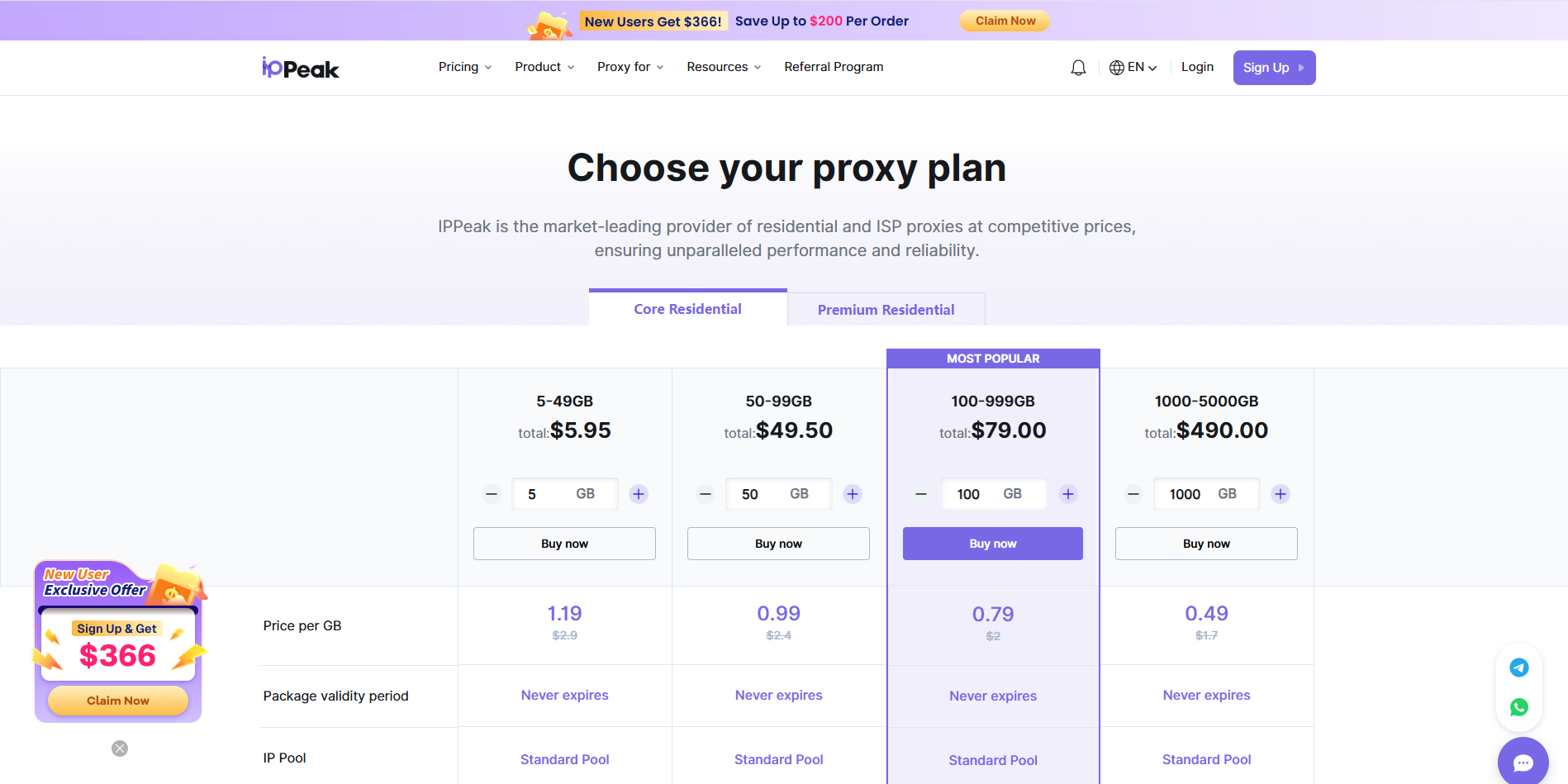
IPPeak reports a residential network of more than 80 million IPs across over 195 countries and regions. Its residential plans include Core Residential and Premium Residential options, with features such as flexible rotation, ASN targeting, unlimited concurrent connections, and HTTP/SOCKS5 support.
The provider also lists Unlimited Residential Proxies starting at $8 per hour. These plans are designed for high-volume workloads and are advertised with unlimited traffic and IP usage, customizable bandwidth, and server configurations for selected countries. Availability and configuration options should be verified before purchase.
Technical Features to Evaluate
When comparing ISP proxy providers, examine the connection protocols, location choices, authentication methods, and options for managing sessions. Confirm whether the provider supplies dedicated or shared access, how long an IP can remain assigned, and what happens if a connection becomes unavailable.
Performance claims should also be considered carefully. Response times and connection success can change depending on the destination website, routing conditions, local network quality, and software configuration. Testing the service with a representative workload is more useful than relying only on headline metrics.
IPPeak reports connection success rates of up to 99.95% and average response times below 0.5 seconds for its service. These are provider-reported figures, not a guarantee that every user or destination will experience the same results.
Use Cases for Stable Proxy Connections
Fixed proxies can support legitimate business operations where consistent access is important. These may include authorized account administration, regional advertising checks, website quality assurance, and testing applications from selected locations.
Businesses should use proxy connections transparently and responsibly. Proxy access does not provide permission to violate a website’s terms, evade enforcement actions, or access accounts without authorization. Teams should also apply appropriate security controls to protect login credentials and other sensitive information.
How to Choose the Right Plan
Start by listing the number of IPs required, the locations needed, and the expected duration of use. Then compare the cost of individual IPs against any available bulk discounts. Consider whether a residential rotation plan would better support the task and whether a free test is available to validate compatibility.
For agencies and larger organizations, documenting the intended use case and testing the connection before scaling up can prevent unnecessary spending. It also helps ensure that the selected proxy product matches the actual requirements of the software and target platforms.
Conclusion
The best ISP proxy provider should offer the IP stability, location coverage, technical compatibility, and pricing structure required by a particular workflow. Fixed IPs may be suitable for long-term operations, while rotating residential proxies are often better suited to geographically distributed research and data collection.
IPPeak provides ISP and residential proxy products with different features and pricing models. Reviewing its current plans, checking the terms, and testing the connection can help businesses choose an appropriate solution for their operational needs.
