

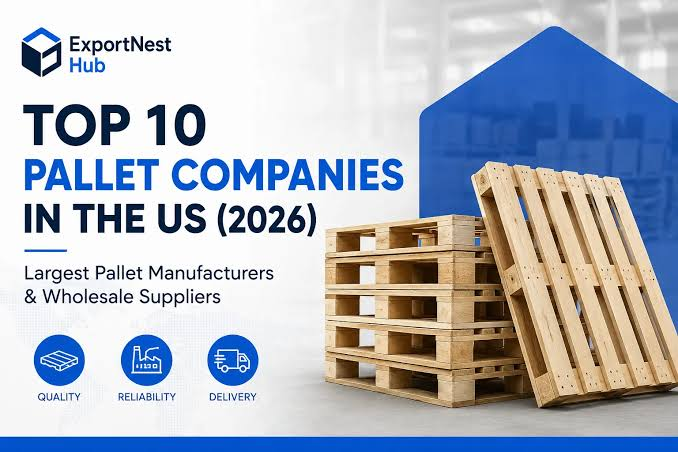
Pallet sourcing rarely gets the attention it deserves until something goes wrong. A delayed shipment, a shortage during peak season, or inconsistent pallet dimensions that disrupt automated handling systems — these are the moments when procurement teams realize that their pallet supply chain deserves as much scrutiny as any other input. For operations that move high volumes of goods across distribution centers, manufacturing plants, or retail networks, the quality and reliability of pallet supply is not a peripheral concern. It sits at the core of daily logistics performance.
In 2025, the US pallet market continues to be shaped by consolidation among major producers, fluctuating lumber costs, and growing pressure from industries that depend on consistent, standardized pallets at scale. Understanding who the largest producers are, how they operate, and what separates one from another is useful context for anyone making sourcing decisions at the facility or fleet level.
This ranking focuses on production capacity, geographic reach, and operational scale as the primary criteria. Revenue figures and market share estimates shift frequently, so the emphasis here is on what these companies are actually able to deliver and where.
What “Capacity” Actually Means for Pallet Sourcing Decisions
When evaluating a national pallet manufacturer, capacity is more than a production volume figure. It reflects how reliably a supplier can fulfill orders during demand surges, how many regional facilities they operate to reduce lead times, and whether they have the infrastructure to maintain consistent quality across different plant locations. A manufacturer that produces tens of millions of pallets annually but concentrates that production in a handful of facilities may still create supply gaps for buyers in underserved regions.
For procurement teams managing multiple distribution points, choosing a national pallet manufacturer with distributed production capacity often reduces exposure to regional disruptions such as lumber shortages, weather events, or labor interruptions at a single facility. The manufacturers that rank highest in this list are distinguished not just by raw output but by the breadth of their operational footprint.
Why Geographic Reach Matters More Than Total Output
A supplier producing at high volume from centralized locations may still struggle to deliver pallets to a buyer’s facility within a competitive lead time. Freight costs, delivery windows, and inventory holding costs all factor into the true cost of pallet procurement. Manufacturers with regional or local satellite facilities can often offer more predictable delivery schedules, which directly affects warehouse receiving operations and inventory planning.
For buyers operating across multiple states or regions, a supplier with a genuinely distributed manufacturing network tends to reduce the administrative complexity of managing multiple local vendors while maintaining a single point of contact for quality standards and pricing negotiations.
The 10 Largest National Pallet Manufacturers in the US (2025)
1. CHEP USA
CHEP, a division of Brambles Limited, operates one of the largest pallet pooling and manufacturing networks in the world, with a substantial US presence. Rather than selling pallets outright, CHEP’s model is primarily rental-based, which means the company maintains and reconditions its inventory continuously. This gives them an unusually large active pallet count and a nationwide service infrastructure. Their focus on standardized blue pallets makes them a dominant presence in grocery, consumer goods, and retail supply chains.
2. PECO Pallet
PECO operates a rental pallet network comparable in structure to CHEP, with a strong presence in the food and beverage sector. Their network spans hundreds of service centers across North America, with a significant concentration along major US distribution corridors. PECO has steadily expanded its geographic footprint and its client base among mid-to-large grocery distributors and food manufacturers who require consistent pallet quality and turnaround.
3. iGPS (Intelligent Global Pooling Systems)
iGPS distinguishes itself by manufacturing and managing plastic pallets rather than wood. Their pooled plastic pallet network serves major retailers and food producers looking for pallets that are lighter, more hygienic, and compatible with automated material handling systems. While their overall pallet count is lower than the wood pallet leaders, their capacity within the plastic segment is unmatched domestically, and their presence in temperature-controlled and pharmaceutical logistics continues to grow.
4. PalletOne
PalletOne is one of the largest independently owned wooden pallet manufacturers in the United States, operating across multiple production facilities in the South and Southeast. Unlike pooling companies, PalletOne sells pallets directly to end users and distributors. Their production model is oriented toward high-volume custom and standard pallet orders, and they have built a significant presence in agricultural, building materials, and industrial supply chains.
5. Pacific Pallet
Operating primarily in the western United States, Pacific Pallet has established itself as a leading regional-to-national supplier with production capacity in California and the Pacific Northwest. Their network serves industries ranging from fresh produce to construction materials, and their geographic positioning gives them an advantage in serving western ports and distribution centers that receive high volumes of imported goods.
6. Millwood Inc.
Millwood is a privately held company that manufactures pallets alongside a broader line of packaging and material handling products. Their pallet manufacturing capacity spans multiple facilities across the Midwest and Southeast, and they supply both new and reconditioned pallets to industrial and manufacturing clients. Millwood’s integration of pallet production with broader packaging services gives them an operational advantage with clients managing complex outbound packaging requirements.
7. Viking Forest Products
Viking Forest Products operates as a major distributor and manufacturer within the pallet supply chain, with a particular strength in the upper Midwest. They supply both wood pallets and pallet components to a range of industries and have built their capacity through a combination of direct manufacturing and a well-managed distribution network. Their proximity to timber resources in the Great Lakes region supports consistent material supply for their production operations.
8. National Wooden Pallet and Container Association (NWPCA) Member Manufacturers
The National Wooden Pallet and Container Association represents hundreds of US pallet manufacturers, several of which rank among the highest-volume producers in their respective regions. While not a single entity, the combined capacity of NWPCA’s larger member manufacturers places them collectively among the most significant forces in the domestic pallet market. Buyers working through regional manufacturers affiliated with this body often benefit from standardized quality practices and access to a broader vendor network when local supply tightens.
9. Brambles (Beyond CHEP) — Reconditioning and Secondary Market Production
Beyond the CHEP brand, Brambles’ US operations include pallet reconditioning and remanufacturing capacity that contributes significantly to the total available pallet supply. Reconditioned pallets represent a meaningful share of the pallets in active circulation across US supply chains, and Brambles’ scale in this area supports buyers who incorporate remanufactured pallets into their procurement mix as a cost management strategy.
10. Regional High-Volume Independents
A tier of regionally dominant independent manufacturers — concentrated in the Southeast, Mid-Atlantic, and Midwest — collectively represents significant production capacity. Companies such as Kamps Pallets, headquartered in Michigan, operate large reconditioning and manufacturing facilities that serve automotive, food, and industrial clients. These independents often compete effectively with national brands by offering faster turnaround, more flexible order terms, and stronger service relationships in their core geographies.
How Production Models Differ Across These Manufacturers
Not every large-volume pallet producer operates the same way, and the production model has direct implications for buyers. The primary distinctions are between pallet pooling companies, direct-sale manufacturers, and reconditioning operations. Each model carries different cost structures, quality controls, and service expectations.
Pooling vs. Direct Purchase
Pooling companies like CHEP and PECO retain ownership of pallets and charge users a rental fee per pallet movement. This model eliminates the need for buyers to manage pallet recovery, reconditioning, or disposal, but it also introduces ongoing rental costs and dependency on the pooling company’s network for retrieval and reissuance. Direct-purchase manufacturers like PalletOne or Millwood sell pallets outright, giving buyers full control over their pallet assets but also transferring the burden of management, storage, and end-of-life handling back to the buyer.
For high-volume operations with complex logistics, the decision between these models often comes down to internal capacity to manage pallet assets. Facilities without dedicated pallet management programs may find pooled options administratively simpler, while those with established pallet recovery workflows may benefit more from outright purchase at scale.
New vs. Reconditioned Pallet Supply
Several of the manufacturers on this list produce both new and reconditioned pallets, and the reconditioned segment has grown substantially as raw material costs have created pricing pressure on new wood pallets. Reconditioned pallets, when properly graded and inspected, can perform comparably to new pallets in many standard applications. However, industries with strict hygiene requirements — food production, pharmaceuticals, and certain chemical applications — typically require new pallets or certified clean pallets, which influences which suppliers are viable for those operations.
Factors Beyond Rank That Influence Supplier Selection
Production volume and geographic reach are useful starting points, but they do not tell the complete story of supplier suitability. Buyers evaluating pallet suppliers at a national or multi-regional scale should also consider how each manufacturer handles order variability, what their lead times look like during high-demand periods, and how consistently they maintain quality standards across facilities.
Quality Consistency Across Facilities
A manufacturer operating fifteen facilities presents a different consistency challenge than one running three. Quality can vary between plant locations depending on raw material sourcing, equipment maintenance, and workforce training. Buyers receiving pallets from multiple plant locations under a single supplier agreement should establish clear specifications and build quality audits into the procurement relationship, rather than assuming that brand affiliation guarantees uniformity.
Responsiveness During Demand Peaks
Pallet demand spikes are predictable in many industries — harvest seasons, retail peak periods, and manufacturing ramp-ups all create concentrated demand. A national pallet manufacturer with flexible production scheduling and sufficient inventory buffering can protect buyers from supply interruptions during these windows. Evaluating a supplier’s historical performance during peak periods is more informative than reviewing their standard lead time commitments under normal conditions.
Conclusion
The US pallet manufacturing sector is heavily concentrated at the top, with a small number of large producers accounting for a disproportionate share of total output. For buyers making sourcing decisions in 2025, the challenge is not finding pallet suppliers — it is identifying which producers have the operational consistency, geographic reach, and capacity flexibility to match the specific demands of a given supply chain.
This ranking reflects capacity and scale as the primary differentiators, but the right supplier for any given operation will also depend on pallet type, purchasing model preference, and regional service requirements. Treating pallet procurement as a strategic decision rather than a commodity transaction tends to produce better outcomes — fewer disruptions, more consistent quality, and pricing that reflects a real understanding of what the operation actually requires. Whether sourcing from a national pool operator or a high-volume regional independent, the goal is the same: reliable supply that supports uninterrupted operations without unnecessary complexity.
