

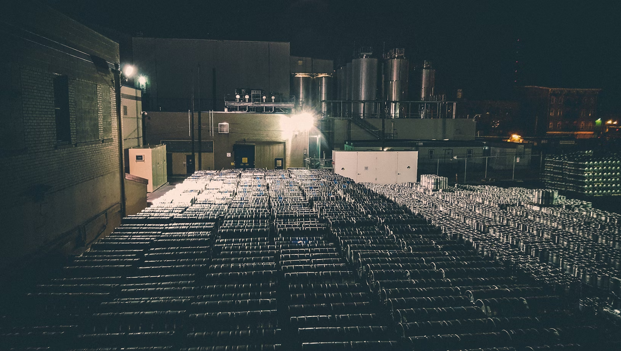
Mass manufacturing has revolutionized the production landscape, enabling the creation of standardized products at scale. This method, synonymous with continuous flow production, leverages automation and assembly lines to achieve high efficiency and uniformity.
However, like any production strategy, it comes with its set of advantages and disadvantages.
Now, let’s delve into the multifaceted aspects of mass manufacturing.
Advantages of Mass Manufacturing
As manufacturing technology advances, so does the benefits of mass manufacturing. Some such key advantages include:
High Precision and Consistency
One of the foremost advantages of mass manufacturing is its ability to produce highly precise and consistent products. When production is strictly monitored, machines set to predetermined parameters can ensure uniform quality across large volumes of products. This level of precision is essential in industries where even minor deviations can lead to significant issues.
Rapid Response to Market Demand
Mass manufacturing allows companies to respond swiftly to market demand. With established production lines, manufacturers can quickly ramp up production to meet surges in demand, ensuring product availability and customer satisfaction. This agility is particularly beneficial in industries with fluctuating demand patterns.
High Efficiency and Productivity
Automation in mass manufacturing enhances productivity. Assembly lines streamline the production process, allowing for rapid assembly and quicker turnaround times. This efficiency facilitates prompt distribution and marketing, crucial for maintaining a competitive edge in fast-paced industries.
For instance, the fast-food giant McDonald’s leverages mass production to serve meals quickly, catering to time-sensitive customers and sustaining its market leadership.
Cost Efficiency
Mass manufacturing significantly reduces production costs. The automation of processes minimizes the need for a large workforce, lowering labor expenses.
Additionally, producing in bulk allows for economies of scale, reducing the cost per unit. This cost-efficiency is a competitive advantage, enabling companies to offer products at lower prices and increase profit margins.
Disadvantages of Mass Manufacturing
Besides the advantages, mass manufacturing also comes with some disadvantages including:
High Capital Investment
Setting up mass manufacturing processes is capital-intensive. Establishing automated assembly lines requires substantial upfront investment in machinery and technology. This high cost can be a barrier for small and medium-sized enterprises (SMEs), limiting their ability to compete with larger corporations.
Employee Morale and Turnover
The repetitive nature of tasks in mass manufacturing can lead to low employee morale and high turnover rates. Workers performing monotonous jobs may experience boredom and lack of motivation, negatively impacting productivity and increasing recruitment and training costs.
In resolution, companies must find ways to keep employees engaged and reduce turnover to maintain a stable workforce.
Rigidity and Lack of Flexibility
Mass manufacturing processes can be inflexible. Once an assembly line is set up, making changes can be time-consuming and costly. For instance, if a production design flaw is discovered or regulatory changes require a different process, redesigning and rebuilding the production line can entail significant expenses and downtime.
Dependency on Technology
Mass manufacturing heavily relies on technology. While automation increases efficiency, it also means that any technological failure can disrupt the entire production process. Regular maintenance and upgrades are necessary to keep the systems running smoothly, adding to operational costs and complexity.
Real-World Examples of Mass Production
Ford Model T Production
A landmark example of mass manufacturing is the production of the Ford Model T. In 1913, Henry Ford pioneered the assembly line technique, drastically reducing the time to build a car from 12 hours to just 93 minutes. This innovation made automobiles affordable for the average American and set the standard for modern mass production methods.
Robotics in Manufacturing
Ford further advanced mass manufacturing by introducing robots to unload die-casting presses in 1961. Today, robotics play a crucial role in many manufacturing processes, enhancing precision and reducing human error. Humans are now more involved in quality assurance, ensuring that automated processes maintain high standards.
Marshmallow Peeps
The evolution of mass manufacturing can also be seen in the production of marshmallow Peeps. In 1954, it took 27 hours to make a Peep by hand.
With the advent of assembly lines, this time was cut to six minutes per Peep, enabling the production of 5.5 million Peeps daily by 2024. This example highlights the incredible efficiency gains achieved through mass manufacturing.
Conclusion
Mass manufacturing offers significant advantages, including high precision, cost efficiency, and rapid production capabilities. However, it also presents challenges such as high initial investment, inflexibility, and potential employee dissatisfaction. Understanding these pros and cons is essential for businesses to make informed decisions about adopting mass manufacturing techniques.
